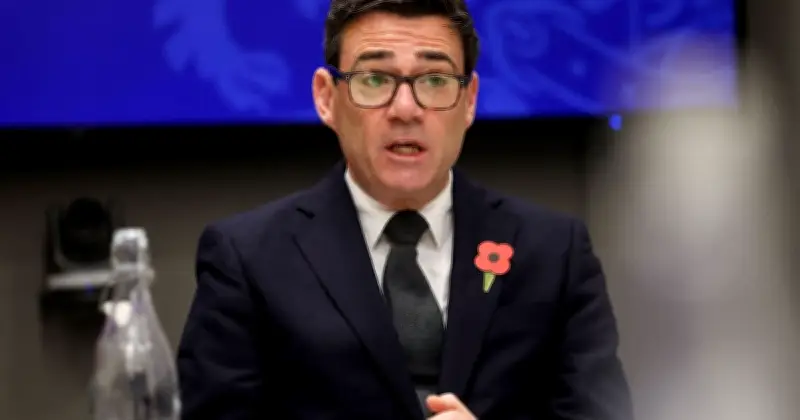
Prime Minister Andy Burnham has declined to say whether he believes immigration levels are too high, instead suggesting migrant workers are needed to fill "gaps in the economy" even as the UK records 1.7 million unemployed people.
More than 600,000 young people are not in employment, education or training and are classed as "economically inactive", meaning they do not count as unemployed because they are not seeking work.
Planned migration and economic needs
Speaking to ITV Tonight for an interview due to air on Tuesday, Mr Burnham said legal migration has "come right down" and argued that judging levels is difficult when migration is planned.
"I think when you have planned migration, it's difficult to say is it too high or too low, because it's got to be, if you like, following gaps in the economy. Because if you just put a number on it, then we may have a shortage in a certain area," he said.
The Prime Minister added that immigration, both legal and illegal, was "in a much better place than it was", citing lower boat crossings and a significant overall drop in net migration. "So there's a much better control of it," he said.
Post-Brexit migration debate
Mr Burnham, who has called for discussion on possibly returning to free movement with the European Union, said: "What I have argued is that migration and illegal immigration changed significantly with Brexit. And I think we've got to be honest about that."
Net migration into the UK stood at 171,000 in 2025.
Planned reforms and care sector concerns
Home Secretary Shabana Mahmood is set to outline changes to immigration today, though planned reforms are expected to have been watered down. Her proposals were criticised by many Labour MPs and Housing Secretary Angela Rayner, and Mr Burnham has reportedly urged her privately to make changes.
The proposals sought to make it harder for immigrants to receive indefinite leave to remain, also known as settled status, extending the wait from five years to ten years or longer for many. People with settled status can claim benefits and access public services similarly to British citizens. Possible changes could exclude care workers from the tougher rules.
Ministers have admitted the government does not know what people granted care worker visas are actually doing. Home Office Minister Jo White warned that many of the 600,000 migrants given permission to work in the care sector may be doing something else, describing the visa arrangement as "a scandal".
Speaking on a panel at the Labour conference, Ms White said employers were encouraged to become "sponsors" to obtain visas for foreign staff after the UK left the EU in 2020. "The biggest concern we've had is the number of sponsors that were issued to the social care sector," she said.
The Conservative government at the time expected 40,000 foreign care workers to come but "in fact over 600,000 arrived", she said, adding: "And there is no real sense that they are actually working in the social care sector."
Ms White said: "Where those workers have gone is a cause of concern. Some are continuing to work for those employers. Some have gone off [doing] we know not what."