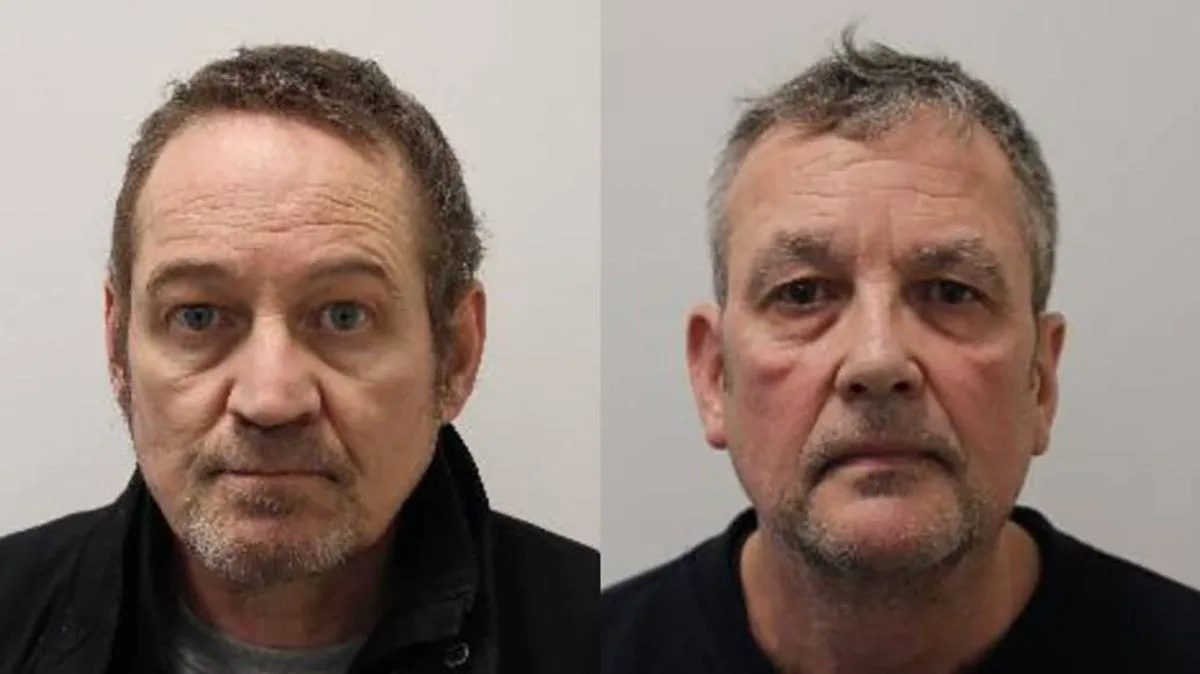
Brothers Guilty of 1984 Homophobic Hate Crime Murder of Civil Servant
Brothers Guilty of 1984 Homophobic Hate Crime Murder

Two brothers have been found guilty of murdering a civil servant in a homophobic hate crime that occurred 42 years ago in north London. Michael Stewart, 57, and Anthony Stewart, 60, were teenagers when they ambushed Anthony Littler as he walked home in East Finchley on 1 May 1984. The 45-year-old victim was struck twice over the head with a blunt weapon and left mortally wounded in an alleyway, still carrying his briefcase, £80 in cash, and credit cards.

The Attack and Initial Investigation

Minutes after the attack, Michael Stewart made an anonymous call for an ambulance from a phone box, but the search was called off after he hung up. Mr Littler was discovered by members of the public lying in a pool of blood with a catastrophic brain injury. Jurors at the Old Bailey heard that by spring 1984, the Stewart brothers and their friends had made a hobby of targeting lone men they believed to be gay. Despite house-to-house inquiries, the brothers claimed to be at home during the attack, with Anthony Stewart insisting he never used the alley. Appeals on BBC Crimewatch and ITV’s Police 5 failed to yield leads, leaving the case unsolved for decades.

Breakthrough After Family Dispute

A breakthrough came on the 29th anniversary of Mr Littler’s death when the defendants’ younger brother, Daniel, who was 10 at the time, came forward to police following a family dispute. He told officers his older brothers had confessed to the killing and boasted about being involved in queer bashing. Years after the murder, Michael Stewart also admitted his guilt to a girlfriend, even showing her the scene of the crime.

Wide Pickt banner — collaborative shopping lists app for Telegram, phone mockup with grocery list

Covert Police Tactics

In 2022, police reopened the investigation, deploying covert techniques including bugging the brothers’ cars and Michael’s home. While Anthony was described as a man of few words, Michael proved to have a loose tongue and bragged about his actions in 1984, the court heard. After an Old Bailey trial, a jury deliberated for less than three hours before finding them guilty of murder on Monday.

Justice After Decades

Senior Crown prosecutor Samantha Yelland acknowledged the challenges faced by investigators, including the loss of key evidence like a potential murder weapon. She described the decision to deploy covert tactics as unusual but necessary due to the absence of other evidence to prosecute the historic hate crime. Ms Yelland told the Press Association: I’m so pleased that we’ve managed to get justice all these years later for Anthony Littler. It’s never right that someone dies in these circumstances, in particular in a hate crime. I’m glad that we’ve been able to get justice for his family.

Detective Chief Inspector Neil John, of Scotland Yard, said: Anthony’s life was suddenly cut short when he was killed in a brutal attack by two teenagers who we now know had a clear propensity for the most sickening kind of violence. They targeted Anthony because he was alone, defenceless and walking down a dark alley in which they knew no-one would see them carrying out their horrendous assault. He added: We know Anthony’s murder has continued to cause his family pain all these years later, and we are pleased that they now know who was responsible for his death.

Trial Details

During the trial, prosecutor John Price KC detailed Mr Littler’s last evening, spent at a pub in Carshalton, Surrey, with a real ale enthusiast group. He arrived at East Finchley Tube station at 12.18am on 1 May and was ambushed in a narrow alleyway. Mr Price suggested the assailants may have panicked and fled without robbing him when the extent of his injuries became clear. A resident, Edward Dyer, heard a loud shout that sounded like a cry of pain. About half an hour later, Annalieze and James Hainge found Mr Littler injured. Mrs Hainge called emergency services, while her husband stayed with the victim, who had two skull fractures and a catastrophic brain injury from which he died at the scene.

Pickt after-article banner — collaborative shopping lists app with family illustration

Mrs Hainge’s call was the second 999 alert. At 12.22am, an unknown person had called an operator, asking for an ambulance – quick and stating: I can’t stop, just get an ambulance to East Finchley station, there’s a man hurt outside the station. The caller, noted as abnormally concerned and well spoken with a young sounding voice, claimed the casualty was bleeding heavily before hanging up. Station staff found no trace of an injured man, and the incident was stood down. Mr Price told jurors that the evidence now showed Michael Stewart made that first 999 call.

Both defendants, from north London, denied involvement and declined to give evidence. They have been remanded into custody and will be sentenced on 3 July.