
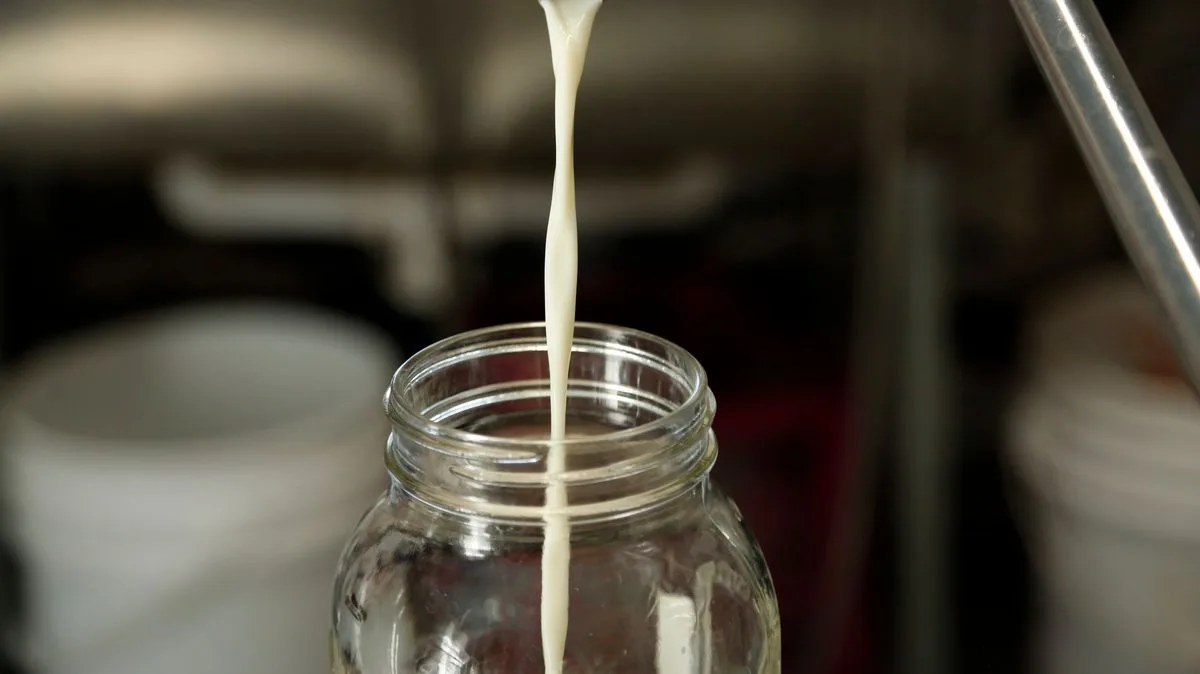
New research has raised fresh concerns over the safety of drinking raw milk as experts monitor outbreaks of bird flu. A study published in Nature Medicine revealed that live H5N1 virus can survive in some raw-milk cheeses for up to 120 days, underscoring potential public health risks.
The research, led by scientists at Cornell University, tested cheeses made in a lab as well as products from a dairy herd containing infected cows. Ferrets fed raw milk contaminated with the virus became infected, but animals fed cheese from the same milk did not. However, the virus remained intact long enough to pose a risk under certain conditions.
In the UK, the Food Standards Agency warns that raw milk may contain harmful bacteria such as E. coli, Salmonella, or Campylobacter. It advises that raw milk should not be consumed by people aged 65 or over, pregnant women, infants, or those with compromised immune systems.
A UK Health Security Agency report published in March said infected raw milk could be a "tenable transmission route" for bird flu. While the risk for the general population is "very low," those consuming raw milk or cheese from infected livestock face potential exposure. The report noted that pasteurised milk poses a "negligible" risk, whereas unpasteurised milk poses a "medium risk."




