

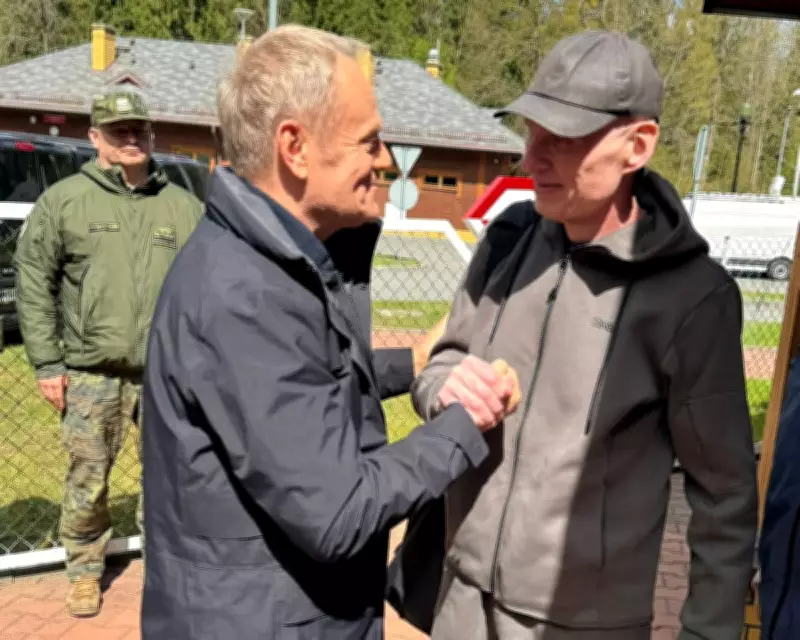
Andrzej Poczobut, a Polish journalist who had been detained in Belarus, has been freed as part of a prisoner swap deal brokered by the United States. The release, which took place on Tuesday, marks a significant development in the ongoing tensions between Belarus and the West.
Background of the Case
Poczobut, a correspondent for the Polish newspaper Gazeta Wyborcza, was arrested in Belarus in 2021 and subsequently sentenced to eight years in prison on charges of inciting hatred and disrupting public order. His case drew widespread condemnation from human rights organizations and press freedom advocates, who viewed it as part of a broader crackdown on independent media in Belarus.
The Swap Deal
The details of the swap remain unclear, but sources indicate that the United States played a key role in negotiating Poczobut's release. The deal is believed to have involved the exchange of individuals held by both Belarus and the US, though the identities of those exchanged have not been officially disclosed.

In a statement, the White House confirmed the release but declined to provide further specifics, citing the sensitive nature of the negotiations. “We are pleased that Mr. Poczobut is now free and can reunite with his family,” a spokesperson said.
Reactions
Polish Prime Minister Mateusz Morawiecki welcomed the news, thanking the US for its efforts and calling Poczobut’s release “a victory for truth and democracy.” The journalist’s family expressed relief but also called for continued pressure on the Belarusian regime to secure the freedom of other political prisoners.
Amnesty International described the release as “a rare glimmer of hope in Belarus’s grim human rights record,” while urging the international community to remain vigilant.
Implications for Press Freedom
Poczobut’s case had become a symbol of the challenges faced by journalists in Belarus, where the government under Alexander Lukashenko has systematically silenced independent voices. His release may signal a potential shift in Belarus’s approach, though analysts caution that it could be a one-off gesture rather than a broader policy change.
The development comes amid heightened geopolitical tensions, with Belarus aligning closely with Russia in its conflict with Ukraine. The swap deal could be seen as a rare instance of cooperation between Minsk and Washington, though the long-term impact on bilateral relations remains uncertain.
As Poczobut returns to Poland, his release serves as a reminder of the ongoing struggles for press freedom in authoritarian states, and the role of international diplomacy in securing the rights of journalists.






