
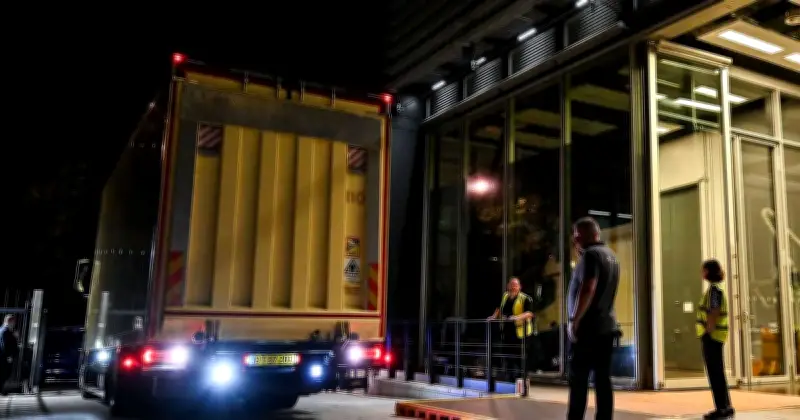
The lorry carrying the Bayeux Tapestry to London was stopped by French authorities at the Eurotunnel entrance near Coquelles for a migrant search. The iconic embroidered cloth is coming to England for the first time in its 1,000-year history, destined for an exhibition at the British Museum.
Security Measures During Transport
French authorities ensured the artwork was escorted by hundreds of armed officers, riot police, and a helicopter on its journey to the English border. However, at the Eurotunnel entrance, border officials conducted a “thorough” check of the lorry. They did not enter the climate-controlled trailer, using sniffer dogs instead to avoid disrupting the internal environment designed to protect the tapestry.
The stop was considered a risk by French officials, but the area was checked for migrants before the tapestry arrived. Almost 6,000 stowaways have been found across all French Channel ports between 2024 and 2025, making border inspections standard.
Escort in England and Exhibition Details
Once the tapestry reached British territory, it was escorted by Kent Police to Folkestone, where the Metropolitan Police took over, ensuring its safe arrival at the British Museum in London. The tapestry is insured by the British Government for £800 million. It will be on display from this autumn to mid-summer next year; tickets from September to December sold out in 24 hours.
France’s president Emmanuel Macron called the loan a “tangible expression of long-standing friendship” between France and the UK.
About the Tapestry
The Bayeux Tapestry is nearly 70 metres long and 50 centimetres tall. It depicts the events leading up to the Norman Conquest of England in 1066, led by William, Duke of Normandy, challenging Harold II, King of England, and culminating in the Battle of Hastings. Dating to the 11th century, it is thought to have been made in England, perhaps as a gift for William, and has been preserved for centuries in Normandy, France.




