Across Asia, families are reverting to firewood and coal for cooking as liquefied petroleum gas (LPG) prices skyrocket amid the Middle East crisis. This shift threatens public health and reverses years of progress toward cleaner energy.
India: A Struggle for Fuel
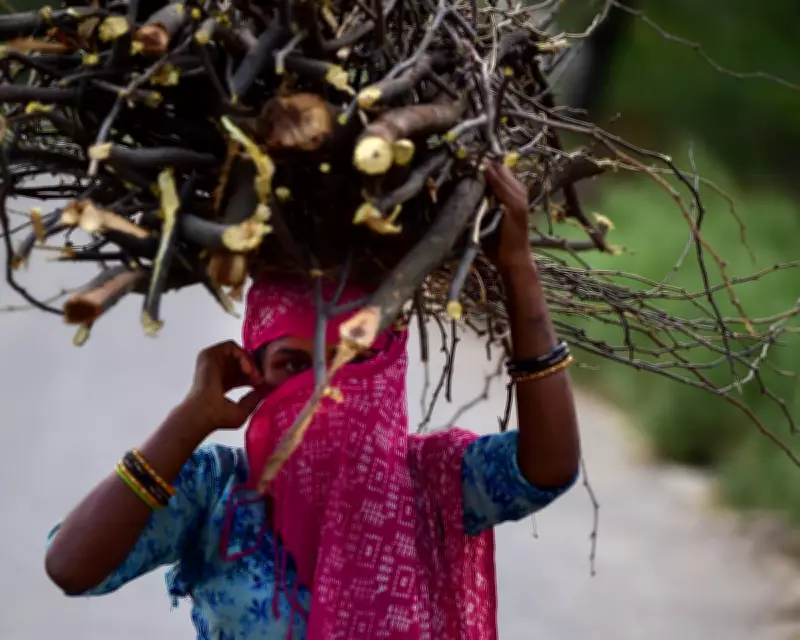
In a south Delhi slum, Afshana Khatoon spends hours collecting firewood to cook for her family. Just weeks ago, she used a gas stove, but now LPG refills are scarce and unaffordable. Her 5kg canister sits empty as prices have quadrupled. "My husband earns 400-500 rupees a day; we can't spend 1,000 rupees on gas for a week," she says.
India imports 60% of its LPG, mostly via the Strait of Hormuz, which is blockaded amid the Iran-US conflict. Official data shows LPG consumption fell by 2.2 million tonnes in April, the sharpest decline in years. Prime Minister Narendra Modi has urged austerity, and the defence minister warns reserves last only 45 days.

Health and Environmental Risks
Burning firewood emits pollutants linked to respiratory diseases, lung cancer, strokes, and heart disease. The World Health Organization associates ambient and household air pollution with 6.7 million premature deaths annually. Women and children are most vulnerable.
Delhi, already among the world's most polluted cities, has temporarily relaxed restrictions on coal and firewood use. Climate activist Harjeet Singh warns, "When prices rise, the poorest switch back to biomass, which is a major source of fine particulate pollution."
The Philippines: A Similar Crisis
In Manila, Josephine Songalia uses charcoal instead of LPG, which has tripled in price to about Php600 per tank. Charcoal costs only Php10, but she fears the smoke will harm her family. "I worry the smoke could harm my lungs, but I push those thoughts aside so my kids can eat," she says.
LPG consumption in the Philippines has dropped 30% compared to last year. The government has suspended excise taxes on LPG and paraffin for three months. Professor Mylene G Cayetano warns that charcoal production is a "very dirty process" that causes environmental devastation.
A Fragile Energy Transition
India has distributed over 100 million subsidized gas canisters in the past decade, but the crisis exposes that access does not guarantee affordability. Families now choose between food and fuel. Singh notes, "The gas cylinder has become a symbol of a transition they can no longer afford to sustain."
Back in Delhi, 75-year-old Shanti, diagnosed with a chronic lung condition, has been forced to cook with firewood for two months. "A doctor told me to stay away from smoke, but what choice do I have?" she says, coughing.