

Thousands of Afghan families who assisted US forces during the two-decade war are now stranded in Qatar, facing an uncertain future as the Trump administration negotiates their relocation to the Democratic Republic of the Congo (DRC) instead of the promised resettlement in the United States.
Broken Promises and Suspended Dreams
Hasina Nasimi* had been counting down to 27 January 2025, the day she was booked on a flight with her husband and four children to Denver, Colorado. Her brother, four sisters and mother were already there, rebuilding their lives after fleeing Afghanistan. However, on 20 January 2025, a week before her planned departure, President Donald Trump signed an executive order suspending refugee processing, cancelling the trip overnight.
Nasimi's father and brother were killed by the Taliban; her brother shot in 2018 because the family's eldest son Mohammad had worked as a translator for American forces. Since then, the family had received threats and lived cautiously. When the Taliban returned to power in August 2021, they knew they had to leave.

Life in Limbo at As-Sayliyah Camp
Nasimi arrived in Qatar with her family in December 2024, shortly after giving birth to her fourth child. What they were told would be a brief stopover at As-Sayliyah camp has stretched into almost a year-and-a-half in limbo. "People are going crazy here," Nasimi says. "There is constant fear. Women have had premature births because of the trauma and uncertainty, and there have even been suicide attempts."
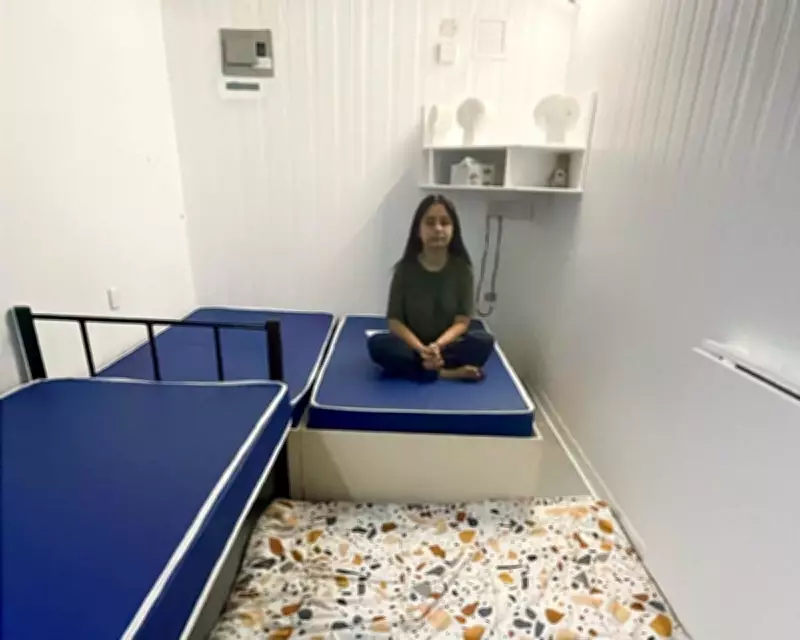
The camp, used as a transit facility to process families before resettlement, was not designed for long-term stays. Families live in containers inside a hangar, sharing toilet and kitchen facilities, with no proper schooling for children and no permission to leave. Conditions have deteriorated further since the start of the US-Israeli war on Iran. "We heard missiles overhead, and fragments from intercepted ones hitting our roof," Nasimi says.
A Teenager's Lost Dreams
Zahra Muhib arrived in Qatar as a 13-year-old, days before Trump took office. Now 15, she has celebrated two birthdays in the camp, which she describes as "hell" and "a prison." Her parents served as officers in the Afghan armed forces while the US was in the country. When the Taliban returned, several colleagues were detained and never heard from again. The family relocated but continued to receive threats, eventually being offered resettlement under the P1 visa scheme.
Zahra had begun to hope again: of school, even university, and a life she would create herself. Now, she lives in a small container with her parents and 11-year-old brother. "I have been diagnosed with depression and anxiety here, and I'm taking medication now. I barely sleep at night, and have developed a skin rash I can't get rid of," she says. "When I was finally allowed to go to the hospital with my dad, they put GPS trackers on us to ensure we wouldn't escape."
Zahra says she would go to the DRC if forced. "Going home is not an option because it's not safe, so I'd go anywhere," she says, adding that she is "tired of the uncertainty." She spends most of her time alone, withdrawn. "I've been out of education for four years because of the Taliban's ban on girls' education," she says. "Four years filled with sadness. I love all countries, but there's no good education in the DRC, no good healthcare. My life has been on hold since the Taliban came and I don't think I can start dreaming big in the DRC."
Concerns Over DRC Relocation
Shawn VanDiver, founder and president of AfghanEvac, an NGO supporting Afghans who worked with American forces, says the government is failing to uphold its commitments. "The only right solution is to bring them to America," he says. Sending families to the DRC raises serious concerns. "The DRC is in active conflict, and is already hosting over 600,000 refugees. It lacks the infrastructure, legal protections, or community support necessary for resettlement."

The state department is also offering financial incentives for residents at As-Sayliyah to return to Afghanistan and forfeit their chance to come to the US: $4,500 for the main applicant and $1,200 for each family member. But Zahra's mother, Samargul, 34, says going back is not an option. The family also cannot seek refuge elsewhere because their open immigration case with the US blocks other countries from accepting them.
"These families have risked their lives for the US. Sending them to the DRC is a huge injustice and not a fair, viable option," a source familiar with the situation says. "The state department under the Trump administration is desperate to get rid of this issue. Another 150,000 Afghans with links to the US are still stuck in Afghanistan and Pakistan and await processing."
A Brother's Plea
Speaking from Colorado, Nasimi's brother Mohammad, 37, who arrived in the US in 2013, served in the US army, and is now a police officer, says he started working for the US to support his family. Since his brother's killing in 2018 and continued Taliban threats, he tried everything to bring them to safety. In 2024, he managed to get his four sisters and mother to the US, but Nasimi and her family remain stranded. "I want Americans to know that their government has broken its promise," he says.
For Zahra, the feeling is an all-consuming sadness. "I'm stuck here. My dreams are shattered. I don't dare to dream again."
*Name has been changed





