
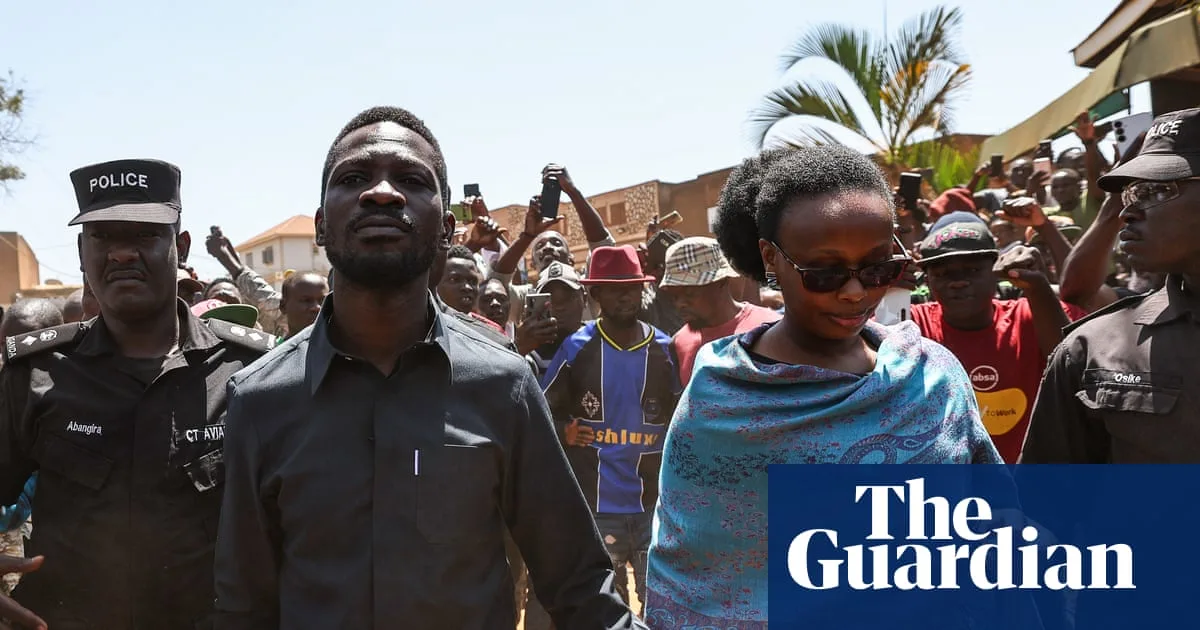
Uganda’s leading opposition candidate, Bobi Wine, has accused the government of widespread ballot stuffing and the abduction of his party officials during Thursday’s general election, which took place amid a nationwide internet shutdown. The pop star turned politician wrote on X: 'Internet switched off. Massive ballot stuffing reported everywhere. Our leaders … arrested. Many of our polling agents and supervisors abducted, and others chased off polling stations. RISE TO THE OCCASION AND REJECT THE CRIMINAL REGIME.'
Voting was delayed in many parts of the country due to technical and logistical issues. Some polling stations in Kampala and Jinja remained closed hours after they were due to open, with reports of missing ballot papers and malfunctioning biometric voter verification machines. David Lewis Rubongoya, secretary general of Wine’s National Unity Platform, said: 'Everything they are doing is a sham and it is deliberate.' President Yoweri Museveni, seeking a seventh term, acknowledged his own voting difficulties and promised an investigation.
In the run-up to the election, security forces frequently disrupted Wine’s campaign events using teargas and live fire, killing at least one person and arresting hundreds. Civil society members have also been targeted, and the government ordered several rights groups to suspend operations. The internet has been shut down since Tuesday, and mobile money services restricted.
Observers fear a violent crackdown on dissent after the vote, similar to Tanzania’s post-election violence in October. Museveni has been in power since 1986, and most Ugandans have known no other leader. While he initially brought stability and economic growth, critics accuse his government of corruption, authoritarianism, and human rights abuses. Political historian Mwambutsya Ndebesa said Wine’s challenge has exposed the regime’s intolerance of dissent, polarising the country and threatening stability.




