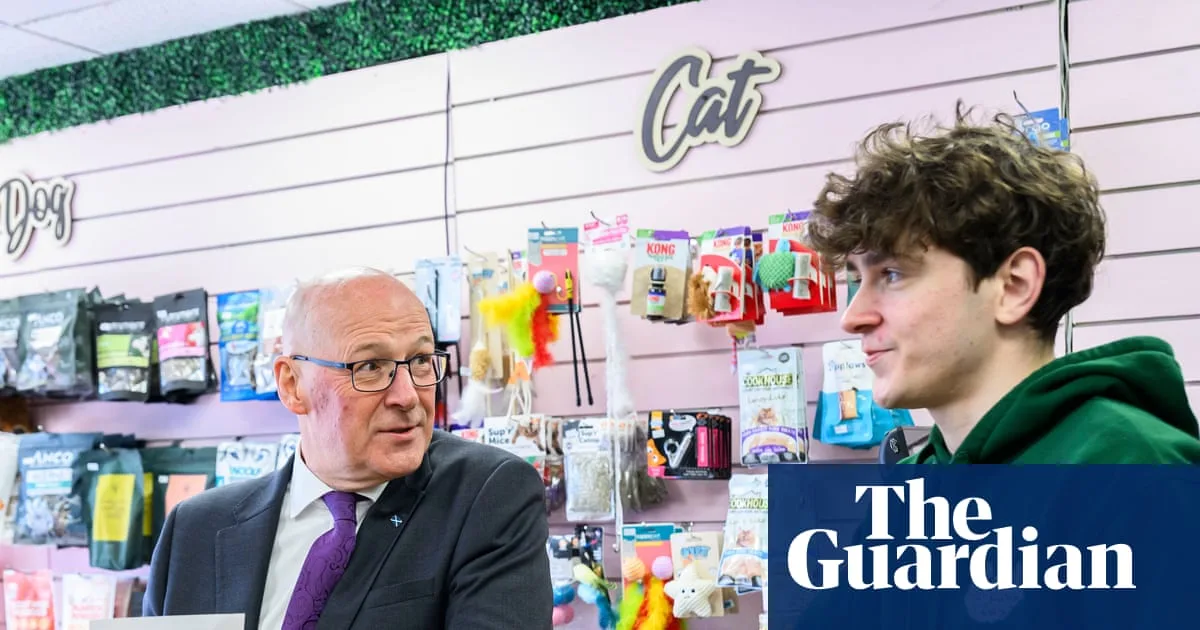
Tactical Voting Proposed to Limit SNP's Fifth Consecutive Victory
For those opposing the SNP's 19-year tenure in Bute House, the upcoming election might seem a cause for despair. Every poll from every major polling company indicates the same outcome: the SNP is poised to win. The only uncertainty is whether John Swinney will secure an overall majority or lead another minority government.
Unless these polls are drastically wrong, the SNP is set to achieve its fifth consecutive victory at Holyrood. This parliament was established by Labour with the promise that it would strengthen the Union and eliminate the threat of separatism.
Two Decades of Governance Under Scrutiny
Over two decades, the SNP has faced criticism for undermining education standards, missing NHS targets, presiding over record drug-related deaths, and more recently, promoting controversial policies like gender ideology and Net Zero initiatives. Despite these issues, they appear likely to be rewarded with another term.
Winston Churchill famously described democracy as "the worst form of government except all those other forms that have been tried." In this context, some argue we must persist in our efforts to improve it.
Given the SNP's resilience, it might be tempting to disengage from the election entirely. However, an alternative approach is gaining traction: tactical voting.
The Case for Tactical Voting
The concept of tactical voting doesn't sit well with everyone. Ideally, voters should support a candidate or party they believe in, rather than voting against another. If you have that option, it's undoubtedly the best course of action.
For instance, in Coatbridge and Chryston, there's a strong Labour candidate, Kieron Higgins. A local who previously worked for Citizens Advice, Higgins focuses on practical priorities like restoring family doctors and funding care packages to support people in their own homes.
This is a candidate worth supporting without reservation. In other constituencies, however, voters might consider backing whichever Labour, Conservative, or Liberal Democrat candidate is best positioned to defeat the SNP.
Why Limit SNP Power?
The rationale is clear: while these opposition parties have their differences, none can be held accountable for the past two decades of perceived failures, neglect, and political self-indulgence attributed to the SNP.
Some parties have been more effective than others in opposing what critics call a clueless establishment that has mismanaged Scotland for 19 years. When a country faces crises, voters may need to prioritize practical solutions over ideological purity.
Meanwhile, the SNP is accused of focusing on divisive constitutional debates and other obsessions that detract from addressing everyday issues and public services.
Holyrood's Electoral System and Opportunities
Holyrood's electoral system inherently advantages a party like the SNP, which has a core support base centered on a single issue, while opponents are fragmented across multiple parties without a unifying agenda. The best achievable outcome may be mitigating the excesses of nationalism through voter action.
Tactical voting aims to impose democratic checks on the SNP, primarily by keeping their seat tally below 65, the threshold for a majority government. This is feasible, as the Nationalists have achieved a majority only once since devolution.
A minority SNP government would need to collaborate with other parties to pass legislation, especially its Budget. This could force compromises with the Greens, pulling policies leftward, or with the Lib Dems, anchoring them in the center.
More ambitiously, tactical voting could keep the combined number of SNP and Green MSPs below 65, creating a nightmare scenario for John Swinney. This would trap his party in power without the ability to ignore opposition, making them vulnerable on confidence votes, taxation, and spending decisions.
The Role of the Greens and Political Dynamics
While a combined SNP-Green majority is likely, the Greens present an interesting dynamic. Although they align with the SNP on independence, they have limited patience with Swinney's government on issues like the attainment gap, health outcomes, and housing.
This doesn't make them allies of those seeking a prosperous Scotland, but it means the SNP cannot always rely on their junior partner. The gap between these factions could lead to unexpected political developments.
Public Sentiment and Electoral Realities
Many voters share a sense of frustration with this election, viewing it as a choice among uninspiring options. There is little enthusiasm for party leaders or their manifestos, mirroring the cynicism seen in the 2024 general election.
In 2024, Labour campaigners misread public sentiment, assuming a strong desire for Keir Starmer, only to win a majority with a modest vote share as voters primarily sought to oust the Tories. This time, voters appear even more disillusioned.
John Swinney, often described as having the personality of a PowerPoint presentation, may benefit from public disaffection, much like Starmer did. However, his party could eventually pay the price for this lack of genuine support.
A Strategic Approach for Voters
For voters who wish to see Scotland governed effectively, the best option may be to acknowledge the flaws in all parties while recognizing that the opposition's shortcomings pale in comparison to those of the SNP and Greens.
Votes cast on May 7 will shape the Scottish parliament until 2031. Weakening the SNP now could make them more beatable in future elections, offering a path toward better governance and accountability.






