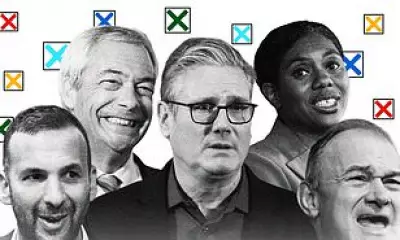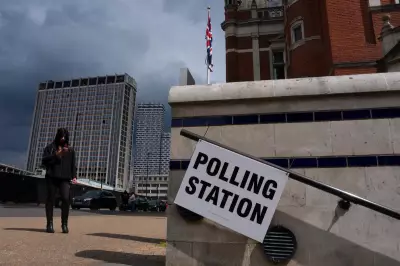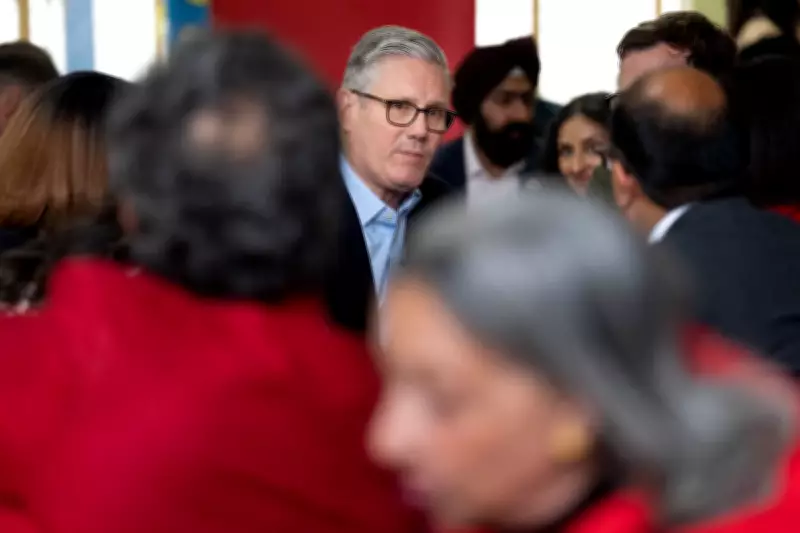
Ministers have rallied around Sir Keir Starmer to defend his premiership as backbench calls for a change of leader intensified following a disastrous set of local election results. Efforts to shore up support for the Prime Minister were under way on Friday afternoon, including three former general secretaries of the party urging it not to “look inward” but “unite” behind Sir Keir.
Cabinet Ministers Voice Support
Chancellor Rachel Reeves said his “mandate to change the country” must be delivered, while Business Secretary Peter Kyle said reversing Labour’s fortunes would require “a collective effort, not just blaming the boss”. Defence Secretary John Healey said “we should not turn inward”, Housing Secretary Steve Reed warned against “navel-gazing”, and Transport Secretary Heidi Alexander said the “last thing we need is to descend into a vanity leadership contest”. Chief Secretary to the Prime Minister Darren Jones called for the party to “come together”, while Technology Secretary Liz Kendall told BBC News “he’s not going to go, he’s not going to set a timetable”.
Former General Secretaries Urge Unity
In an op-ed for the Mirror, former Labour general secretaries David Evans, Iain McNicol and Ray Collins said the party must focus on its plan for the country, and to do otherwise “would only strengthen and embolden our opponents”. “This is therefore a moment not for fragmentation, but for coming together,” they said.

Election Results Deliver Heavy Blow
Labour has lost hundreds of councillors so far and fallen to third place in the Senedd, where the party’s First Minister Baroness Eluned Morgan failed to win her seat and Plaid Cymru is now the largest party followed by Reform UK. During a visit to Ealing, west London, where Labour retained control despite losing 10 seats, Sir Keir vowed to press on, saying: “The voters have sent a message about the pace of change, how they want their lives improved. I was elected to meet those challenges but I’m not going to walk away from those challenges.” The King’s Speech on Wednesday will offer a chance for a reset as he sets out the next steps for his premiership.
Starmer Defends Record
Sir Keir defended his Government’s record on public services and limiting involvement in the Iran war, but conceded “unnecessary mistakes” had also been made. He added: “These are tough results, but tough days like this, they don’t weaken my resolve to deliver the change that I promised at the general election – they strengthen my resolve to do so.” Labour lost its majority on Tameside council after an uninterrupted run of 47 years – the authority that includes former deputy party leader Angela Rayner’s constituency. She is viewed as a potential challenger to Sir Keir, along with Greater Manchester mayor Andy Burnham, whose path back to Westminster will be complicated by the need to win a by-election in the face of a strong showing by Reform UK in the North West. In Mr Burnham’s backyard, elections to Manchester City Council saw Labour lose 25 council seats to either the Greens or Reform UK.
Scottish and Welsh Labour in Turmoil
As results started to emerge in the Holyrood elections and the SNP said it expected to emerge the largest party, Scottish Labour leader Anas Sarwar said he was “disappointed” and that “my party is hurting”. Welsh Labour, meanwhile, expects to be reduced from 29 to around 10 members in the Senedd, meaning the party would not lead the Welsh Parliament for the first time since it was created. Reform UK’s leader in Wales, Dan Thomas, was elected to the Senedd as the first results came in, while Labour First Minister Lady Morgan lost her seat with an outgoing call for Sir Keir’s Government to “change course”.

Growing Criticism from Labour Figures
More Labour and union figures emerged with criticism of the Prime Minister as the day went on. Labour former minister Louise Haigh said what is “abundantly clear is that unless the Government delivers significant and urgent change, then the Prime Minister cannot lead us into another election”. Unison general secretary Andrea Egan said on X: “Labour faces oblivion because it is not delivering for the vast majority of people. What must change is not just the leader but the entire approach: only a Labour Government which always puts the interests of workers before the wealthy can succeed.” Unite leader Sharon Graham said it is a case of “change or die” and that the “writing is on the wall” for Sir Keir’s Government. “Only fundamental, irreversible change will stem the tide,” she said. “If the party does not shift decisively towards the working class, it is finished. It is change or die. Now or never.”
MPs Call for Leadership Change
Labour MP John McDonnell said a potential leadership change must be “on the agenda” if Labour has “nightmare” local, Senedd and Holyrood elections. But he told the Press Association: “If there is to be a leadership change, it has to be an orderly transition, not a coup.” Labour MP for Stroud, Dr Simon Opher, who was elected in 2024, said the Prime Minister “cannot take our party into the next general election”. “We need an orderly transition that brings together the very best talents across the Labour Party to deliver the change this country so desperately needs and to stop the far right from entering Number 10,” he said. Labour MP Jonathan Brash, who watched as his wife lost her seat on the council in his Hartlepool constituency, said: “I’m looking for change at the top of the Labour Party. It’s clear to me that the Prime Minister should take this opportunity to set out a timetable for his own departure, and then allow for the widest possible leadership election that includes all the talents of our party.” Norwich South MP Clive Lewis urged the Prime Minister to set out a timetable for his departure, telling ITV the “longer this is delayed the greater the damage to the party and the country”. Leeds East Labour MP Richard Burgon also said the party should set a timetable for an “orderly transition” to a new leader by the end of the year, arguing that the Labour defeat had “Keir Starmer’s name written all over it”. Liverpool Walton MP Dan Carden said that “Labour is losing today because we are a party that won’t say Britain is broken” and “we are now a party defined only through tax, spend and welfare”. The party had “no answer for working-class voters who’ve been left behind” and it was not clear “whether Labour wants to represents them at all”.
Local Leaders Warn of Consequences
Liverpool City mayor Steve Rotherham suggested Labour must “adapt or die” and take the results as a “wake-up call” to focus attention on “working people’s lives, hopes and concerns”. Crewe and Nantwich MP Connor Naismith, who was elected for the party in 2024, said “with regret” it was clear new leadership capable of uniting “a broad coalition of voters to stop the Thatcherite politics of Reform UK” was needed. Labour’s Jon Trickett said the message from his Normanton and Hemsworth constituency is “it’s curtains for Keir”. He told the BBC many Labour voters “feel that the direction which the Government has taken has not delivered the change which they thought they’d voted for”. He added: “They’re angry, they’re upset, they feel let down, and they’ve sent us a clear message: the party and the Government, including the leadership, must change with immediate effect if we want to recover.” Ian Lavery, Labour MP for Blyth and Ashington and former party chairman, said Sir Keir “could end the Labour Party forever”. He told BBC Radio 4’s World at One: “There needs to be a new programme – not just a new leader, by the way – we need a new political programme. We need to change direction.”
Polling Expert's Analysis
A polling expert said it was clear Labour was going to be the “biggest loser” in the local elections but the political ramifications for Sir Keir are less straightforward. Keiran Pedley, director of UK politics at Ipsos, told the Press Association: “It’s almost impossible, even at this early stage, to see anything other than Labour being seen as the biggest losers of this set of election results. What’s less clear is the political ramifications, because that depends on what the Labour MPs, and specifically Labour Cabinet ministers, decide to do.”