

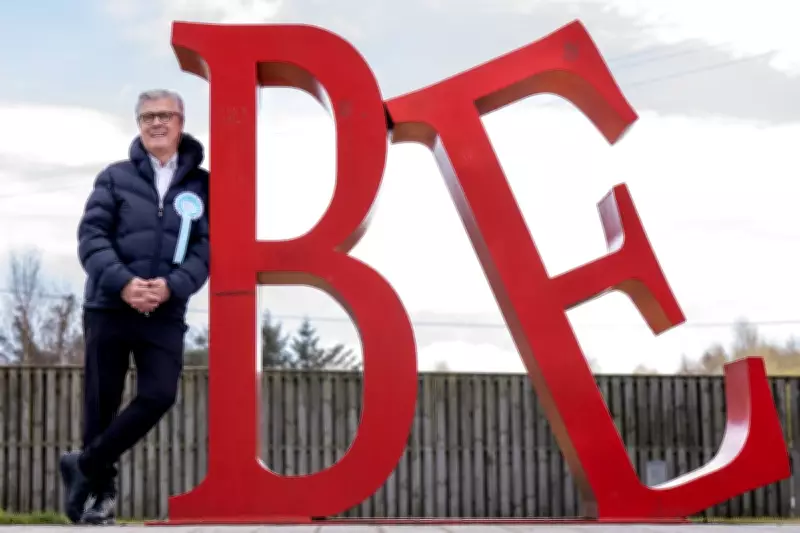
Reform UK's Scottish Leader Declares Holyrood Election Ambition to Win
Lord Malcolm Offord, the Scottish leader of Reform UK, has boldly declared that his party is "in it to win it" at the upcoming Holyrood election, setting his sights on both constituency victories and a potential role as first minister. In an exclusive interview, the former Conservative minister outlined his vision for challenging the political establishment in Scotland.
Offord's Political Aspirations and Background
Despite never having held elected office, Lord Offord expressed unwavering confidence in his ability to lead Scotland. "I'm in it to win it," he stated emphatically. "I believe I've got the ambition to do it and I've got the vision to do it. So yes, I want to be first minister." The peer, who relinquished his House of Lords seat to lead Reform UK in Scotland, emphasised that his five years of political experience have prepared him for this challenge, having observed both effective and ineffective governance firsthand.
Criticism of Political Rivals
Lord Offord launched scathing attacks on his political opponents, accusing Scottish Tory leader Russell Findlay of lacking "ambition to form a government." He also criticised former SNP first ministers Nicola Sturgeon, Humza Yousaf, and John Swinney, alongside Westminster prime ministers Boris Johnson, Liz Truss, Rishi Sunak, and Keir Starmer. "It's not a great example," he remarked, claiming there is "managed decline in both London and in Edinburgh" that perpetuates a stagnant status quo.

However, he offered rare praise for Alex Salmond, describing him as a "good first minister" who "understood business and was ambitious for Scotland," despite disagreeing with him on independence. Lord Offord, with his background in finance, admired Salmond's focus on building a successful economy for an independent Scotland.
Reform UK's Strategy and Independence
The Scottish Reform leader highlighted that UK party leader Nigel Farage is allowing "Reform Scotland to find our own voice," with distinct candidates, manifesto, and government programme. He positioned his party as challengers to the "cosy consensus" of devolution, arguing that Holyrood has failed to deliver meaningful change for Scots over 25 years. "We're new kids on the block," he said, "and we are saying Holyrood needs to change, it needs to be performing better for Scottish people."
This message, he believes, "threatens the establishment," prompting rival parties to focus on Reform rather than their own policies. Despite recent controversies, including apologising for past comments and criticism for yachting during the campaign, Lord Offord dismissed these as "bumps in the road for a new party."
Electoral Prospects and Challenges
While current polls suggest Reform UK is unlikely to win the May 7 election, Lord Offord finds it "realistic" that his party could place second behind the SNP. He challenged the notion that Reform would only secure regional list MSPs, asserting, "I believe we can win constituencies." Though he refused to specify target seats to avoid "jinxing" them, he claimed there are "a couple of seats where we have got a chance" in each of Holyrood's eight regions.
With turnout at just 63.5% in the last Scottish Parliament election, Lord Offord sees an opportunity to mobilise disenfranchised voters who are "a bit scunnered" with politics. He described the election as Reform's chance to appeal to working people, a factor he says has been overlooked in predictions. "If our call to arms works," he added, "that's where our opportunity comes from."
Opposition Response
Scottish Conservative deputy leader Rachael Hamilton responded sharply, accusing Lord Offord of weakness on the Union due to his willingness to field pro-independence candidates and not ruling out another referendum. "Unlike Reform," she stated, "we will always stand up to the SNP's efforts to break up the UK." She also criticised Reform's manifesto, claiming it was "torn to shreds by experts within 24 hours," in contrast to the Tories' "credible, costed policies."
As the election approaches, Lord Offord's bold declarations and Reform UK's unconventional approach continue to stir debate, positioning the party as a disruptive force in Scottish politics with ambitions that defy conventional polling and expectations.






