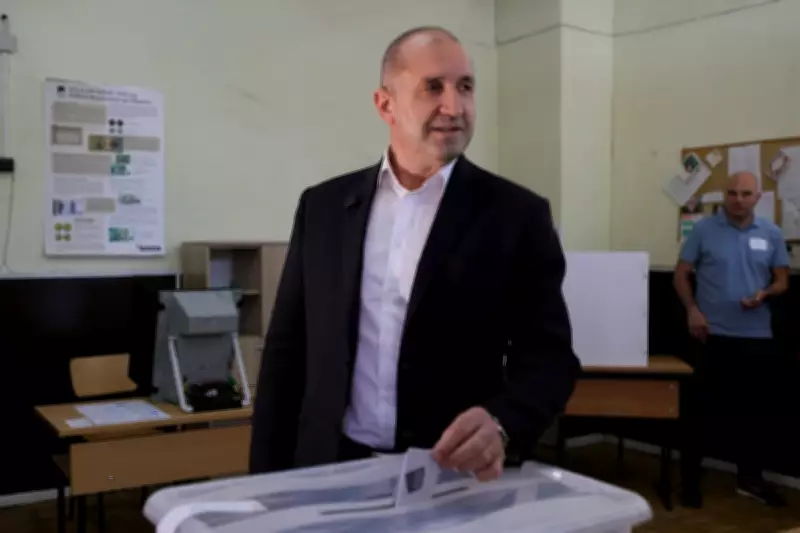
Bulgarian voters, weary from years of political instability, have delivered a resounding mandate for change by electing the centre-left coalition led by former president Rumen Radev. According to the central electoral commission's announcement on Monday, 20 April 2026, the Progressive Bulgaria coalition has emerged as the clear winner of the parliamentary election, effectively ending half a decade of political fragmentation in the nation.
A Decisive Victory for Radev's Coalition
With 96% of ballots counted by early Monday, results showed Radev's coalition receiving 44.7% of the vote. This commanding lead placed them more than 20 percentage points ahead of their nearest competitors. The centre-right GERB party, led by veteran politician Boyko Borissov, and the pro-Western reformist bloc We Continue the Change party trailed significantly, scoring 13.4% and 12.9% respectively.
Two other parties appear to have gained seats in the 240-seat National Assembly according to the latest results. Borissov has already conceded defeat and extended congratulations to the election winner, marking a significant shift in Bulgaria's political landscape.

Radev's Vision for Bulgaria
Radev described his party's victory as "unequivocal," calling it a "victory of hope over distrust, a victory of freedom over fear." He emphasized Bulgaria's commitment to its European path while adding a note of caution about European ambitions.
"But believe me, a strong Bulgaria and a strong Europe need critical thinking and pragmatism," Radev told reporters. "Europe has fallen victim to its own ambition to be a moral leader in a world without rules."
Controversial Foreign Policy Stance
During his presidency, Radev gained a reputation for being sympathetic to Russia. He repeatedly opposed European Union efforts to send military aid to Ukraine following Russia's full-scale invasion, arguing that supporting Ukraine risked drawing Bulgaria into the conflict. Instead, he favored reopening diplomatic talks with Russia as a potential resolution.
The 62-year-old former fighter pilot, who earned a Master of Strategic Studies degree from the U.S. Air War College in 2003 before becoming Bulgarian air force commander, resigned from the mostly ceremonial presidency in January. This move came several months before the end of his second term, allowing him to launch a bid for the more powerful role of prime minister.
Divided Support Base
Radev's supporters are divided between those hoping he will finally address Bulgaria's persistent oligarchic corruption and those aligning with his Euroskeptic and Russia-friendly views. His popularity surged as he positioned himself as an opponent of entrenched mafia networks and their connections to high-ranking politicians.
At campaign rallies, Radev vowed to "remove the corrupt, oligarchic model of governance from political power." This message resonated strongly following the collapse of Bulgaria's previous conservative government in December, which fell after nationwide anti-corruption protests drew hundreds of thousands of mainly young people to the streets.
Years of Political Instability
Bulgaria, a member of both NATO and the European Union, has faced repeated criticism for failing to tackle corruption and for deficiencies in its rule of law. Since 2021, the nation of 6.5 million people has struggled with fragmented parliaments that produced weak governments, none of which managed to survive more than a year before collapsing due to street protests or backroom parliamentary deals.
This pattern of instability created what many Bulgarians described as an "election roulette," with frequent votes failing to produce lasting governance solutions.
Mixed Reactions from Voters
On the streets of Sofia, reactions to the election results reflected both hope and skepticism born from years of disappointment.
"Above all, we expect a more stable judicial system, and for trust in institutions to truly be restored," said Nikoleta Dimitrova, a 37-year-old shop assistant from Sofia. "Until now, they have been heavily influenced by various figures, many of whom, as we can see from the current results, have now left the government."

Accountant Cveta Gerogieva, 55, expressed more cautious optimism: "I hope that we will really live a better life, but I am not sure that there will be stability for a long period. Probably we will vote again."
The decisive election results represent a significant turning point for Bulgaria, offering the possibility of stable governance after years of political chaos, though Radev's controversial foreign policy positions and divided support base present ongoing challenges for the new administration.