
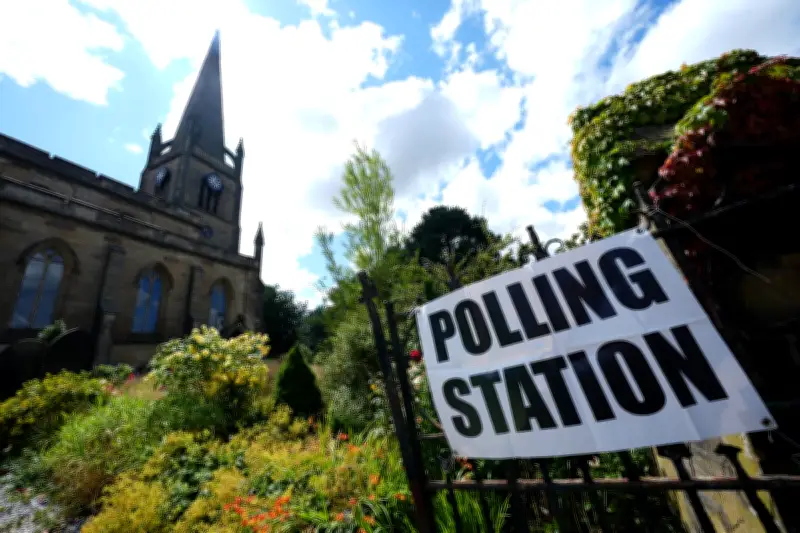
Polls closed on Thursday evening in the by-election to choose the next mayor of Greater Manchester, a contest triggered by Andy Burnham's election to Parliament last month. With more than two million eligible voters, it is the largest by-election ever held in Britain.
Pre-election opinion polls indicated that Labour candidate Bev Craig, who leads Manchester City Council, was on course to win by a comfortable margin. Her main rivals were expected to be Reform UK's Sian Astley and the Green Party's Geraldine Coggins. Other candidates included Phil Eckersley (Conservatives), Richard Kilpatrick (Liberal Democrats), Marlon West (Restore Britain), and Marcus Farmer (Independent).
Voting and Counting
Burnham himself voted at a polling station in Golborne near Wigan late on Thursday, less than an hour before polls closed. The votes will be counted on Friday, with the winner expected to be announced in the afternoon.
This is the first time a by-election has been necessary to fill a vacancy for one of England's combined authority mayors. The cost of the contest is expected to run into millions; the 2024 mayoral election cost taxpayers £4.7 million.
Electoral System
In 2024, Burnham won re-election with 63% of the vote under the first-past-the-post system, also winning in each of Greater Manchester's ten local authority areas. For this by-election, the voting system reverted to the supplementary vote (SV) system used in 2017 and 2021.
Under SV, if any candidate wins more than 50% of first-choice votes, they are declared the winner. If no candidate reaches that threshold, all but the top two are eliminated. Ballot papers from eliminated candidates are re-examined, and any second-choice votes for the two remaining candidates are added to their first-choice totals. The candidate with the highest combined total wins.
In 2021, the last time the supplementary vote system was used in Greater Manchester, Burnham won in the first round with 67% of first-preference votes.




