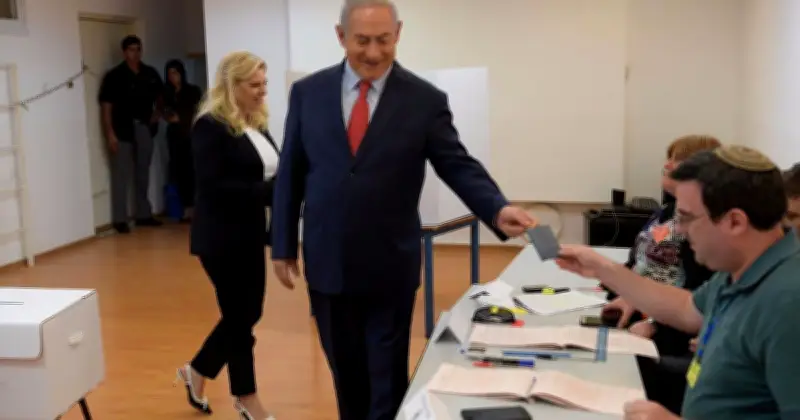
Benjamin Netanyahu has cast his vote as Israelis head to the polls to elect the next prime minister, with results potentially taking weeks or even months to be confirmed.
Polling stations opened earlier today, and polls close on Tuesday evening. The incumbent prime minister was seen casting his own ballot earlier in the day.
Main candidates and coalition challenge
The main candidates are Benjamin Netanyahu, the current prime minister; Gadi Eisenkot, former military chief of staff; Naftali Bennett, former prime minister; Itmar Ben-Gvir, former military chief of staff; and Mansour Abbas, Knesset member and leader of Ra'am.
Results may be announced in weeks or even months, and a new election may be required. That is because Israelis vote for parties and not candidates. None of the several main parties is expected to win anywhere close to a 61-seat majority in Israel's parliament, known as the Knesset, needed to lead the nation alone.
The next prime minister will likely have to cobble together a coalition, which could take several weeks. The main contestants in this election are believed to be Netanyahu and his main opponent, retired Gen. Gadi Eisenkot. In the end, both could fall short of a 61-seat majority.
Potential new election and record turnout
A new election could be held if, after negotiations between parties, the winner is not able to form a majority. Israel's largely ceremonial president, Isaac Herzog, will hold consultations with all the party leaders after the election and ask the candidate who appears most likely to form a coalition to do so.
Voter turnout has reached an all-time high, according to the Central Elections Committee, which said that, as of 2pm, around 44.9% of the electorate had cast their vote - up from 38.9% in the last election in 2022. With over three million votes cast, it is the highest turnout since the beginning of records in 1973, according to the Central Elections Committee.