

Beyond Gaza: Muslim Voters Shift from Labour to Greens in Newcastle
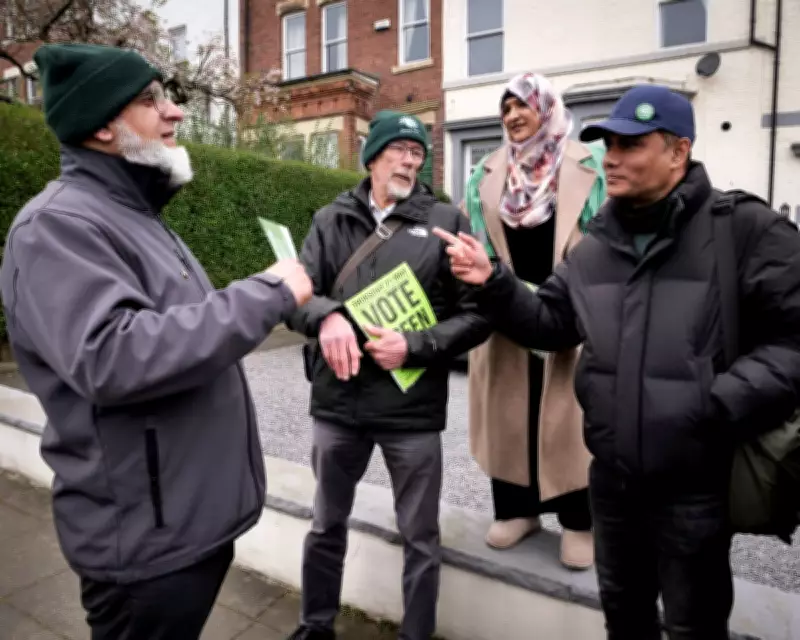
In the Walker area of Newcastle, Green Party candidate Mohammed Suleman canvasses with supporters, symbolising a broader political realignment. As local elections approach next month, campaigning reveals that issues like the rise of the far right, climate change, and the cost of living are concerning voters as much as the Middle East conflict.
Disillusionment with Labour
Mohammed Suleman, a self-described "straight-talking Geordie" taxi driver and businessman, traditionally voted Labour as the lesser of two evils. However, the war in Gaza became a tipping point. A month into the conflict, which a UN committee later described as a genocide, Suleman and others at his local mosque petitioned their Labour MP, Chi Onwurah, to vote for a ceasefire. When she abstained, Suleman said, "That's when I blew my top."
This moment was part of a longer process of disillusionment. Suleman and a dozen other Muslim campaigners and voters in Newcastle described a profound sense that Labour has abandoned their communities. Despite decades of Labour-run councils, they point to graffitied shopfronts, diminishing local services, and a tepid response to the far right as evidence.

A National Trend
This shift is not unique to Newcastle. From Gorton and Denton, where the Greens secured their first byelection victory, to contests in Birmingham, Leicester, and east London, Labour is haemorrhaging Muslim support. Health Secretary Wes Streeting has expressed alarm, noting that even safe council wards are at risk. The upcoming local elections will determine if this is a protest vote or a permanent change.
For Suleman, the rise of the far right was a key factor in his decision to stand as a Green councillor. He recalled the 2024 summer racist riots, where mosques were attacked and hijab-wearing women assaulted, likening it to his school days of "Paki bashing." He believes the Greens are best positioned to combat this extremism.
Why the Greens?
Suleman cites Khaled Musharraf, a Green councillor elected in 2024, as an inspiration. Musharraf, who migrated from Bangladesh, emphasises that Muslim interest in the Greens is not solely about Gaza. Many Muslims come from countries on the frontlines of climate change, and mosques are increasingly addressing the climate crisis in sermons.
Polling by More in Common UK shows Muslim voters are most concerned about bread-and-butter issues like the cost of living, crime, and local services. Executive director Luke Tryl compared Gaza's impact to Brexit's effect on Labour's red wall base, saying it crystallised feelings of being taken for granted.
Deeper Discontent
Sharmen Rahman, the Green Party's national spokesperson for equalities, points to Labour Muslim Network surveys showing rising discontent. In 2020, 46.8% disagreed that Labour represented Muslims effectively; by 2022, this rose to 63%.
Halimah Begum, a former Labour member, left after Keir Starmer's comments on immigration, which she felt painted all British-Bangladeshis as illegal immigrants. "I identify as Bangladeshi, British and Muslim, and they all play simultaneously," she said. "So hearing that was quite hard."
Suspicion and Challenges
As Green support grows, so does suspicion. After the Gorton and Denton byelection, allegations of "family voting" emerged, but a police investigation found no evidence. Rahman dismissed these claims as racist, noting that in split households, men often favoured Labour while women and children chose Greens.
Shaista Aziz, a former Labour councillor who resigned over Starmer's Gaza comments, acknowledges the Greens' appeal but notes the party must become more representative, as its base has traditionally been middle-class and white.
On the Doorsteps
In Newcastle's West End, Green canvassers find voters concerned about potholes, graffiti, Gaza, and the far right. In the East End, areas like Walker lack the community cohesion once provided by trade unions and industry. Green candidate Matt Williams argues these areas are not solely Reform UK territory, with about a third of voters leaning Green, a third to Reform, and the rest undecided.

Begum engages in difficult conversations with white working-class voters, challenging prejudices while emphasising her faith. "When someone is being prejudiced or discriminated, then I would challenge that," she said.
The local elections will test whether this shift marks a lasting change in British politics, as Muslim voters seek alternatives beyond traditional party lines.





