
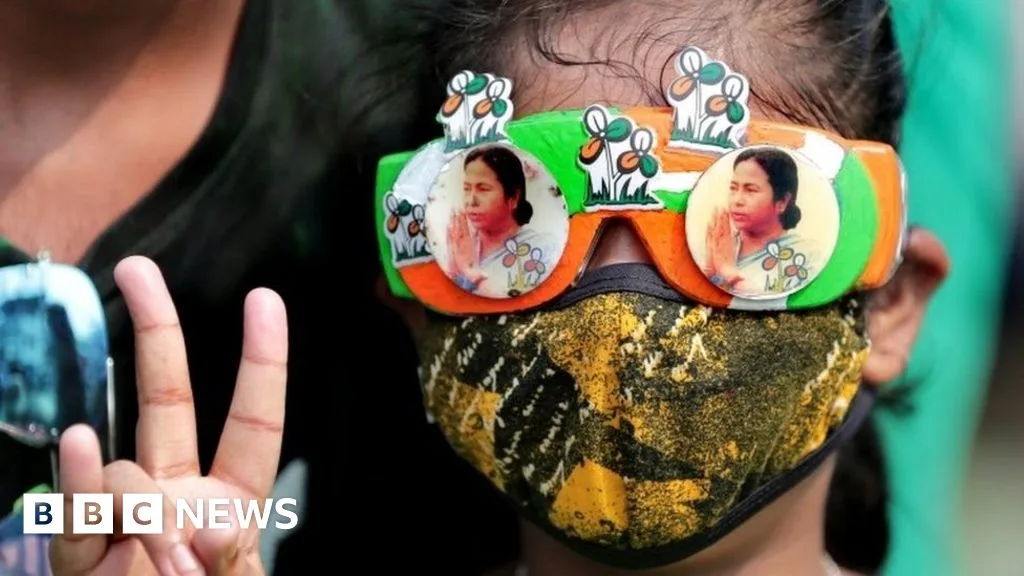
Narendra Modi’s Bharatiya Janata Party (BJP) has suffered a significant defeat in the West Bengal state election, as Chief Minister Mamata Banerjee’s Trinamool Congress (TMC) secured a third consecutive term with over 200 seats in the 294-seat assembly. The BJP won 77 seats and nearly 40% of the popular vote, marking its strongest performance in the state but falling short of its goal to oust Banerjee.
Political strategist Prashant Kishore described the election as “a war for Indian democracy,” noting that a TMC defeat would have “almost eliminated” opposition chances in the 2024 general election. The BJP ran an intensely polarising campaign, with Modi addressing packed rallies despite rising Covid-19 infections, while federal agencies raided Banerjee’s family and party members.
Banerjee, who campaigned from a wheelchair after injuring herself, bucked anti-incumbency and federal pressure. Kishore alleged that staggered voting phases benefited the BJP and failed to prevent the “blatant use of religion to win votes.” However, Banerjee’s focus on welfare schemes for women, including education and anti-child marriage initiatives, resonated with female voters, who turned out in high numbers.
Analysts say Banerjee’s personal popularity, akin to Modi’s, and her politics of “gender and welfare” provided a counter-narrative to the BJP’s majoritarianism. Her victory offers hope to a fragmented opposition, though political scientist Suhas Palshikar warned it could be a “pyrrhic respite” as the BJP gains a firm foothold in the state.




