MCB Leader Wajid Akhter Takes Inspiration from New York Mayor's Grassroots Success
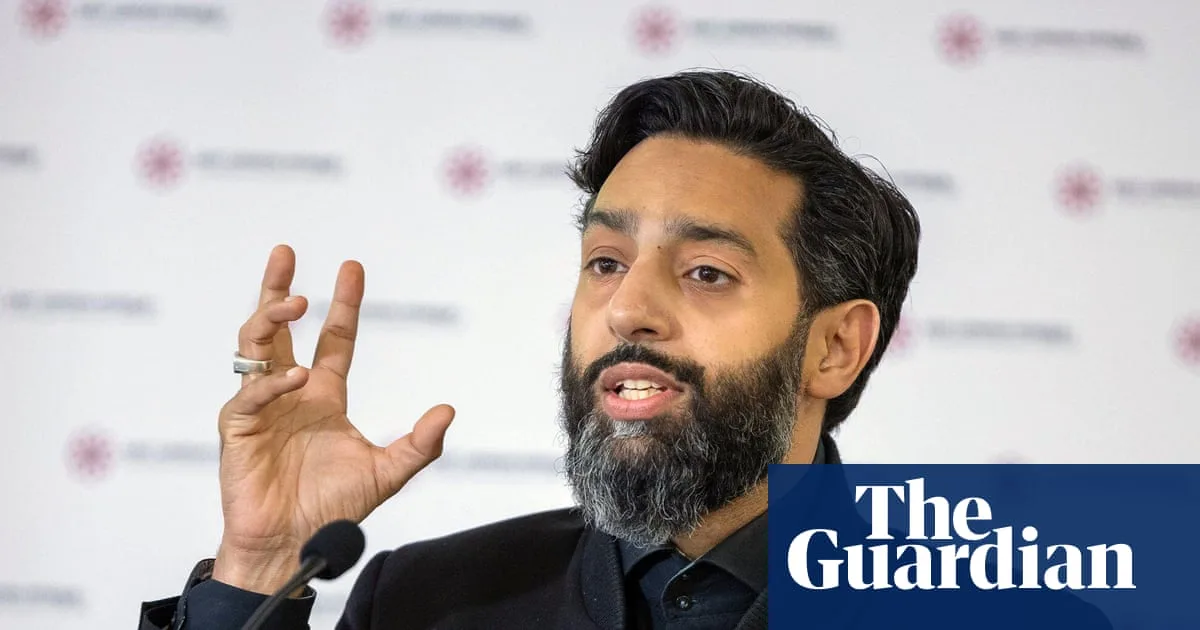
Dr Wajid Akhter, who assumed the role of secretary general at the Muslim Council of Britain (MCB) last year, is spearheading a transformative initiative aimed at galvanising British Muslim political engagement. Drawing direct inspiration from Zohran Mamdani's groundbreaking campaign to become New York's first Muslim mayor, Akhter and the MCB are meticulously studying the strategies that propelled Mamdani to victory.
"We actually spent some time with his campaign team to work out what the secret sauce was," revealed Akhter, a practising GP, during a recent interview at a bustling cafe in east London. He emphasised that the Mamdani campaign's adept communication strategy, which skillfully connected global issues like Gaza to local concerns such as rent, was particularly striking.
Replicating a Winning Model: The Hungry for Change Campaign
Central to Mamdani's success was an unprecedented scale of grassroots organising, a model the MCB is now actively replicating through its ambitious Hungry for Change campaign. This initiative focuses on registering Muslims to vote and fostering grassroots civic action across the United Kingdom.
To date, the MCB has recruited 200 voter champions spanning more than 30 areas in preparation for the upcoming local elections. Internal data indicates that the campaign has already facilitated 3,377 visits to the government's voter registration website, helping to register several thousand individuals. Akhter confirmed that the organisation remains steadfastly non-partisan and aims to expand this model nationwide by the next general election.
A Strategic Shift for the MCB
This campaign signifies a profound strategic shift for the MCB, an organisation that has faced significant challenges in securing government engagement for over a decade. The discord traces back to 2009 when then deputy secretary general Daud Abdullah signed the Istanbul declaration, a document advocating attacks on the Royal Navy. This led the Labour government to sever ties, a policy reinstated by the incoming coalition in 2010 and maintained by consecutive Conservative governments until 2024.
The disengagement policy was rigorously enforced. In February 2024, the government threatened to withdraw funding from the Inter Faith Network unless it removed a board member linked to the MCB. The network's refusal resulted in defunding, a move widely criticised by faith leaders. Although Labour engaged with the MCB while in opposition, it has upheld the non-engagement policy in government, a decision that has sparked considerable shock and anger within the community.
"We understand that they’re not going to engage with us out of pity, or even out of the national interest," Akhter stated. "They will eventually engage with us because they have no other choice."
Redefining Community Focus and Identity
Akhter articulated a vision of shifting the MCB's "qibla"—the direction of prayer—away from seeking governmental approval and towards tangibly improving the lives of British Muslims and the broader public. He advocates for reimagining mosques as dynamic community hubs rather than mere places of worship. Pilot schemes offering mental health first aid and CPR training have already been implemented in various mosques.
Furthermore, Akhter called for a recalibration of charitable focus within the British Muslim community. He urged a greater emphasis on domestic priorities such as knife crime, housing, and the economy, rather than predominantly directing zakat—obligatory charitable contributions—overseas.
"I take inspiration from black churches during the civil rights movement, from the anti-slavery movement in this country," Akhter reflected. "Every one of these movements, when they started off, felt like they were fighting against impossible odds with next to nothing in terms of resources. But the one feature they all had in common was the people refused to give up on them."
Navigating Contemporary Challenges
In the face of rising Islamophobic rhetoric and political movements, Akhter underscored the urgency of collective action. "In a world where everyone’s going right, we dare to go left sometimes, in a world where faith is no longer popular, we stick to ours," he asserted.
A self-described history enthusiast, Akhter drew parallels to Britain's steadfast resistance against Nazi Germany, framing the current moment as a defining one for British Muslims. "This is our moment as British Muslims. It’s that same hatred, fascism, the ideology that some people are uniquely to blame for problems of society," he said.
He also highlighted the presence of numerous allies across the UK, noting that the majority of the country does not align with right-wing narratives. Polling data, he pointed out, indicates that British Muslims often exhibit stronger loyalty to the UK than the general public, firmly rejecting claims that they do not belong.
Reflecting on his identity, Akhter shared an anecdote from a recent pilgrimage to Mecca, where he was consistently identified as "that Brit" among pilgrims from 190 countries. Amid the crowds, a humorous moment arose when a friend suggested forming an orderly queue, eliciting laughter from all present.
The MCB, which represents an estimated 500 of the UK's 2,000 mosques, is concurrently overhauling its communication strategies, with a renewed focus on video content, social media, and podcasts to better connect with communities.






