

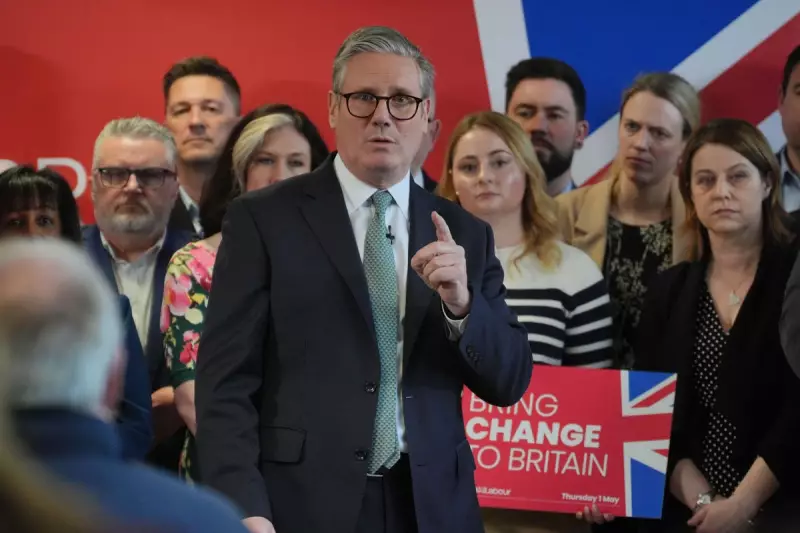
The Labour government faces a mounting political and democratic crisis over its controversial decision to postpone local elections in twenty-seven councils across England. The move, branded a "democratic disgrace" by critics, will deny an estimated four million people the right to vote this May unless a legal challenge led by Nigel Farage succeeds in overturning it.
A Postponement Without Public Consent
At the heart of the controversy is the process itself. The councils, most of which are Labour-controlled, requested the delay because they are due to be abolished in 2028 or 2029 during a reorganisation into a single tier of local government. This means councillors elected for four-year terms are seeking to extend their tenure by two or three years without seeking a fresh mandate from voters.
Local Government Secretary Steve Reed has defended the plan, arguing that opposition parties "want pointless elections" while "Labour wants to fix potholes." In a recent article, he posed the rhetorical question: "Ask the public if they think it’s a good idea to elect thousands of councillors to jobs that are set to be abolished."

However, the government notably did not ask the public. Instead, it consulted the councillors. The result was that two-thirds of Labour councils and one-third of Conservative councils favoured postponement. This allowed ministers to present the decision as a cross-party consensus, awkwardly implicating Tory councils who had requested the delay.
A Political Gift to Nigel Farage
The attempt to share the blame backfired, creating a significant opportunity for Nigel Farage. He has seized on the issue, condemning the "democratic outrage" of the two main parties conspiring to deny people's fundamental rights. For Farage, whose career was built on the "let the people vote" mantra, this is a potent rallying cry.
Analysts suggest Labour has committed a cardinal political sin: it looks terrible to oppose a campaign for people to have a say. Historical parallels are stark. Margaret Thatcher faced Ken Livingstone's campaign for a say over the GLC's abolition. Tony Blair felt compelled to promise referendums on the euro and EU constitution. David Cameron ultimately yielded to the demand for an EU membership referendum.
By appearing to sideline democracy for administrative convenience and to avoid potential election humiliation, Labour has walked straight into a trap. As one commentator noted, the party has handed Farage "the easiest propaganda gift possible," allowing him to posture as the sole defender of democratic principles.
Questionable Justifications and Inevitable Fallout
Reed's defence hinges on the benefits of local government reorganisation, citing efficiency savings like the £30,000 a year once spent by Buckinghamshire County Council to tell callers they had the wrong authority. Yet critics retort that reorganisation does not require the cancellation of democracy. Furthermore, the argument that councils lack the "capacity" to run elections and redesign logos simultaneously is undermined by those councils proceeding with votes despite reorganisation plans.
Polls indicate many voters believe Labour is delaying because it fears losing. The party is defending seats won during the Tory turmoil of 2022 and, in London, its second-best results in sixty years. The expected results are predicted to be terrible for Labour regardless. The absence of elections in some areas will not hide the scale of the party's current unpopularity, making the self-inflicted democratic scandal a compounding political mistake.
The fundamental question remains: why make a bad situation worse by gifting your most vocal opponent a banner under which to march? For millions of disenfranchised voters and a political opposition reinvigorated, the government's answer seems profoundly inadequate.






