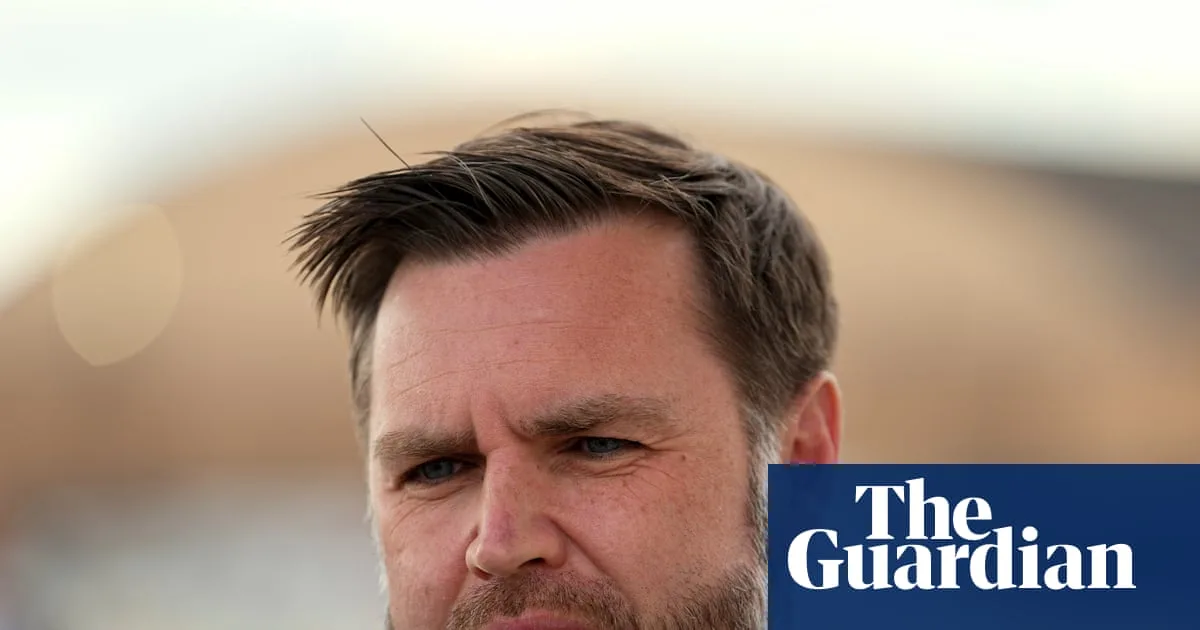
J.D. Vance, the United States Vice-President, is meticulously crafting his path to become the natural successor to Donald Trump, balancing unwavering loyalty to the former president with a distinct persona shaped by his humble origins and powerful Silicon Valley backers. As he approaches his first anniversary in office, Vance is effectively running a shadow presidential campaign for 2028, positioning himself as the heir apparent to the MAGA movement while navigating the complex dynamics of Trump's enduring influence.
From Hillbilly Elegy to Trump's Enforcer
Once best known as the author of Hillbilly Elegy, a memoir hailed as a key to understanding Trump's appeal, Vance has undergone a profound political transformation. He has become the most aggressive defender of Donald Trump, a shift that has seen him reverse previous positions on foreign intervention, free speech, and government transparency. This evolution was on full display during a routine campaign stop in Concord, North Carolina last September, where he leveraged his hardscrabble childhood in Middletown, Ohio to connect with voters and attack Democratic policies on crime.
"We did not have a lot of money," Vance told the crowd, hand on heart. He spoke of being raised by a grandmother, "Mamaw," who struggled to provide, yet insisted she never feared violent crime until, he claimed, Democrats undermined law and order. The performance was a snapshot of Vance's political brand: a hardline warrior with a compelling personal narrative. Attendees like Levi Baldwin, 62, praised him as "one of us" who built character through struggle, embodying "the American story."
The Silicon Valley Power Base
Perhaps the most significant factor distinguishing Vance from other Trump allies is his deep and lucrative connection to the tech industry. His political career was launched with a $15 million campaign finance boost from billionaire Peter Thiel, the Palantir founder who later personally lobbied Trump to select Vance as his running mate. This relationship has only strengthened, with Thiel recently telling an audience he is "very pro-JD Vance."
Vance's network extends across Silicon Valley's elite. He hosted a pivotal $300,000-a-plate fundraiser at the San Francisco mansion of investor David Sacks, now the administration's AI and Crypto Czar, where tech donors urged Trump to pick him. Elon Musk, Trump's biggest financial backer, also championed Vance's nomination, declaring the Trump-Vance ticket "resounds with victory" to his millions of followers. Vance even helped mend a public rift between Musk and Trump last summer.
As Vice-President, Vance has eagerly served as tech's bridge to the MAGA world, championing anti-regulation views. In a keynote speech at Andreessen Horowitz's American Dynamism Summit, he assured tech executives they had an important place within the movement, stating, "It's time to align the interests of our technology firms with the interests of the United States of America writ large."
A Delicate Balancing Act for 2028
Despite his clear ambitions, Vance must perform a delicate dance. His every move is calibrated to avoid appearing overtly eager, which could alienate Trump. He has been appointed finance chair of the Republican National Committee—an unprecedented role for a sitting vice-president—giving him regular access to mega-donors. He plans extensive travel in 2026, ostensibly for midterm campaigning, but in reality to lay groundwork for a presidential run.
Polls suggest his strategy is working. A RealClearPolitics average late last year put Vance at 48.8% for the 2028 Republican nomination, far ahead of Donald Trump Jr. on 11% and potential rival Marco Rubio on 9.3%. He has secured the support of Turning Point USA and its young volunteers, and earned praise from figures like Virginia Governor Glenn Youngkin.
However, analysts warn the path is fraught. "JD Vance, Marco Rubio, any of these so-called wannabe inheritors of Trump's mantle are gonna have to deal with two things," said Michael Steele, former RNC chairman. "One, Donald Trump, and two, they're not Trump." He dismissed the idea of Vance as the heir apparent, noting Trump could always anoint his own son, making the succession "messy."
Vance's recent actions show a politician consolidating his base while trying to unify the party. At the AmericaFest gathering, he urged Republicans to resist "endless, self-defeating purity tests," carefully avoiding the internecine wars of MAGA podcasters. Yet his rhetoric remains fiercely combative. Following the fatal shooting of poet Renee Good by an ICE officer, he blamed the victim and "the far left," calling it "a tragedy of her own making."
As he stands first in line to the presidency, JD Vance embodies a new political archetype: the Silicon Valley-funded populist. His journey from critic to chief defender of Trump, bankrolled by tech billions, positions him as a formidable contender. But his ultimate test will be stepping out from Trump's shadow while proving to the MAGA base that he is the rightful keeper of the flame.




