

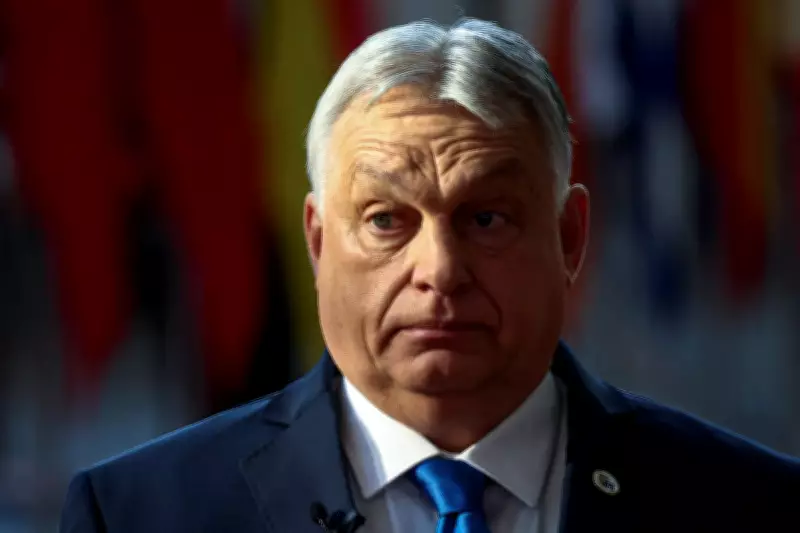
Hungary's Crucial Election Sees Orban Fighting for Political Survival
Voters in Hungary are heading to the polls on Sunday in what is being described as Europe's most significant election of the year. Nationalist Prime Minister Viktor Orban, who has held power for 16 years, is facing the toughest opposition challenge of his tenure. Opinion polls indicate that Orban and his Fidesz party are likely to lose power to the centre-right, pro-European Union Tisza party, led by former Fidesz insider Peter Magyar.
US Vice President JD Vance Backs Orban's Campaign
In a notable development, US Vice President JD Vance has taken time out of a busy schedule, which includes managing a fragile ceasefire with Iran, to assist Orban with his election campaign. Vance praised the European leader, stating that he "stands up for the values of western civilisation." This support highlights the strong alliance between Orban and the Trump administration, with Orban being a key European ally.
Orban, a staunch ally of Russian President Vladimir Putin, has drawn widespread criticism across Europe for his support of Russia's invasion of Ukraine. He previously dismissed Russian drone incursions into NATO airspace with a casual "So what?" and declared that "Ukraine is not an independent country," further straining relations with European partners.

Polling Details and Expected Results
Polling stations across Hungary opened at 6 a.m. local time (0400 GMT) and will close at 7 p.m. (1700 GMT). The results are anticipated to become clear by late Sunday evening, with many analysts predicting a potential shift in power. Current polling data shows the opposition Tisza party leading with 58% support, compared to Orban's Fidesz party at 35%, indicating a significant challenge for the incumbent leader.
Orban's Legacy and the Stakes of the Election
During his 16-year rule, Orban has transformed Hungary into what he terms an "illiberal democracy," centralising power and drawing both domestic and international scrutiny. This election is not just a test for Orban but also a key moment for Europe, as it could signal a shift away from nationalist populism in the region. The outcome will have implications for Hungary's future relations with the European Union and its stance on global issues like the Ukraine conflict.
As voters cast their ballots, the world watches closely to see if Orban can defy the polls and extend his grip on power, or if Hungary will embark on a new political path under the leadership of Peter Magyar and the Tisza party.






