

Hungary's Election: A Cautionary Tale of External Influence and Political Change
Hungary's parliamentary election this Sunday presents a stark dilemma for voters and observers alike. Even if US interference proves ineffective and Viktor Orban is ousted after 16 years in power, the outcome may merely shift from one challenging situation to another, albeit with different nuances. The campaign has been marred by accusations of external meddling, raising questions about sovereignty and democratic integrity.
US Vice President's Controversial Intervention
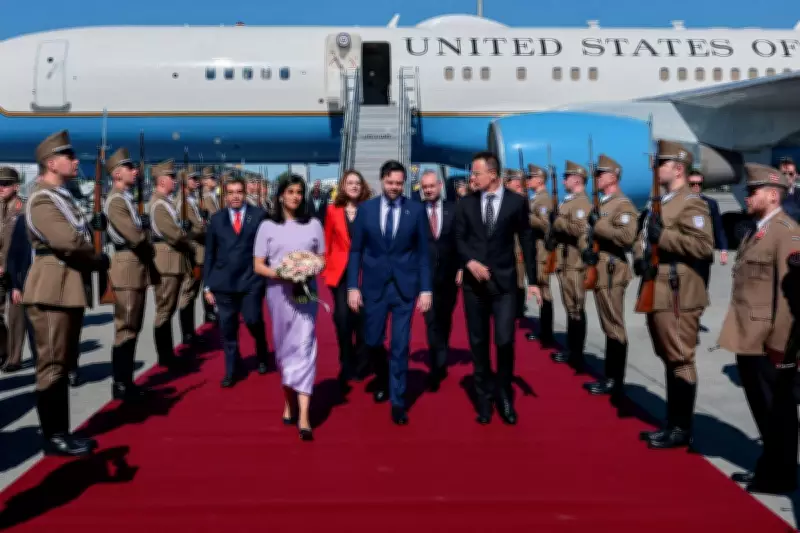
It takes considerable audacity for a senior US official to travel to Hungary just days before a critical election and publicly accuse others of interfering in the vote. Despite the US being heavily engaged in the war on Iran, Vice President JD Vance made a significant investment of time and political capital with his two-day visit to Budapest. This move stands as one of the most blatant examples of foreign involvement in a sovereign nation's democratic process.
The United States has a history of intervening in other countries' elections, despite vehemently condemning similar actions by states like Russia. Recall President Obama's warnings to the UK about Brexit before the 2016 referendum, or Victoria Nuland's distribution of "cookies" to protesters in Kyiv in 2013. Vance's appearance in Hungary, however, sets a new benchmark for overt interference.

His visit was explicitly designed to bolster support for Prime Minister Viktor Orban, the long-standing leader of the EU's awkward squad—a role that aligns well with the current US administration's interests. At a rally for Orban, Vance passionately challenged the crowd: "Will you stand against the bureaucrats in Brussels? Will you stand for Western civilisation? Will you stand for freedom, truth, and the God of our fathers? Then, my friends, go to the polls and stand for Viktor Orban!"
The Rise of Peter Magyar and Opposition Hopes
Whether Vance's intervention can sway the election remains uncertain. While he received an enthusiastic reception, European aversion to Trump's war on Iran might influence Hungarian voters with Trumpian leanings, as seen elsewhere. For the first time in years, Orban and his Fidesz party face a credible threat of defeat, largely due to the emergence of opposition candidate Peter Magyar.
Magyar's Tisza party held a 10-point lead in polls a week before the election, positioning him as a counter to Orban in almost every aspect. He embodies the hopes of Orban's numerous domestic and international critics. Notably, Vance's accusations of EU efforts to influence the campaign in Magyar's favor—or against Orban—are not without merit. Brussels has been transparent about its stance, adding another layer of external pressure to the race.
Superficially, Magyar appears as the antithesis of Orban. At 15 years younger, he is telegenic and adept with social media, promising a return to EU democratic and legal norms. His platform includes unlocking frozen EU funds, joining the euro by 2030, reducing dependence on Russian energy, and maintaining greater distance from Moscow. Supporters also hope he will end restrictions on academia and media, and reverse the centralisation of media ownership.
Economic Factors and Voter Uncertainty
A Magyar victory is viewed not only as an end to Orban's lengthy tenure but as a solution to a host of other issues. His position is strengthened by Hungary's current economic difficulties and cost-of-living pressures, which plague many governments seeking re-election. However, disentangling the reasons for a potential Orban defeat will require post-election analysis, as voter intentions can shift unpredictably.
Orban's defeat is far from assured. Four years ago, the opposition waged a strong anti-Orban campaign, yet Fidesz emerged with an increased majority. Voters may tell pollsters one thing and act differently in the ballot box. Additionally, Magyar carries personal baggage, including a messy personal life and a history as a Fidesz insider, which may not be fully apparent internationally.

Policy Continuity and EU Implications
Even if Magyar wins, those expecting sharp policy divergences from Orban may be disappointed. While less militant, Magyar supports Orban's stance against further aid to Ukraine and advocates for ending the war swiftly. It is unclear whether he would lift Hungary's block on the EU's proposed €90bn aid package for Kyiv. Like any elected Hungarian leader, he opposes most immigration, reflecting broader public sentiment.
Orban's outspokenness on these issues has provided cover for other EU members who share similar views but refrain from vocalising them. Slovakia and increasingly Czechia align with Hungary, Belgium has pushed for talks with Moscow, and Poland strongly opposes fast-tracked EU membership for Ukraine. A new Hungarian government is unlikely to drastically shift the EU's political dynamics.
Symbolism Versus Substance in the Election Outcome
The defeat of Viktor Orban, should it occur, may be more symbolic than substantive. Yet symbolism holds weight in an election framed as a battle between EU cohesion and European values versus an increasingly autocratic state with ties to Moscow and Washington. For the sake of all involved, it is crucial that the election yields a clear result, where accusations of EU blackmail, US pressure, or Russian bots are overshadowed by the voters' expressed will.
The last thing Hungary or Europe needs is for arguments about external influence, which have tainted the campaign, to persist after the polls close. This election serves as a reminder to be careful what you wish for, as change may not bring the transformative shift many anticipate.





