

Gorton and Denton By-Election: A Three-Way Battle with Surprising Dynamics
The upcoming Gorton and Denton by-election has emerged as one of the most unpredictable contests in recent British political history, with a surge in support for the Greens challenging traditional party strongholds. This constituency, long considered a safe Labour seat, is now witnessing a dramatic shift that could reshape the electoral landscape.
Labour's Uphill Struggle in Former Stronghold
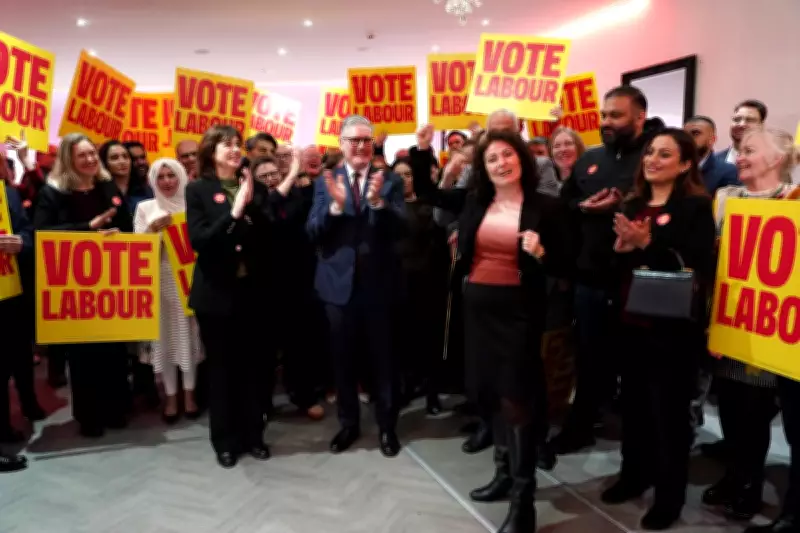
Prime Minister Keir Starmer's unexpected appearance on the campaign trail has sparked speculation about Labour's chances of retaining what was once considered one of its safest constituencies. However, political analysts suggest Starmer's goals may be more modest than outright victory. The Labour leader faces significant challenges, with the party's national unpopularity reflected in local polling.
In the 2024 general election, Labour secured 51 percent of the vote in Gorton and Denton, but current projections show them trailing behind both the Greens and Reform UK. Realistically, Labour's best hope appears to be snatching second place from Reform, with third place remaining a distinct possibility. The party's performance here could have significant implications for upcoming Scottish, Welsh, and local elections in May.

Reform UK's Unexpected Challenges
Despite Reform UK's strong national standing, the party faces particular difficulties in Gorton and Denton. Demographics play a crucial role, with a substantial Muslim community less receptive to Nigel Farage's brand of nationalist populism, particularly given recent disillusionment with Labour over the Gaza conflict.
Reform's candidate, Matt Goodwin—a former academic turned right-wing television personality—lacks the local appeal of his Green Party rival. The party's campaign suffered a further setback when a campaigner was suspended following revelations of racist and sexist social media posts.
The Green Surge and Tactical Voting
The Greens have emerged as the primary challenger to Reform UK, benefiting from tactical voting from Labour supporters and possibly some Liberal Democrats. Their candidate, Hannah Spencer—a plumber by trade—brings authentic local credentials that resonate with voters.
The only credible recent poll shows the Greens leading with 33 percent, followed by Reform at 29 percent and Labour at 26 percent. Bookmakers have made Spencer odds-on to become the next MP, with Reform at approximately 2/1 and Labour at 6/1. If successful, Spencer would become the Green Party's fifth MP and their first representative from a Northern urban constituency.
Traditional Parties Marginalized
The Conservative and Liberal Democrat parties, once natural challengers in constituencies like Gorton and Denton, have been rendered largely irrelevant by the rise of Reform and the Greens. The Lib Dems face the prospect of losing their deposit, while the Conservatives may struggle to maintain their meager 8 percent share from the general election.
Turnout and Electoral Implications
Voter turnout will prove crucial to the outcome. Reform UK hopes to mobilize typically non-voting citizens, a strategy that proved successful for Farage during the Brexit referendum. The Greens, meanwhile, benefit from tactical voting patterns and growing environmental concerns among the electorate.
This by-election reveals several important trends in British politics: Labour's continued unpopularity, the fragmentation of traditional party politics, and the increasing importance of tactical voting under the first-past-the-post system. The contest represents just the latest episode in what appears to be a radical transformation of Britain's electoral landscape, making future general elections increasingly difficult to predict.
Gorton and Denton's uneven demographic makeup and challenging polling conditions mean the possibility of an upset remains higher than usual. As voters prepare to cast their ballots, all eyes will be on this constituency that has become a microcosm of Britain's changing political dynamics.






