

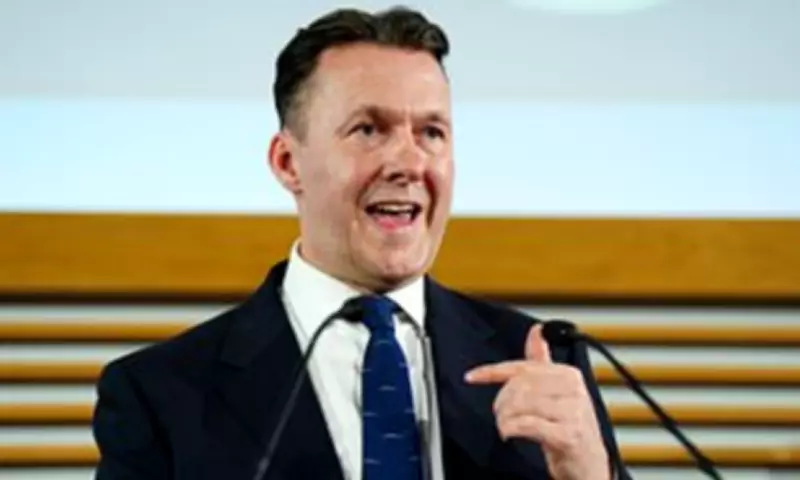
Scottish Tory Leader Russell Findlay Unveils Manifesto, Warns of SNP 'Living Nightmare'
Russell Findlay presented a cheerful demeanour at his party's manifesto launch, but his message carried a stark warning. The Scottish Conservative leader cautioned that Scotland would descend into a 'living nightmare' if John Swinney's SNP secured a majority in the upcoming election on May 7. In a bloodcurdling tone, he painted a grim picture of the constitutional turmoil that would follow, though he noted with irony that at least there wouldn't be 'much too much change involved' in such a scenario.
Upbeat Tone Amid Polling Challenges
Despite polls showing far from encouraging prospects for the Tories, Findlay emerged as a happy warrior in what are less than happy times for his party. He unveiled plans focused on tackling wasteful government spending and providing pensioners with a £500 payment each. With energy and patter, he quipped that the manifesto announcement was 'the most exciting launch since Artemis II blasted off into the clear blue sky'—a line that, while not the strongest comedy material, was certainly more family-friendly than anything from rival Malcolm Offord.
Findlay's central theme was stopping independence, and he urged Unionist voters to back the Conservatives on their peach-coloured ballot paper to lock the Nationalists out of a majority. He acknowledged that Swinney had been 'clear and consistent' on the issue of another independence referendum, a stance that doesn't typically characterise the First Minister but highlights the constitutional stakes.

Echoes of Past Campaigns and Familiar Policies
The Tory leader reminded activists that the Conservatives had previously thwarted SNP majorities twice under leaders Ruth Davidson and Douglas Ross, and he called on them to turn out and do it again. This message is likely catnip to Tory voters, who relish battling the SNP over the future of the Union. The new manifesto contained little that Davidson or Ross would disagree with, emphasising economic growth, putting more police officers on the beat, controlling Scottish Government finances, and setting aside constitutional distractions.
In an era marked by new parties, defections, and shifting directions, Findlay argued there is something reassuring about a party sticking to its principles, even if some might view the policies as too samey. One such familiar principle is law and order, with Findlay discussing plans to send prisoners to foreign jails—a pragmatic move given the Greens' proposal to close all Scottish prisons.
Drawing Contrasts on Trust and Rivalries
Findlay was eager to draw contrasts with other leaders, particularly on the issue of trust. He questioned whether Keir Starmer could be relied upon to say no to Swinney's demands for another referendum, noting wryly that Starmer might struggle to pick Swinney out of a lineup of impersonators. He also pointed out that a prime minister who can't stand up to Ed Miliband's political brawn is likely unreliable on constitutional matters.
Naturally, Findlay reserved fire for the Tories' real rivals, highlighting that Reform is fielding pro-independence candidates and that its Scottish leader, Malcolm Offord, has countenanced another referendum in the future. 'Reform can't be trusted on the Union,' he cautioned, adding they 'can't be trusted full stop.' He mocked Offord as the most entertaining party leader in Scotland, who has 'spent the campaign in and out of hiding,' suggesting that every TV appearance by Offord should be followed by an announcer declaring it a Conservative Party broadcast.
Confidence in Public Opinion and Economic Reality
Findlay boasted that the Tories are 'on the right side of public opinion' on all key issues, a claim that remains to be verified. However, he asserted they are certainly aligned with economic reality, which is becoming a rarity at Holyrood. He took credit for having 'the smartest' team in the Scottish parliament, acknowledging the stiff competition but positioning his party as a steady hand in turbulent times.






