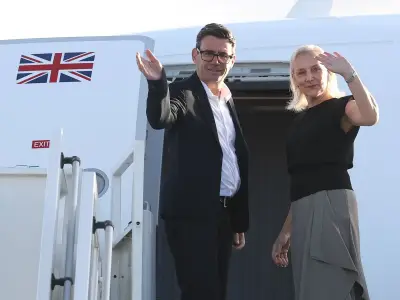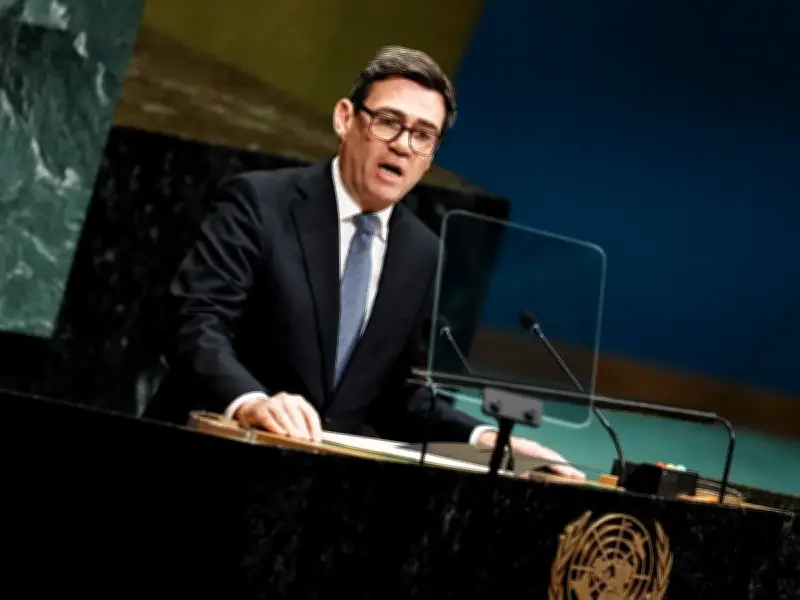
Prime Minister Andy Burnham has ruled out an early general election as he prepares for his first Labour conference in the role. In a round of interviews, he confirmed the next test of public opinion at the ballot box will not come until 2029.
Mr Burnham said he wants to “draw a line” and focus on helping the public feel “a bit of hope in their lives”, rather than begin another divisive electoral cycle. Recent media reports had suggested close advisers were weighing up the prospect of an election as early as next year, following polling that indicated Labour would remain the largest party – though short of a parliamentary majority – if a snap election were called.
Prime Minister dismisses speculation
Asked by BBC West’s political editor Paul Barltrop whether he is tempted to call an election, Mr Burnham replied: “Not particularly. No, I’m not.
“I see all the speculation and it just races ahead. The media love to do that. No, no election any time soon.
“I’m focused on the job as Prime Minister doing what I said I would do. I will lay out a big speech in Liverpool next week, which will say further about the direction I want to take the country in the coming period.
“The focus is on that: helping people with the cost of living, helping businesses with the costs of running a business. These have got to be the priorities right now rather than throwing the country into a backward-looking process where we are arguing again amongst ourselves.
“The time has come, draw a line, get the country looking forward, pulling together, people feeling a bit of hope in their lives again, that’s what I’m trying to do and I hope to take it further in the coming period rather than putting people back into an election cycle.”
Next election confirmed for 2029
Asked by ITV Calendar’s Fred Dimbleby if the next election would be in 2029, the Prime Minister replied: “Yes, that’s when the next election will be. All of this speculation on an early election, I can knock that dead.”
An early election victory would have allowed the Prime Minister more room to set out his own agenda for governing the country, rather than being tied to promises in the 2024 manifesto which Sir Keir Starmer stood on.
Channel crossings and Thames Water
Elsewhere in the interviews, Mr Burnham told BBC South East that the number of migrants crossing the English Channel illegally had been made worse by Brexit. “I do point to the loss of collaboration with neighbours that came with Brexit. That hasn’t helped,” he said.
He added that the Government would seek to stop crossings altogether, but said: “I’m not going to give you a date by which we can do that, or a promise that we will do it, as other governments have done in terms of a particular deadline.
“But what I will say to you is I will not stop, nor will the Home Secretary, until we bear down every element of this criminal, illegal activity and that we do so in a way that gets the numbers right now.”
Mr Burnham also suggested to BBC South that the Government is “looking at all of the options” to rescue the troubled utilities firm Thames Water. The Prime Minister has previously expressed a desire to see more “public control” over water companies amid the pollution and leakage scandals that have dogged the sector, while his MPs are calling for Thames in particular to be placed under Government control.