
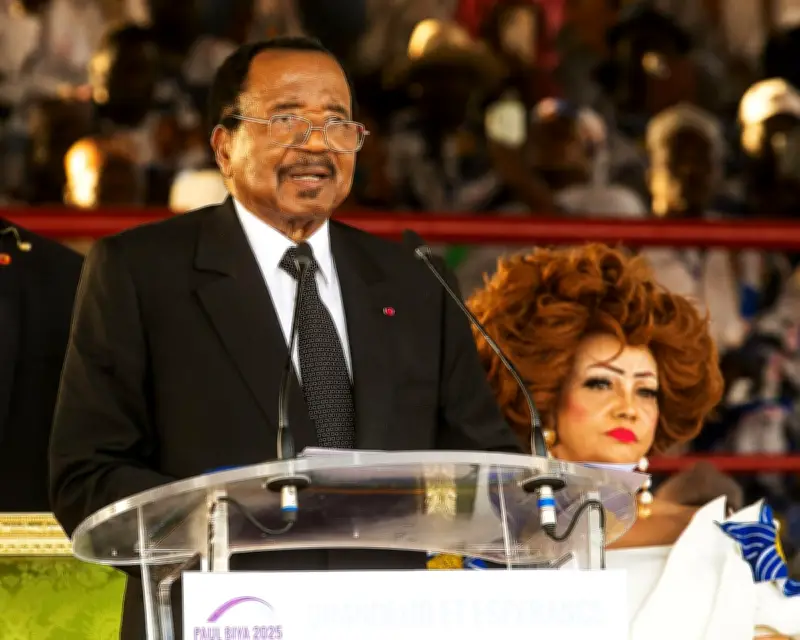
Cameroon's President Paul Biya, the world's oldest head of state, has been absent from public view for a record 53 days, sparking renewed speculation about his health and whereabouts. The 93-year-old leader left for Switzerland on 7 June for what officials called a "brief private stay" with his wife, Chantal. Since then, neither has addressed the country or been seen publicly.
Conflicting statements from officials
Biya, who took office in 1982 after serving as prime minister, has spent increasing amounts of time abroad in recent years, often at the InterContinental hotel in Geneva. No official return date has been announced, leaving Cameroonians reliant on contradictory statements from government figures.
Communication Minister René Emmanuel Sadi said Biya was in good health and "working from Geneva, where he currently resides." He added that "reports claiming otherwise are pure fantasy and malicious manipulation aimed at destabilising opinion." Higher Education Minister Jacques Fame Ndongo claimed Biya had been "meticulously following the files submitted to him by his aides … wherever he is."
Labour Minister Grégoire Owona offered a different explanation, stating the president was on annual leave and comparing him to ordinary citizens. "Paul Biya, elected by the Cameroonian people and paid by them, is a worker who has the right to annual leave," Owona said. "His employer is obliged to grant it. He informed his employer before leaving and will do the same upon his return."
Banned discussion of health
Cameroonian authorities banned discussion of Biya's health in October 2024 during a previous absence. Despite this, local media have published claims that he is critically ill, and jokes about a "work-from-abroad president" have resurfaced on social media.
Mamadou Mota, vice-president of the opposition Cameroon Renaissance Movement party, said the absence created a "glaring institutional vacuum." He stated: "A country cannot be governed by remote control while critical socioeconomic challenges go unaddressed."
Electoral and constitutional concerns
Biya was sworn in for his eighth consecutive seven-year term in November 2024, after an election marred by allegations of irregularities. The Constitutional Council dismissed opposition complaints, but many parties refused to recognise the outcome.
No government has been named since the swearing-in. With parliamentary and municipal elections expected in early 2027, there are worries that the prolonged absence could disrupt the electoral cycle.
In April, parliament reintroduced the office of vice-president, but the position remains unfilled. Biya's son and stepson are reportedly jockeying for position, and public disagreements among cabinet ministers have become common.
Opposition and economic impact
Kohtem Sambit, secretary general of the Movement for Patriotism and People's Prosperity, criticised the ruling party. "Politics should be about serving the people, but the CPDM appears more interested in holding on to power than addressing the concerns of Cameroonians," he said.
Sambit noted that the economy minister had borrowed over 21 billion Central African francs in Biya's name without public verification. "You do not see the person who signed, nor do you know his whereabouts. That debt will be paid by the public."
The Social Democratic Front argued that the issue is not the president's right to travel but the government's failure to explain the extension of his stay. Patricia Tomaïno Ndam Njoya of the Cameroon Democratic Union called for an impartial procedure to determine any incapacity.
Businessman Nji Lucas expressed economic concerns: "No serious investor wants to commit resources in a country where there is uncertainty over political leadership. There is no trust, and investors require certainty before making long-term decisions."
Rare party meeting
Last week, the CPDM's secretary general, Jean Nkuete, convened a rare meeting of senior officials, described only as an "important working session" with no agenda released. Several party officials declined interview requests, citing personal reasons.




