

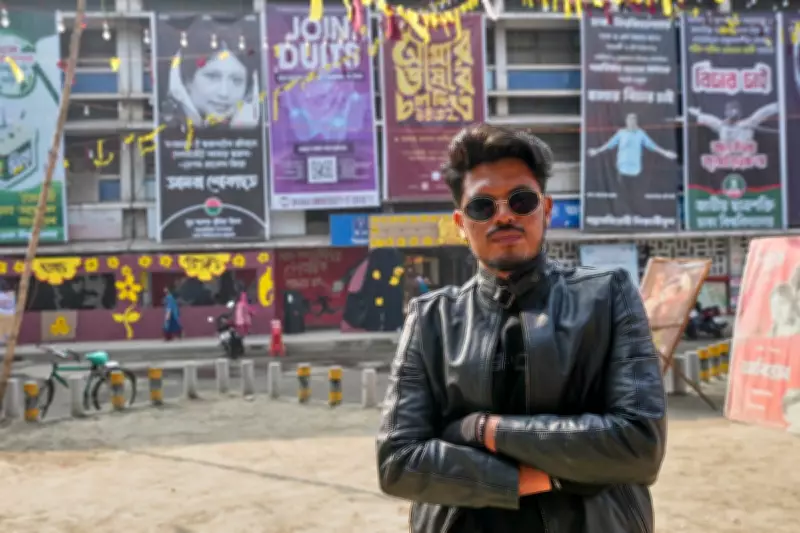
Bangladesh's Defining Election: Citizens Voice Hopes and Anxieties
Bangladesh stands at a critical juncture as voters head to the polls on Thursday for a national election that could fundamentally reshape the nation's future. This pivotal moment follows youth-led protests eighteen months ago that overthrew the government of former prime minister Sheikh Hasina, ushering in an interim administration led by Nobel laureate Muhammad Yunus.
The vote, occurring alongside a constitutional referendum on political reforms, will conclude the transition period and serve as a crucial test for democracy in this South Asian nation. While many citizens hope the return to elections will restore law and order, protect civil liberties, and bring accountable leadership, there is palpable unease about potential political instability, the marginalization of women and minorities, and the rising influence of Islamist groups in a traditionally secular country.
Demand for Fair Elections and Rule of Law
Interim leader Muhammad Yunus has pledged to deliver a fair electoral process, a major demand among the populace. Many Bangladeshis regard previous elections under Sheikh Hasina's lengthy rule as rigged, with concerns about opposition crackdowns eventually exploding into a student-led uprising. This movement ended Hasina's fifteen-year tenure, forcing her into exile in India.

"I don't want any more bad incidents in Bangladesh, or a war-like situation," said Arefin Labib, referencing the 2024 uprising that saw a brutal security force crackdown resulting in hundreds of deaths. Labib expressed hope that a newly elected government might finally restore stability and guide the nation toward a better future, stating, "If the country wants to run smoothly, then a fair election is needed."
This sentiment is widely shared, especially following Hasina's ouster, which was accompanied by rising political violence, attacks on Hindu minorities, and a general collapse of law and order. Sixty-two-year-old street vendor Zainul Abedeen echoed this, saying, "I want the government to prevent riots, killings, and any other trouble in the country."
Broader Call for Democratic Restoration
While there is consensus that Yunus's interim government stabilized an economy in free fall, many argue it failed to restore security, protect human rights, and safeguard religious minorities. Dhaka resident Rajit Hasan noted that despite efforts, the interim administration fell short of delivering the deep reforms and accountability many had anticipated.
"The government just tried, but the political situation was so fragmented, so fragile, that it just couldn't sort it out," Hasan explained. He emphasized a desire for the transition to bring stronger access to justice, genuine protection of civil liberties, and freedom for people to practice their religion and exercise their rights. Hasan called for accountable leadership, independent institutions, and a political culture where dissent is respected rather than suppressed, declaring, "We want democracy. We want our rights. We want the rule of law. That's what we are looking for."
Women's Representation Under Threat
For years, Bangladesh stood out globally for being governed by women prime ministers—Khaleda Zia for two full terms and Sheikh Hasina for four—giving many women a sense of representation. This legacy is now under threat, with Hasina and her party banned from participating and fewer women contesting than before, despite women protesters playing a pivotal role in the uprising that paved the way for this election.
Economics student Wasima Binte Hussain, who participated in the uprising, expressed disappointment that the political transition has not opened more space for women. She noted that female leadership remains scarce and issues affecting women have not received the attention she expected. "One of my primary hopes was that there would be more women leaders... and women's issues would be prioritized more. It hasn't been prioritized that much," she said.

Rise of Islamists Sparks Deep Concerns
These worries have intensified alongside a surge of support for Jamaat-e-Islami, an Islamist group banned under Hasina but gaining influence since her ouster. The party's rise has alarmed many, particularly women, after its leaders suggested restricting women's activities and questioned their ability to work due to childbearing roles. While the party insists it would rule moderately if it gains power, skepticism remains high.
Twenty-two-year-old Sayma Nowshin Suha described the prospect of Jamaat-e-Islami gaining power as deeply frightening for young women like her, citing its conservative politics. She dreams of a Bangladesh where people can live freely without fear or restriction, stating, "In Bangladesh, conservatism is the scariest thing."
As Bangladesh votes, the nation's citizens articulate a complex mix of aspirations for democratic renewal and anxieties about the path ahead, making this election a truly defining moment in its history.





