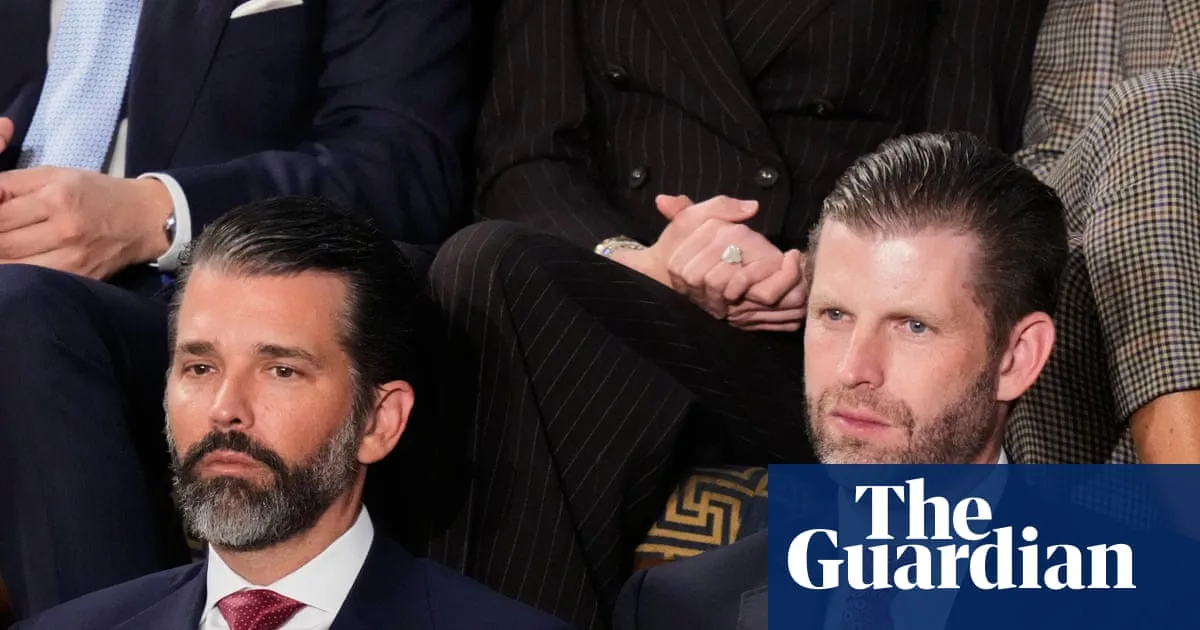
Trump Sons' Drone Firm Seeks Gulf Contracts Amid Iran Conflict
Trump Sons' Drone Firm Targets Gulf Contracts in Iran War

Trump Sons' Drone Venture Pursues Gulf State Deals During Iran Hostilities

In a move sparking significant ethical scrutiny, a Florida-based drone manufacturer supported by Eric Trump and Donald Trump Jr is actively seeking to sell defensive drone interceptors to Gulf countries currently facing attacks from Iran. This sales drive coincides with a conflict initiated by their father, former President Donald Trump, through strikes with Israel over a month ago, which has heightened the security needs of these nations.

Ethical Concerns Raised Over Potential Conflicts of Interest

Richard Painter, a former chief White House ethics lawyer under George W. Bush, has voiced strong criticism, stating that Gulf states may feel pressured to purchase from the Trump sons to gain favour with their father. "This is going to be the first family of a president to make a lot of money off war – a war he didn't get the consent of Congress for," Painter remarked, highlighting the unprecedented nature of the situation.

Powerus, the company in question, announced a deal last month to bring aboard Eric Trump and Donald Trump Jr, potentially granting them sizable equity stakes. The firm's co-founder, Brett Velicovich, confirmed to the Associated Press that demonstrations of their drone interceptors are underway across the Middle East, aimed at showcasing technology that could protect against Iranian threats. "Our team is doing many demos across the Middle East right now for our interceptors," Velicovich said in a text exchange, though he declined to specify which countries are involved.

Wide Pickt banner — collaborative shopping lists app for Telegram, phone mockup with grocery list

Company Defends Role in National Security and Manufacturing

Powerus has denied any conflicts of interest, with Velicovich emphasizing the company's mission to bolster American drone manufacturing in competition with Chinese and Russian rivals. "We are at war, my friend; we are in an arms race and America will lose if we don't build fast," said Velicovich, an Army veteran who has experienced attacks from Russian drones now used by Iran. He added that investing in U.S. manufacturing should transcend political divisions.

The venture aligns with a Pentagon initiative allocating $1.1 billion to develop a domestic armed drone industry, a gap created by the Trump administration's ban on Chinese imports. This expansion marks a shift for the Trump sons, who have diversified their business interests beyond traditional sectors like hotels and golf courses since their father's return to office, now including cryptocurrency, prediction markets, and federal contracting.

Responses and Broader Implications

When questioned about potential ethical issues, Eric Trump issued a statement last month expressing pride in investing in promising technologies, stating, "I am incredibly proud to invest in companies I believe in. Drones are clearly the wave of the future." The Trump Organization, where both sons serve as executives, has not commented on this specific matter but has previously dismissed similar conflict-of-interest claims.

This development underscores ongoing debates about the intersection of family business ventures and presidential influence, particularly in contexts of international conflict and defence procurement. As Gulf states navigate security challenges, the involvement of the Trump sons in drone sales adds a layer of complexity to U.S. foreign policy and ethical governance discussions.

Pickt after-article banner — collaborative shopping lists app with family illustration




