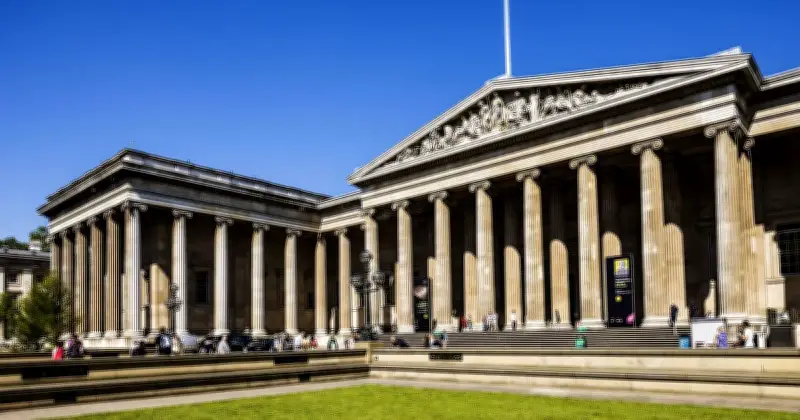
Jamaica's Minister of Culture, Gender, Entertainment and Sport, Olivia Grange, is set to meet British Museum officials to "advance discussions on the repatriation of artefacts" taken from Jamaica during the colonial era. The move comes as slavery reparations campaigners demand the return of Caribbean artefacts, even though they were not stolen.
Petition to King Charles
Ms Grange is leading a delegation to the United Kingdom that will present a petition on slavery reparations to King Charles on Monday. The petition asks the King, in his capacity as Head of State of Jamaica, to refer three questions to the Judicial Committee of the Privy Council (JCPC), Jamaica's highest court.
The petition is not a demand for payment. Instead, it asks King Charles to refer three legal questions concerning slavery to the JCPC: whether the enslavement of Africans in Jamaica was legal under English law, whether it broke international law, and whether Britain now has a legal duty to provide redress.

Zemi sculptures sought
The Jamaican government wants the return of 15th-century zemi sculptures, sacred objects associated with the Taíno, the island's Indigenous people who were devastated by European colonisation. The three figures were discovered in 1792 by a surveyor in a cave in the Carpenters Mountains. They were brought to London shortly after and then acquired by the British Museum before Jamaican independence in 1962.
Because the Taíno population was virtually wiped out within decades of European colonisation due to forced labour, violence, and smallpox, very few wooden artifacts survived. These zemís are therefore among the rarest and most complete physical links to Jamaica's pre-Columbian history.
Official statements
Ms Grange said: "This novel legal approach is being taken after years of deliberations and is intended to ensure the long outstanding settlement for the hundreds of years of the most horrific abuse that our African ancestors endured - the gravest crime against humanity."
Ms Grange previously said: "They are not even on display. They are priceless – they are significant to the story of Jamaica and they belong to the people of Jamaica."
About the three sculptures, she added: "We would wish to have repatriation of those artefacts. For years, we have tried; I think we're making some inroads now in terms of the dialogue, and we have been invited to send three curators for them to go through to see what artefacts are in the possession of the museum, and for us to engage in discussions."
A Palace spokesman said: "We understand the Jamaican government is seeking a petition to be heard before the Judicial Committee of the Privy Council. The process for seeking a petition is to lodge it with the Judicial Committee so that referral under section four of the 1833 Act can be considered. We also understand the Jamaican representatives will be received by the Foreign, Commonwealth and Development Office for bilateral discussions."
A Palace spokesperson also said: "His Majesty has on many occasions expressed his personal and wholehearted commitment to promoting greater understanding around the issue of slavery and finding ways to address historic wrongs for the benefit of communities today."