
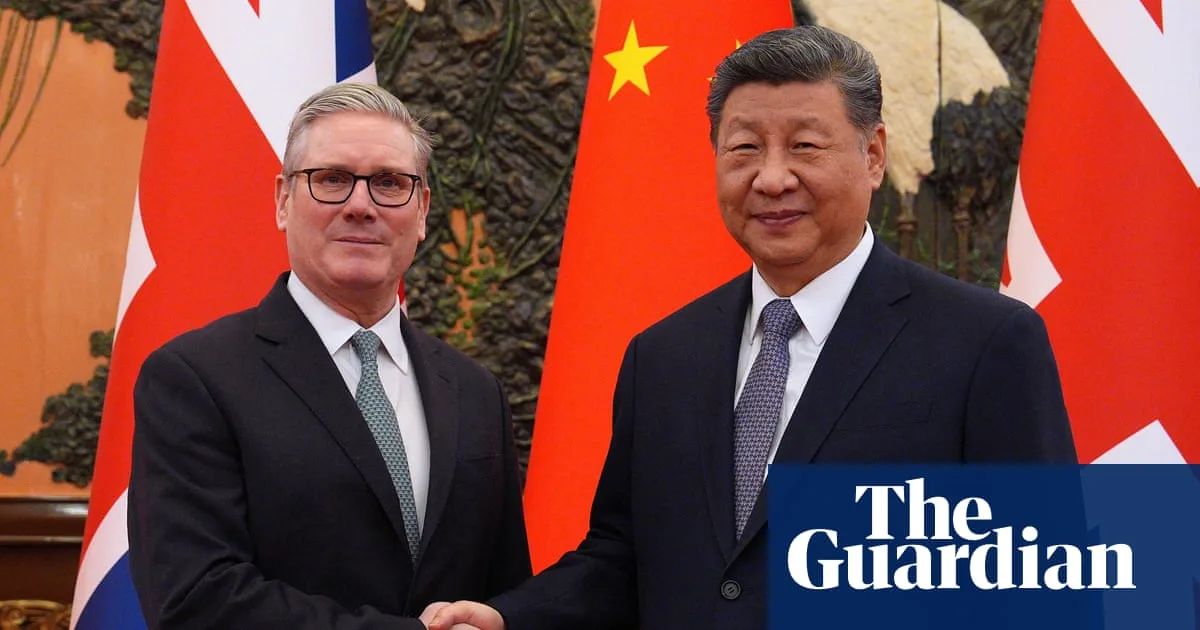
Chinese President Xi Jinping told Prime Minister Sir Keir Starmer that Britain and China must 'rise above differences' to build a stable relationship, as the two leaders met in Beijing for the first UK prime ministerial visit to China in eight years. Xi acknowledged that ties had experienced 'twists and turns' but stressed that a consistent approach would serve both nations' interests.
Speaking in the Great Hall of the People, Xi appeared to address critics of the visit, including Conservative leader Kemi Badenoch, by noting that leaders should 'not shy away from difficulties' when pursuing policies that benefit their countries. Starmer, who has faced cross-party concern over Chinese spying and human rights abuses, said he wanted to bring 'stability and clarity' to the bilateral relationship after years of inconsistency under the previous government.
Following the talks, Starmer described the relationship as being in a 'good, strong place' and announced a series of economic measures. China agreed to a visa waiver for British tourists and business travellers, ending the 30-day limit and aligning the UK with 50 other nations. The UK also secured agreements on closer economic cooperation, including a £10.8bn investment by AstraZeneca in its Chinese operations and a halving of the tariff on Scotch whisky imports from 10% to 5%, expected to benefit the industry by £250m over five years.
Downing Street confirmed that discussions covered sensitive issues such as the fate of jailed Hong Kong activist Jimmy Lai, the lifting of sanctions on British MPs and peers, and the rebuilding of the UK embassy in Beijing. Both leaders also addressed the war in Ukraine, with No 10 stating they shared the same goal of ending the conflict through peace talks. Starmer had spoken to Ukrainian President Volodymyr Zelenskyy on the eve of his visit.
In his opening remarks, Xi recounted a parable about blind men and an elephant, urging Starmer to take a broad perspective. He stressed that in a 'turbulent and fluid' world, more dialogue between the two countries was 'imperative' for global peace and stability. Starmer responded by saying he wanted a 'more sophisticated' relationship with China, focused on the interests of the British people.




