
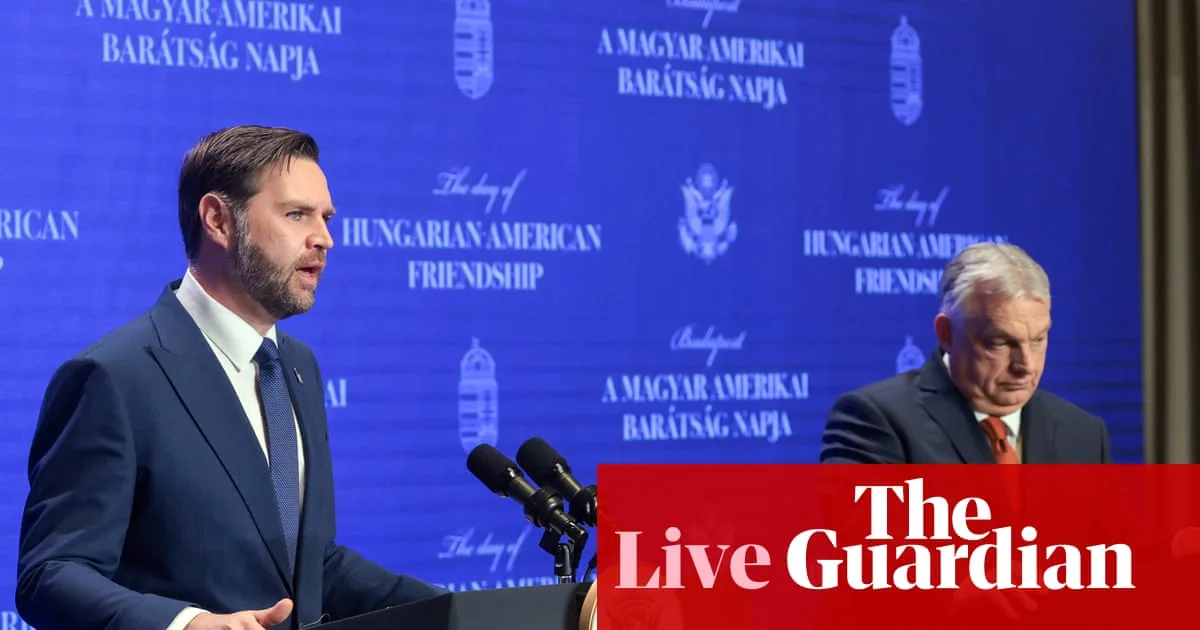
US Vice-President JD Vance has accused the European Union of 'foreign interference' in Hungary's upcoming parliamentary election, while simultaneously endorsing Prime Minister Viktor Orbán. Speaking in Budapest, Vance claimed that 'the bureaucrats in Brussels have tried to destroy the economy of Hungary' and criticised the EU for cutting off oil and natural gas from the East since the war in Ukraine.
Vance argued that the EU made a 'huge mistake' by imposing energy sanctions on Russia and suggested that member states should have followed Orbán's policies instead. However, in 2022, Orbán secured special exemptions from EU sanctions on Russian energy, allowing Hungary to continue importing Russian oil and gas. A recent report from the Center for the Study of Democracy found that Hungary's reliance on Russian crude oil has increased to 93% of imports, up from 61% in 2021.
Despite criticising foreign interference, Vance openly backed Orbán, stating, 'I am here to help him in this election campaign' and predicting that Orbán would win the vote on Sunday. He praised the Hungarian leader for 'ferociously advocating' for his country and 'standing up for the values of western civilisation'. The contradiction between Vance's condemnation of EU interference and his own endorsement is likely to raise eyebrows across Europe.
Vance also addressed questions about US military actions in Iran, confirming that the US had struck 'some military targets' on Kharg Island. He reiterated President Trump's deadline for Iran to respond by Tuesday at 8:00 pm, joking that Iranian leaders are 'not the fastest negotiators'. When asked whether the US would work with a different Hungarian government, Vance dismissed the possibility, asserting that Orbán would win the election.




