
Israel launched a massive air offensive against Iran on Friday, involving more than 200 jets in five waves of strikes targeting at least 100 sites, including the key Natanz nuclear facility and ballistic missile sites. The strikes killed at least nine senior Iranian nuclear scientists and several high-ranking officials, including Iran's most senior military officer and the head of the Revolutionary Guards.
The attacks began at just after 4am local time on Friday, hitting targets in Tehran, Shiraz, Tabriz, Isfahan, and Kermanshah. Satellite imagery showed significant damage to the electrical substation powering Natanz and its above-ground pilot fuel enrichment plant, though the main enrichment facility with about 15,000 centrifuges appeared undamaged. The International Atomic Energy Agency reported no nuclear contamination.
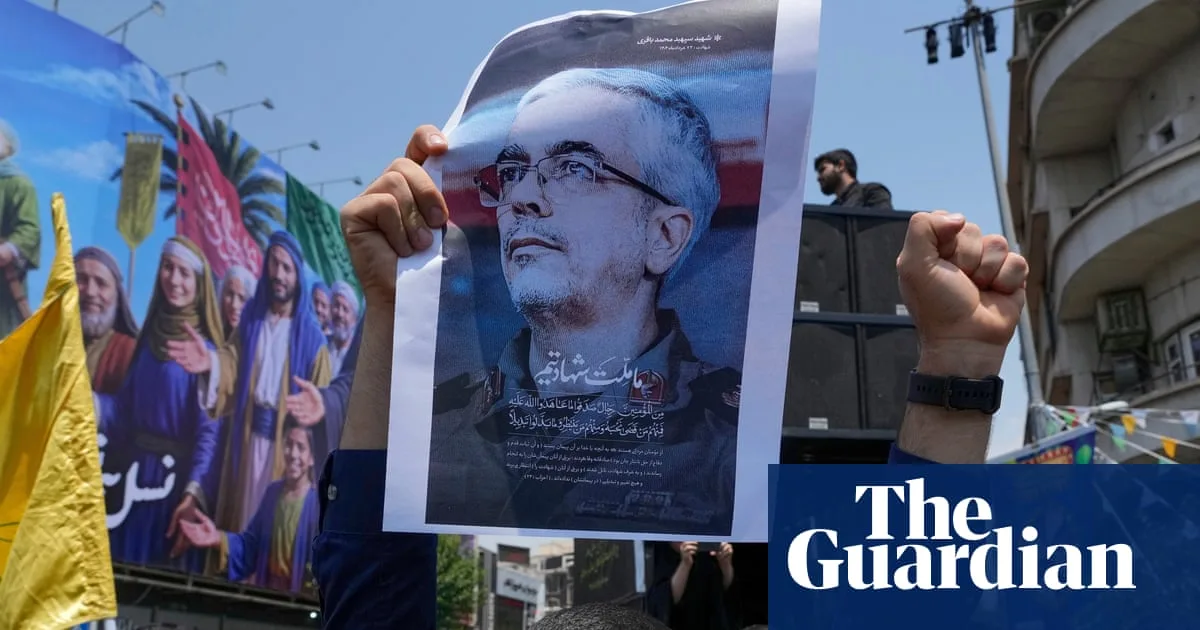
Among those killed were Maj Gen Mohammad Bagheri, chief of staff of Iran's armed forces, and Gen Hossein Salami, commander of the Islamic Revolutionary Guard Corps. Both were key figures in Iran's security hierarchy. Israel also struck the Fordow nuclear facility, a nuclear research centre in Isfahan, missile development sites at Bid Kaneh, and air defence systems in western Iran.
On Saturday, strikes continued at Parchin military base and Mehrabad airport. By Sunday, Israel's military said it had hit more than 80 targets in Tehran, including the defence ministry headquarters, nuclear weapons project infrastructure, and fuel depots. A strike on Mashhad airport was the longest-range attack of the conflict.
Iran accused Israel of hitting civilian areas, claiming 60 people were killed in a strike on a residential building in Tehran. The Human Rights Activists News Agency reported at least 406 deaths and 654 wounded, though the Iranian government has not provided overall casualty figures.




