
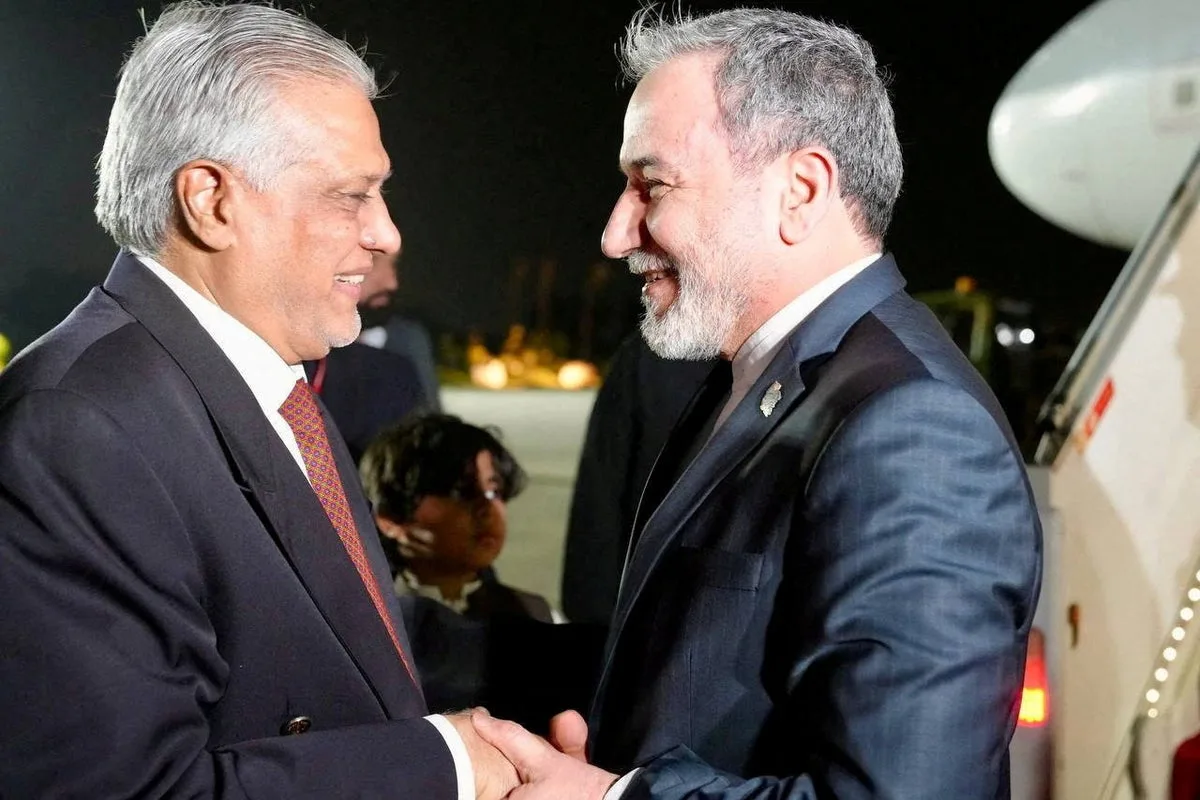
Direct US-Iran talks remained uncertain as Iran’s foreign minister Abbas Araghchi arrived in Islamabad on Friday for a diplomatic tour, but not for direct talks with the US. He met with Pakistani army chief Asim Munir and interior minister Mohsin Naqvi to discuss ongoing hostilities, while the White House confirmed that Jared Kushner and special envoy Steve Witkoff would travel to Islamabad because the Iranians wanted to talk “in person”.
Iranian foreign ministry spokesman Esmail Baqaei said no meeting was planned between Iran and the US, and that Mr Araghchi would only meet Pakistani officials to convey Iran’s “observations”. However, White House spokesperson Karoline Leavitt said the US was “hopeful that it will be a productive conversation” and that the US had “certainly seen some progress from the Iranian side in the past couple of days”.
Vice President JD Vance, the lead US negotiator in the first round of talks, would not travel to Pakistan but remained on standby. Defence Secretary Pete Hegseth said Iran had a chance to make a “good deal” by abandoning a nuclear weapon in “meaningful and verifiable ways”. The second round of negotiations, expected on Tuesday, never happened as Tehran refused to confirm travel.
The uncertainty has put Islamabad under lockdown, with authorities guarding roads and sensitive points. The talks come amid a US naval blockade aimed at forcing Iran back to the table and ending a war that has killed over 5,000 people. Tehran demands the blockade be lifted before resuming talks, while the US wants verifiable guarantees on Iran’s nuclear programme and an end to its blockade of the Strait of Hormuz.
President Donald Trump told Reuters on Friday that Iran planned to make an offer aimed at satisfying US demands, but he did not know what it entailed. He unilaterally extended a two-week ceasefire on Tuesday to allow more time for negotiations. Iranian foreign ministry spokesperson Baghaei stressed that the main subject is now “ending the war in a way that secures the country’s interests”, including compensation, the Strait of Hormuz, and lifting sanctions, and that guarantees of non-aggression are needed from both the US and Israel.




