For the first time in a NATO and European Union capital, residents of Vilnius, Lithuania, sought shelter in underground car parks on Wednesday following warnings of unidentified drone activity from Belarus. This incident marks a significant escalation in a series of airspace violations by Ukrainian drones that have raised serious questions about the alliance's eastern flank air defenses.
Recent Incidents and Political Fallout
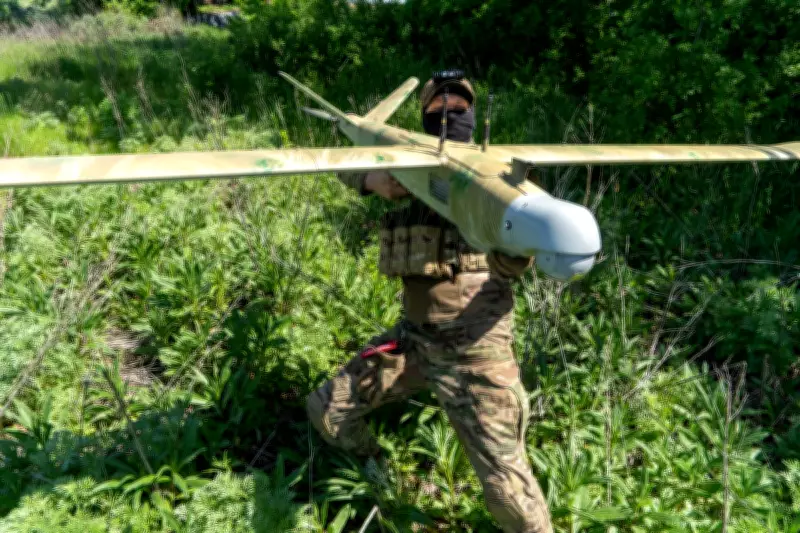
In recent months, Ukrainian drones have crashed into an Estonian power plant chimney, struck empty fuel tanks in Latvia, and been intercepted by Romanian fighter jets over Lithuania. While no fatalities have been reported, these incursions have drawn criticism from Baltic ministers and contributed to the collapse of the Latvian government in May. The drones, intended to target Russian military sites, have been diverted off course by Russian electronic interference, according to Ukrainian officials.
Ukraine's Strategy and Global Context
Ukraine has intensified attacks on Baltic Sea ports used for Russian energy exports, aiming to deplete Moscow's war chest. This strategy coincides with rising global oil prices driven by U.S. President Donald Trump's war in Iran, a crucial revenue stream for the Kremlin. Ukrainian drones have skirted the borders of NATO members Latvia, Lithuania, Estonia, and Finland, with some remaining undetected until they crash-landed.

Russian Electronic Warfare
Since Russia's 2022 invasion of Ukraine, Nordic and Baltic nations have warned about electronic interference disrupting communications. Russia uses jamming and spoofing to send drones off course. Jamming overwhelms receivers with a strong radio signal, while spoofing transmits fake signals to mislead navigation systems. Lithuanian Foreign Minister Kęstutis Budrys stated that Russia is deliberately redirecting Ukrainian drones into Baltic airspace.
Defense Gaps and Responses
In September 2025, about 20 Russian drones flew into Poland, highlighting holes in NATO's air defenses. While Poland and Romania deployed new anti-drone technology, it is not in place across the entire Baltic region. Colonel Janno Märk of the Estonian Defense Forces noted that defending against drones requires solving complex technological, financial, and bureaucratic problems, with no single solution for all drone types.
Political Reactions and Accusations
Russia's Foreign Intelligence Service claimed, without evidence, that Ukraine plans to launch drone attacks from Baltic territory. Ukrainian officials denied this, stating that no Baltic state has allowed such use of its airspace. Budrys dismissed the claim as a transparent act of desperation. NATO Secretary-General Mark Rutte praised the alliance's calm, decisive, and proportionate response, blaming Russia's war on Ukraine for the incursions.