The UK has told the Organisation for Security and Co-operation in Europe (OSCE) that accepting Russia's justifications for invading Ukraine would leave no European border secure and no government safe from the judgement of a more powerful neighbour.
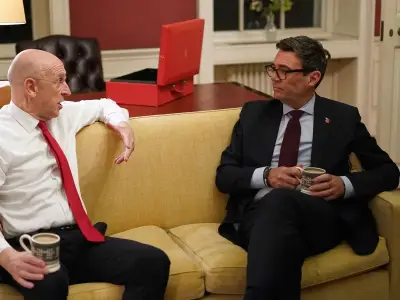
Speaking at the OSCE gathering in Vienna on Thursday, where Vladimir Putin was not in attendance, the UK's Ambassador to the OSCE, Neil Holland, challenged Russia's attempts to legitimise its ongoing war of aggression. He warned international delegates that accepting the Kremlin's rationale for the conflict would tear up the foundations of international law.
Ambassador challenges Russian justifications
Addressing the council, Mr Holland said: "A rule that a state claims for itself, but would never accept being applied to itself, is not a principle. It is a claim to privilege, and international law recognises no such privilege."
He added: "Applied evenly, each of Russia's justifications would leave no border in our region secure, and no government safe from the judgement of a more powerful neighbour."
Civilian casualty figures surge
The diplomatic intervention follows the release of new casualty figures from the UN Human Rights Monitoring Mission in Ukraine. According to the report, Russian attacks killed at least 328 civilians and injured more than 2,100 in September alone, an 85% surge compared to the same month last year. In the Ukrainian capital of Kyiv, civilians were killed or injured on 22 of the month's 30 days as Moscow intensified its aerial bombardments.
Pointing to the mounting human toll, the British envoy placed the blame on the Kremlin's leadership.
"Behind these figures lies a decision taken in Moscow," Mr Holland told the council. "Russia has never offered this Council a single consistent explanation for that decision – perhaps because it knows its reasons hold no water. Instead, it has offered a succession of justifications. Each has been falsely presented as a matter of principle."
UK challenges Kremlin's pretexts
During the address, the UK delegation systematically challenged the various pretexts Moscow has deployed since launching its full-scale invasion. Mr Holland noted that Russia claims a right to use military force to protect people beyond its borders who "speak its language or share its culture", while simultaneously demanding that neighbouring states surrender territory to satisfy Russian security demands.
Questioning the hypocrisy of the Kremlin's stance, the ambassador asked delegates: "Would the Kremlin give up territory to address its neighbour's security concerns? And Russia claims that it acted pre-emptively, in self-defence. But no one planned to attack Russia. A right to strike first against threats that a state alone perceives would leave every state exposed to the fears of its neighbours, real or invented."
The UK concluded its statement by directly challenging the Russian delegation to clarify its position on the Helsinki Final Act, the landmark agreement establishing the inviolability of national frontiers and the peaceful settlement of disputes.
Mr Holland called on Moscow to explain how using military force to alter another nation's borders aligns with those commitments, or else "confirm which principles they have disavowed enabling them to take this action and whether they believe all participating states can also renounce these principles."