
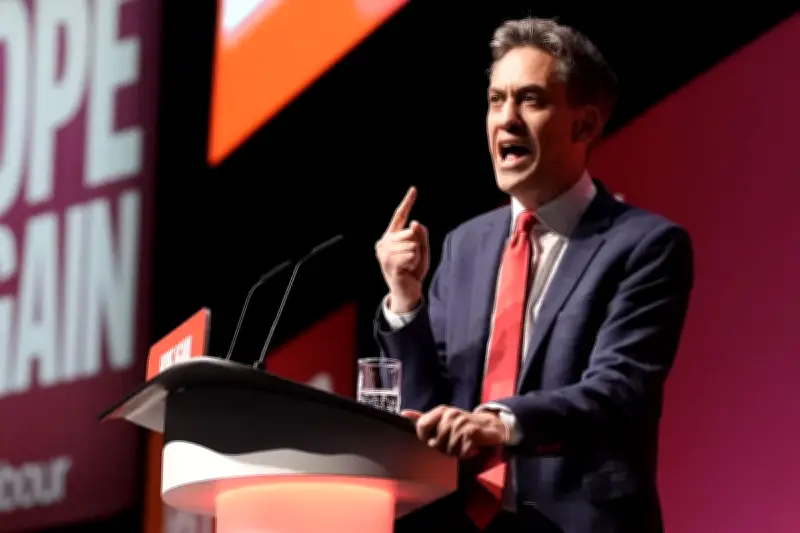
Foreign Secretary Ed Miliband has insisted British taxpayers will not pay a penny more as a result of Prime Minister Andy Burnham's "new approach" to the Commonwealth, ruling out reparations for the UK's historical role in the slave trade while leaving the door open to a formal apology.
Speaking to BBC Newscast, Mr Miliband accused previous governments of having had a tendency to "sweep under the carpet" the issue of slavery. He criticised what he described as a "sorry, not sorry" from Sir Tony Blair, who in 2006 expressed "deep sorrow and regret" for Britain's involvement in the slave trade but stopped short of an official apology.
Structured dialogue with Commonwealth nations
The Prime Minister has left the door open to calls for a formal apology on behalf of the state as he pursues a "structured dialogue" about the issue with Commonwealth nations, which Mr Miliband said was likely to conclude within a year. Asked whether the Government might reach the point of a formal apology by the time it hosts the G20 leaders' summit in Manchester next November, he said: "Broadly speaking, yes."
Speaking to broadcasters on Monday, Mr Burnham also refused to be drawn on whether the change in position could mean higher costs for taxpayers. But asked whether the new approach could end up costing UK taxpayers a penny more, Mr Miliband said: "No."
He added: "I mean, not… no. And that's – for us, that's never been what it's about. And that's why it's been important that you know, and I did have this conversation with our partners in advance. I said, 'look, we are going to say we are willing to say that we're open to an apology, but we're not going to shift our position on reparations.'"
Reaction to past approach
Mr Miliband said Sir Tony "did sort of do a kind of sorry not sorry situation", adding: "He sort of, yeah, he kind of expressed sorrow, but and then said sorry, and then it was walked back by No 10."
The Prime Minister has ruled out offering reparations for the harm caused by the transatlantic slave trade but has used the Commonwealth Heads of Government Meeting (Chogm) to set out plans for a "debt reset" aimed at helping poorer countries struggling with repayments. He has argued that work to support member states amid rising global interest rate costs must include non-G7 donors and the private sector as he met counterparts from across the group in St John's, the capital of Antigua, this week.
Funding and international response
The UK will also allocate £40 million over three years from within existing budgets to speed up critical infrastructure investment including green energy in the Caribbean. Calls for an apology and reparations have grown in recent years, with St Lucia's Prime Minister Philip J Pierre, chairman of the 15-member Caribbean Community (Caricom) reportedly saying the economic and political bloc was "ready to engage" in the "structured dialogue" Mr Burnham had proposed.
The Prime Minister said the UK wanted to "work closely with you to make sure we get that right" as he met the president of Ghana for one-to-one talks on the sidelines of the summit later on Tuesday. Exchanging warm words at the top of the meeting, John Dramani Mahama in turn said Britain had shown a "shift in some very strong positions" and is now "more open to interacting with the rest of the world" and the Commonwealth.
After the last Chogm in 2024, when Downing Street was resistant to any discussions about reparations, the Ghanaian leader said the new Prime Minister's approach "creates a first step for us to continue to work to see how we can put this whole issue of transatlantic slave trade and colonialism behind us".




