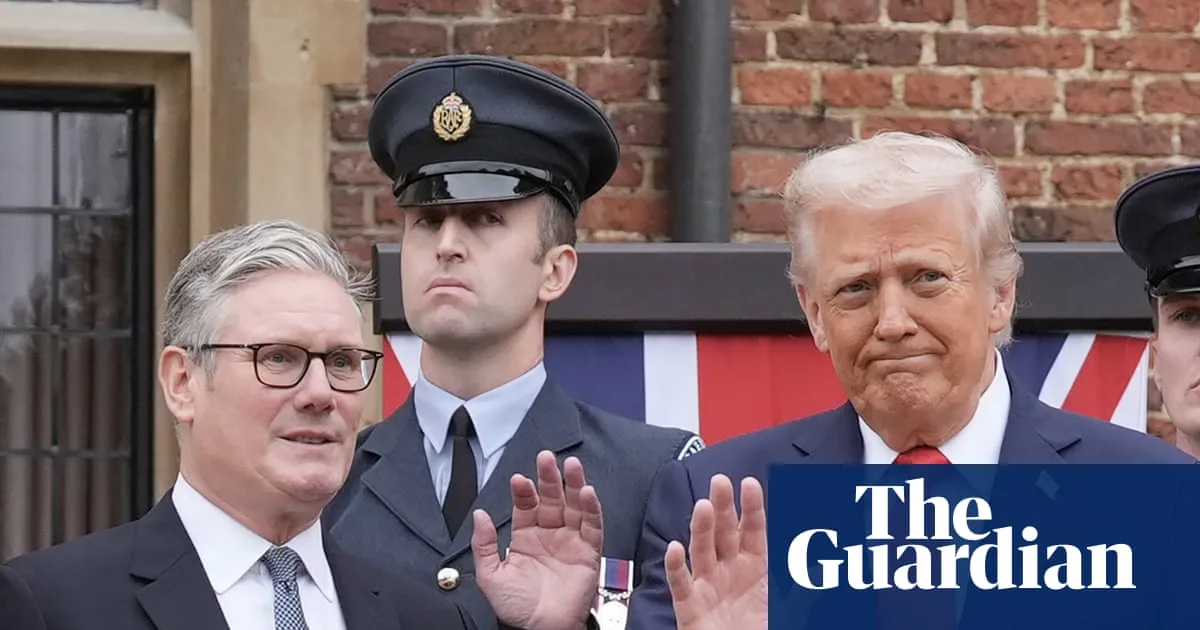
The United Kingdom has issued a firm response to escalating threats from US President Donald Trump against Iran, reiterating its commitment to avoid offensive military involvement in the conflict. This stance comes after Trump made a series of provocative statements, including a bizarre claim that Iranians "want to hear bombs go off as they want to be free," in a new rant that has drawn widespread condemnation.
Trump's Threats and Accusations of War Crimes
In his latest remarks, the US President threatened to attack Iranian power plants and bridges if Tehran did not reopen the strategically vital Strait of Hormuz. This move has sparked accusations from international observers and legal experts that such actions could constitute war crimes, given the potential impact on civilian infrastructure and populations.
UK's Defensive Position Clarified
In contrast, the British government has explicitly stated that it will not engage in offensive operations against Iran. Education Secretary Bridget Phillipson articulated this position clearly, noting that Trump's language and approach are not ones the UK government would adopt. "We remain focused on defensive measures to ensure stability in the region," Phillipson emphasised, highlighting the UK's limited role in the conflict.
The UK's involvement is strictly confined to defensive actions, such as Royal Air Force jets providing protection for Gulf allies and granting permission for the US to use British bases for strikes against Iranian missile sites. This careful delineation underscores Britain's commitment to international law and diplomatic norms, even as tensions rise.
Trump's Controversial Statements and Domestic Boasting
Amidst these geopolitical tensions, Trump also made headlines by welcoming families to the White House Easter Egg Roll, where he boasted about a US military rescue mission of a service member shot down in an F-15 over Iran. This display of military prowess was coupled with harsh criticism of Americans who oppose the Iran war, whom he labelled as "foolish."
Trump justified the conflict by asserting that it is primarily about preventing Iran from acquiring nuclear weapons, a point that has been a central theme in US foreign policy for years. However, his aggressive rhetoric and threats have raised concerns about the potential for escalation and the broader implications for global security.
Implications for UK-US Relations and Global Diplomacy
The UK's response highlights a growing divergence in approach between London and Washington regarding Iran. While the US under Trump appears willing to escalate military threats, Britain is steadfast in its defensive posture, aiming to de-escalate tensions and uphold international agreements.
This situation underscores the complexities of modern diplomacy, where allies must navigate differing strategies while maintaining cooperative relationships. The UK's stance serves as a reminder of its commitment to peaceful resolution and adherence to legal frameworks, even in the face of provocative actions from a key ally.
As the situation develops, observers will be watching closely to see how this dynamic evolves and whether other nations follow Britain's lead in advocating for restraint and defensive measures over offensive aggression.






