
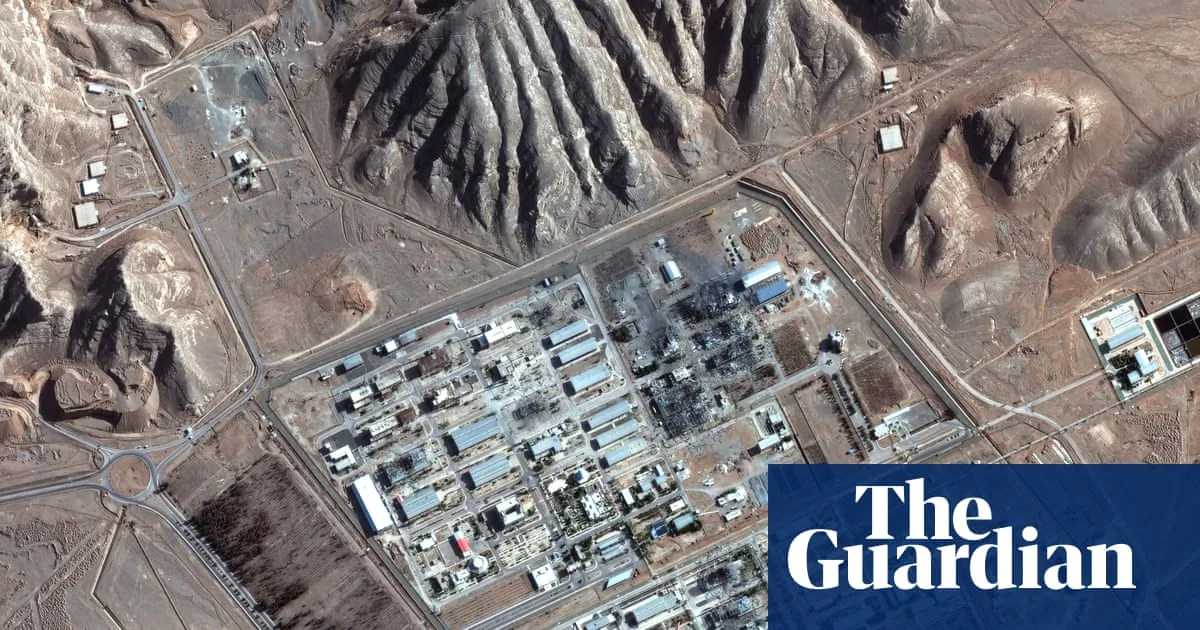
The UK, France and Germany are expected to announce on Thursday that they will reimpose sweeping sanctions on Iran after it failed to readmit UN inspectors to all of its nuclear sites. The decision, which has been under consideration for months, is likely to provoke the worst crisis in Iran's relations with the west since Israel's attacks on the country's nuclear sites in June.
The sanctions, contained in six suspended UN resolutions, will begin on 18 October, when the original 2015 nuclear deal expires. The move by the three European powers – known as the E3 – cannot be vetoed by permanent UN Security Council members such as Russia and China. The E3 is demanding that Iran fully readmit inspectors from the International Atomic Energy Agency (IAEA) and provide details on the 400kg stockpile of highly enriched uranium that was present before the Israeli attacks.
Confirmation of the partial return of IAEA inspectors on Wednesday was met with protests by Iranian officials, who claim the strict preconditions they set have been breached. IAEA director general Rafael Grossi said inspectors had been allowed to re-enter but were not permitted to visit the main bombed sites at Fordow, Natanz and Isfahan. Instead, they could only monitor refuelling at the Bushehr site. Grossi stated, 'Our work has begun but we are not yet at the point I have in mind. There is no such thing as selective inspections.'
Iran's foreign ministry has warned it would respond if Europe proceeds with the snapback. The country is already preparing countermeasures, and the move has revived domestic divisions between those who want to shun the west and those who argue the economy depends on cooperation. The Iranian economy is already reeling from water and energy shortages.
Once the E3 diplomats start the process on Thursday, they have just over 30 days to press ahead or defer the snapback, likely for six months. Russia has proposed a six-month delay but lacks the required UN Security Council votes. The brinkmanship over Iran's nuclear programme has lasted more than two decades, and the failure of indirect talks with the US earlier this year has added to tensions.




