
Many astronomers are no longer asking whether there is life elsewhere in the Universe. The question on their minds is instead: when will we find it? Many are optimistic of detecting life signs on a faraway world within our lifetimes, possibly in the next few years.
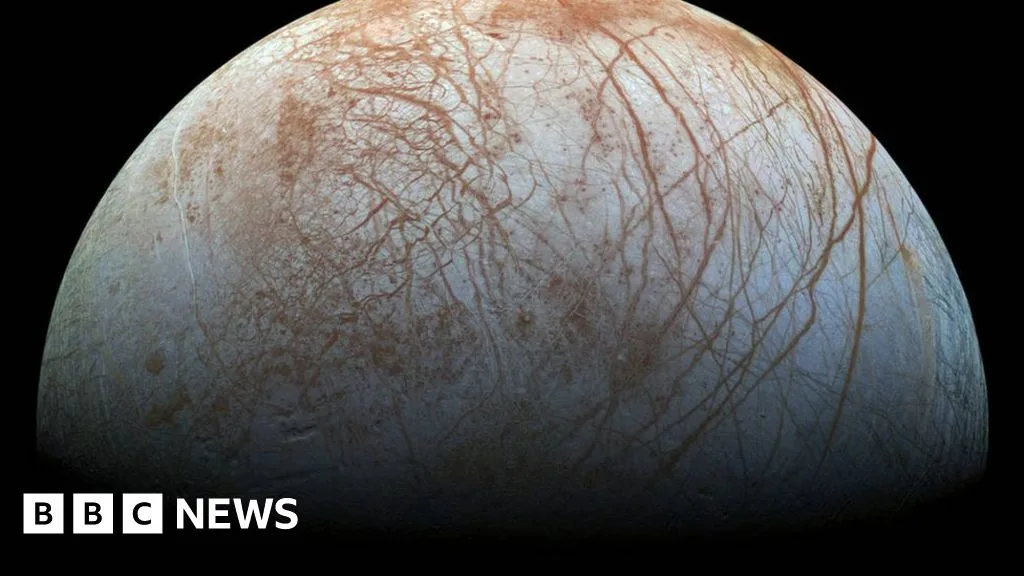
One scientist, leading a mission to Jupiter, goes as far as saying it would be 'surprising' if there was no life on one of the planet's icy moons. Nasa's James Webb Space Telescope (JWST) recently detected tantalising hints at life on a planet outside our Solar System, and it has many more worlds in its sights.
'We live in an infinite Universe, with infinite stars and planets. And it's been obvious to many of us that we can't be the only intelligent life out there,' says Prof Catherine Heymans, Scotland's Astronomer Royal. 'We now have the technology and the capability to answer the question of whether we are alone in the cosmos.'
Telescopes can now analyse the atmospheres of planets orbiting distant stars, looking for chemicals that on Earth can be produced only by living organisms. The first flicker of such a discovery came earlier this month, with a possible sign of a gas produced by simple marine organisms detected in the atmosphere of planet K2-18b, 120 light years away.
Prof Nikku Madhusudhan of Cambridge University, who led the study, told me that if the hints are confirmed 'it would radically change the way we think about the search for life.' He predicts that within five years there will be 'a major transformation' in our understanding of life in the Universe.
Numerous missions are under way or planned, including Nasa's Habitable Worlds Observatory and the European Southern Observatory's Extremely Large Telescope, while closer to home, Nasa's Clipper and ESA's Juice will explore Jupiter's icy moon Europa, which has an ocean below its icy surface and plumes of water vapour.




