
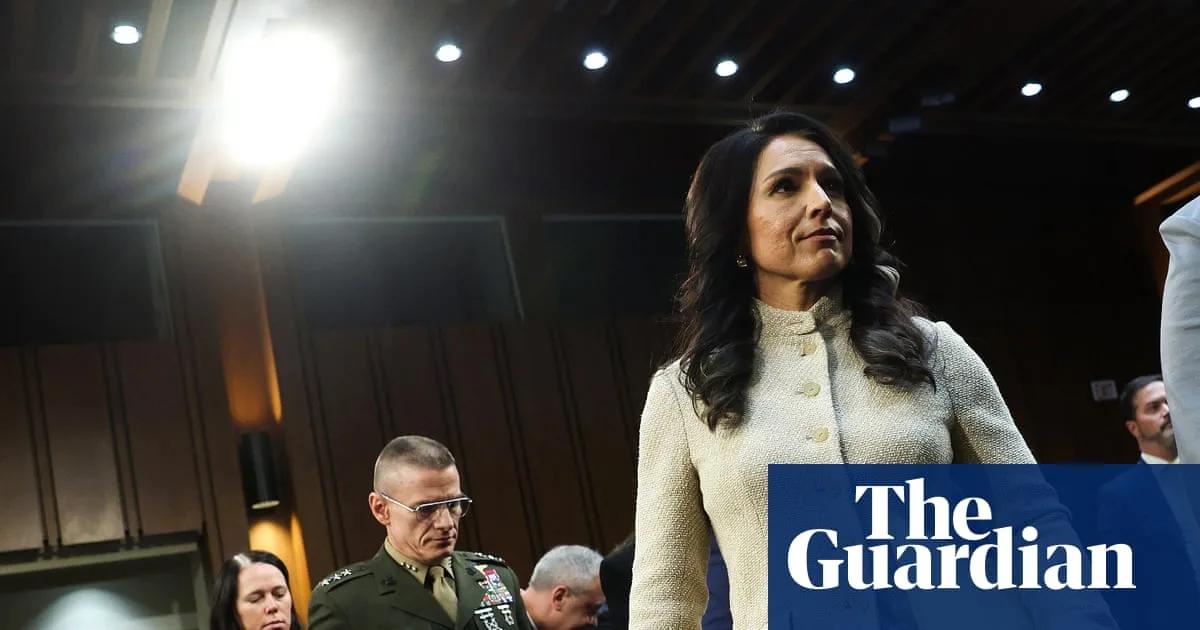
Tulsi Gabbard has resigned as US director of national intelligence after a turbulent 15-month tenure, ending her role as the country’s top intelligence official on Friday. The former Democrat, who lacked an intelligence background, was an unconventional choice for the position, and her foreign policy views occasionally diverged from President Donald Trump’s, particularly on overseas military intervention.
Gabbard took unusual measures to ingratiate herself with Trump, vowing to root out politicisation across US spy agencies and embracing his agenda of election denial. However, over time, she became increasingly sidelined, with Trump excluding her from key national security conversations on Iran and Venezuela, according to sources familiar with the Office of the Director of National Intelligence (ODNI). A spokesperson for Gabbard’s office dismissed these claims as “100% false”.
During her tenure, Gabbard reduced ODNI staff by 30%, with at least 100 employees accepting early retirement programmes at the CIA and ODNI in 2025. She also introduced the Director’s Initiatives Group (DIG), a taskforce to cut costs and investigate “weaponisation” across the intelligence community, focusing on Trump’s priority topics such as the origins of Covid-19, allegations of Russian interference in the 2016 elections, and Havana syndrome. The DIG was dismantled in December and given a final termination date in June.
Gabbard’s acting chief of staff, Alexa Henning, a political appointee from Arkansas Governor Sarah Huckabee Sanders’ office, was noted for her aggressive stance towards media and other intelligence leaders. An ODNI spokesperson defended Henning as a “highly talented leader”. Trump first dismissed Gabbard’s input in June 2025 amid a joint US-Israel mission to bomb Iran’s nuclear facilities and assassinate nuclear scientists.




