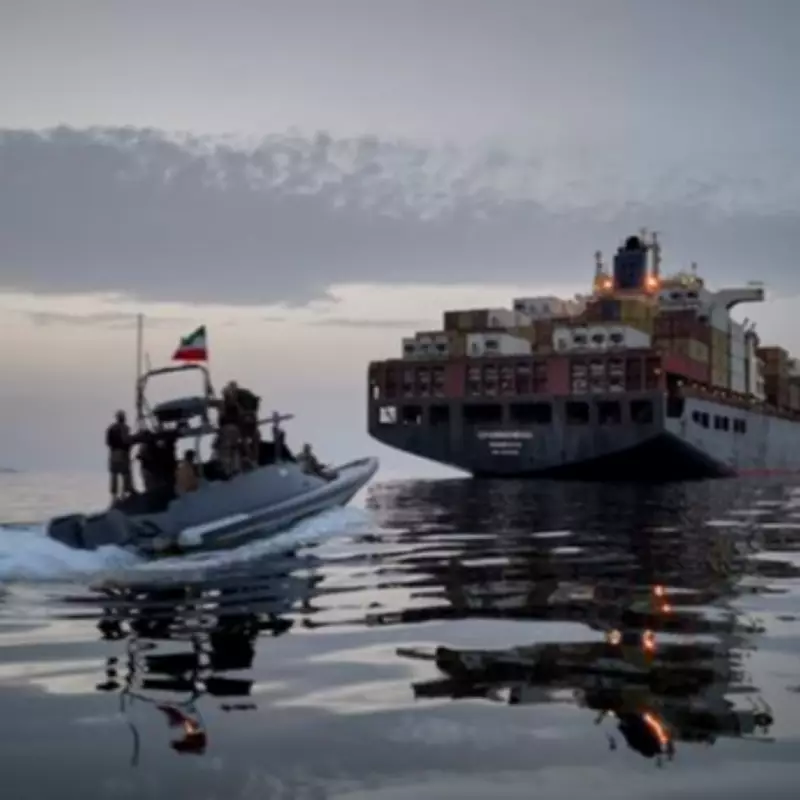
US President Donald Trump's 'humanitarian' operation, dubbed 'Project Freedom', aimed at freeing 2,000 stranded merchant vessels in the Gulf, has been met with a claimed Iranian missile attack. This escalation marks a significant move in the ongoing crisis over the Strait of Hormuz, as both sides seek to break the crippling stalemate.
Costly Military Action
The US military action in the Middle East is costing close to £1 billion a day, impacting President Trump politically, militarily, and strategically. At every turn, Tehran appears to be outmanoeuvring the White House's incoherent war strategy. Iran's targeting of US Navy warships in response to Trump's operation is a major next step, though it seems Iran did not hit a warship as claimed but likely targeted one, costing war-planners hundreds of thousands in surface-to-air defence missiles. At the very least, it was a warning shot across the bows of the US military and a defiant gesture against Trump's 'Project Freedom'.
Iran's Defiance
This action follows through on Iran's threat to attack if the US navy tried to escort stranded merchant vessels. The Islamic Revolutionary Guard Corps (IRGC) appears determined not to allow American forces into the Strait, regardless of how the operation is presented. Even the mission name 'Project Freedom' represents a climb-down from the originally hawkish 'Operation Epic Fury'. The conflict is hitting western consumers, particularly in Britain, through rising oil prices, threats to international flights, and job losses in the aviation sector.

Internal Pressures in Iran
Prior to the conflict, Iran faced months of uprisings and demonstrations threatening the regime's existence. Executions are at an all-time high, thousands are being arrested, and 30% of the population lives in abject poverty. The conflict has done nothing to help Iranians, despite Trump's promises of assistance. Tehran is signalling that no matter how Trump sells his military action, it will not succeed, and his administration desperately needs an off-ramp.
Iran's Demands for Settlement
According to the Institute for the Study of War, Tehran is demanding a settlement that includes delayed talks on its nuclear programme. Its counter-proposal seeks a swift end to the war, which has devastated Iran's military but not diminished its defiance. Key demands include a mutual guarantee of non-aggression, an end to the US blockade on Iranian ports in exchange for reopening the Strait of Hormuz, compensation, and withdrawal of US forces from near Iranian waters. Iran also wants to discuss the nuclear issue later, without firm commitments to ending its atomic programme, and seeks sanctions relief.
Increasingly, it seems difficult to imagine Trump not accepting an off-ramp, with intense back-channel negotiations underway. The problem is that Trump may have to accept leaving the Gulf in exchange for reopening the Strait, knowing it could be closed again at any time. The British military will likely have to become further involved in protecting shipping in the region, even after a settlement is reached.