
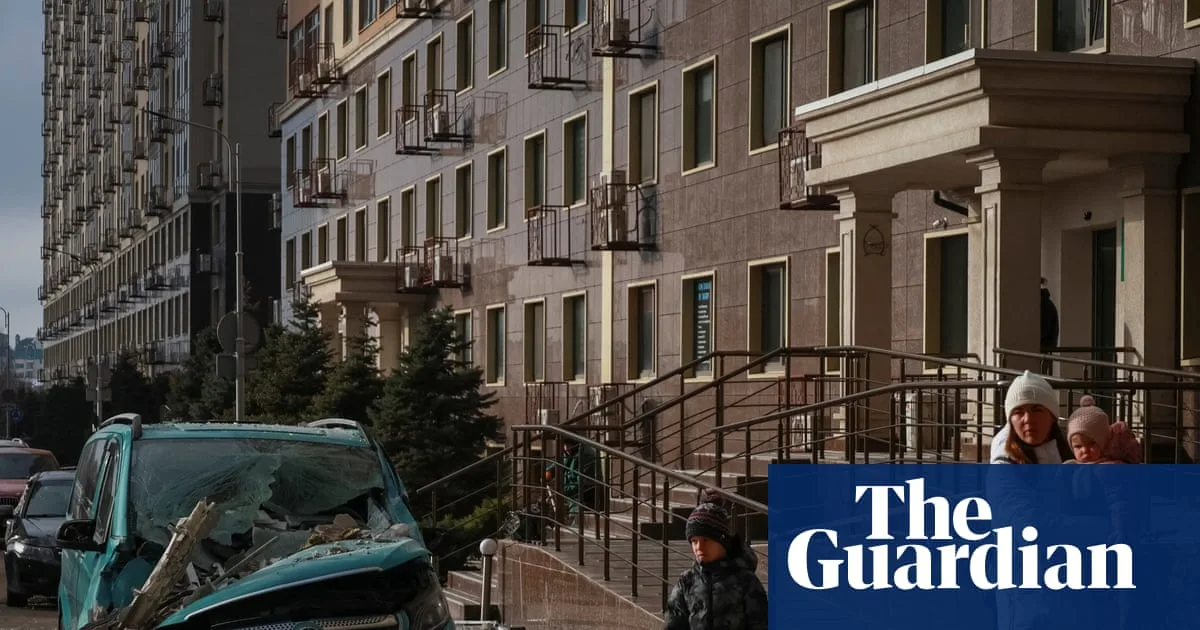
In Odesa, a waiter at the Benedikt cafe has not been following Donald Trump's desire to annex Greenland, but the parallels with Vladimir Putin's land grab in Ukraine are clear to him. “They’re crazy. The pair of them,” he said.
Oleksandr Merezhko, chair of the Ukrainian parliament's foreign policy committee, warned that the Greenland crisis is a distraction that weakens support for Ukraine. “Any distraction among our European partners weakens the coalition supporting us. It weakens Nato, and it weakens transatlantic solidarity,” he said. Merezhko also noted that Trump's actions undermine the post-1945 rules-based order and play into Putin's idea of spheres of influence.
Leo Litra of the New Europe Center wrote that US actions regarding Greenland “effectively legitimise aggressive territorial claims by stronger states against their neighbours”, echoing the logic of Russia's aggression. He said the crisis poses a direct threat to Ukraine's defence and forces a reassessment of Europe's security architecture.
Kremlin officials have drawn parallels between the Greenland and Ukraine situations. Dmitry Peskov said Trump would “go down in history” if he took control of Greenland, while Sergei Lavrov argued that “Greenland isn't a natural part of Denmark”, mirroring Moscow's justifications for its invasion of Ukraine. Russian bot networks have amplified disinformation, including a fake video of Volodymyr Zelenskyy backing Ukrainian troops for Greenland.
President Zelenskyy, at the World Economic Forum in Davos, said “Europe remains in Greenland mode: maybe someone somewhere will do something,” highlighting European dithering. Ordinary Ukrainians sense war fatigue, with IT specialist Oleksii Striapko saying, “I feel not so much Europe's indifference as its war fatigue.”




