Trump Publicly Snubs Starmer's Carrier Offer in Blow to US-UK Alliance
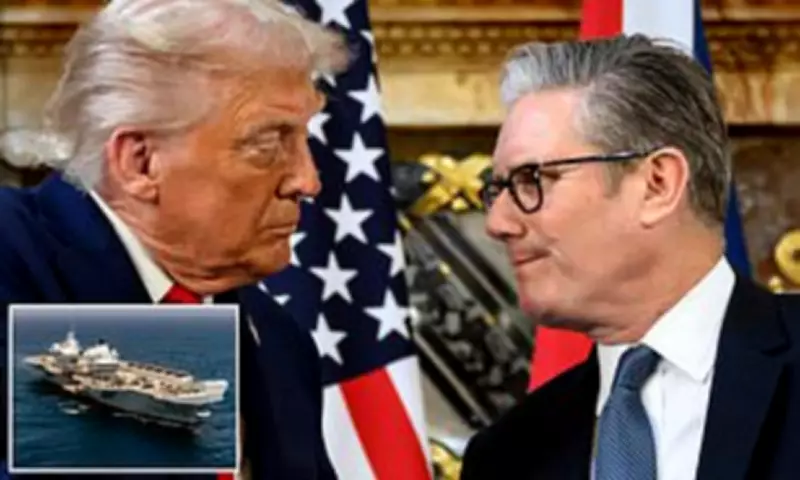
In a startling public rebuke, former US President Donald Trump has directly told Prime Minister Keir Starmer that the United States does not require the Royal Navy's aircraft carriers for Middle Eastern operations, delivering a fresh wound to the longstanding Special Relationship between the two nations.
Explosive Social Media Broadside Targets UK Support
Launching an explosive broadside via his Truth Social platform, Trump warned that America would "remember" what he characterised as insufficient support from "our once great ally." He pointedly suggested that the Prime Minister was attempting to join a conflict only after it had been decisively won.
"The United Kingdom, our once Great Ally, maybe the Greatest of them all, is finally giving serious thought to sending two aircraft carriers to the Middle East," Trump posted. "That’s OK, Prime Minister Starmer, we don’t need them any longer - But we will remember. We don’t need people that join Wars after we’ve already won!"

UK's Cautious Stance and Military Preparations
This diplomatic flare-up occurs against a backdrop of heightened military readiness. The UK government has notably refrained from joining the US-Israeli strikes on Iran that commenced last weekend. Prime Minister Starmer emphasised last Sunday that Britain "will not join offensive action now."
However, London has accepted a specific American request to utilise its military bases for what it describes as the "specific and limited defensive purpose" of targeting Iran's missiles at their source. Furthermore, it was revealed on Saturday that the Royal Navy is actively preparing one of its two formidable aircraft carriers, HMS Prince of Wales, for potential deployment to the volatile region.
HMS Prince of Wales on Heightened Alert
The readiness state of the 64,000-ton warship is being significantly increased, with its 1,600-strong crew reportedly warned to be prepared to sail within a five-day window. Previously on a ten-day notice period, this accelerated timeline means the carrier could join HMS Dragon, a £1 billion Type 45 destroyer, in a potential Middle Eastern deployment as early as next week.
A Ministry of Defence spokesman clarified the situation: "HMS Prince of Wales has always been on very high readiness and we are increasing the preparedness of the carrier, reducing the time it would take to set sail for any deployment." The vessel, which boasts a flight deck large enough for three football pitches and can carry up to 36 advanced F-35 fighter jets, has recently emerged from a three-month maintenance period.
Starmer Faces Criticism Over Defence Response
Prime Minister Starmer is concurrently facing fierce political criticism for the perceived pace of the UK's defensive response. This follows an Iranian drone attack last Sunday on RAF Akrotiri in Cyprus, a key British base. In response, Sir Keir announced the deployment of HMS Dragon, equipped with state-of-the-art missile defence systems, to protect the region.
However, as of this weekend, the destroyer remains anchored in Portsmouth and is not expected to reach the conflict zone for approximately another week. This delay has sparked scrutiny over operational readiness.
Military Leadership Defends Preparedness
Chief of the Defence Staff, Sir Richard Knighton, has robustly defended the UK's military posture. He stated yesterday that he "completely" rejects accusations that the nation was ill-prepared for the escalating Middle Eastern conflict. Sir Richard confirmed that HMS Dragon would depart "in the next few days, as soon as it's got ammunition on board," though he did not specify a precise arrival timeline for the Mediterranean.
An MoD spokesman added further context: "Since the strikes began, we've had British jets in the sky shooting down drones and have sent additional assets to the region to further reinforce our air defences, including more Typhoons and Wildcat helicopters with drone-busting missiles."

Political and International Reactions
The situation has ignited domestic political debate. Tory leader Kemi Badenoch argued yesterday that Sir Keir is "too scared" to intervene decisively in the Iran crisis, fearing he might further alienate left-wing voters who are increasingly shifting support to the Green Party.
Meanwhile, Donald Trump continued his commentary on the region, branding Iran the "loser of the Middle East" and predicting its imminent collapse. "They were looking to take over and rule the Middle East," he asserted. "It is the first time that Iran has ever lost, in thousands of years, to surrounding Middle Eastern Countries." The former president later met with families of the six American soldiers killed in the ongoing hostilities.