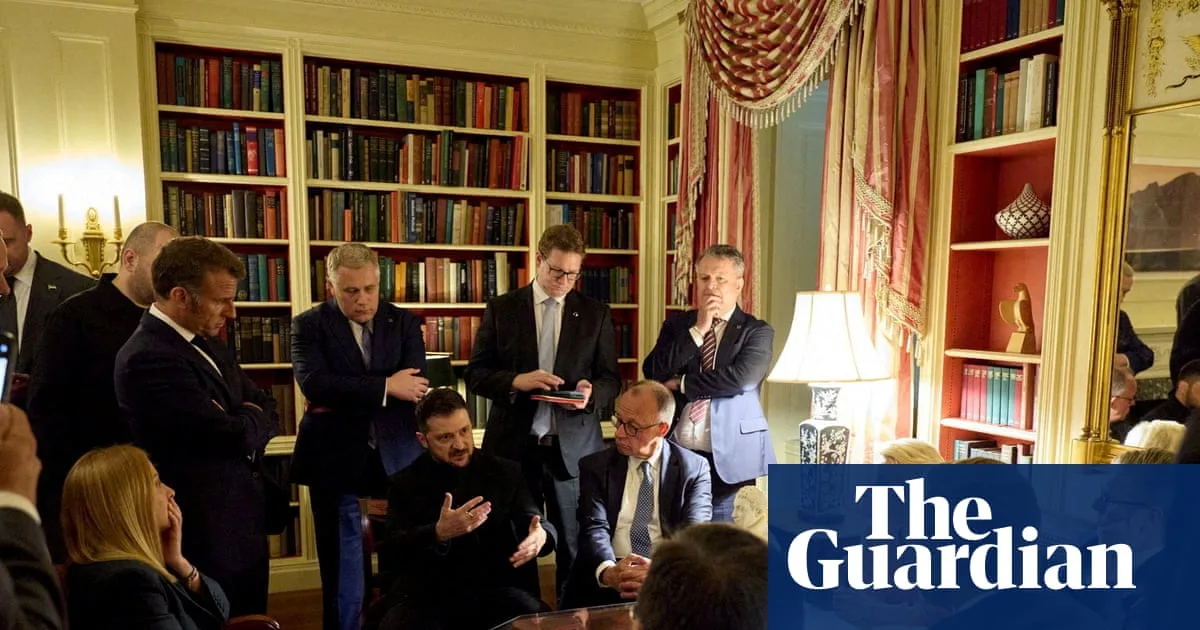
Hours before Volodymyr Zelenskyy headed to Washington for a Monday meeting with Donald Trump, seven European heavyweights hastily cleared their schedules to join him. The group, described as a “dream team” of leaders representing Europe’s economic and military heft, aimed to shield Ukraine from any fallout from Trump’s recent summit with Vladimir Putin in Alaska. That meeting had seen Trump back pro-Russian positions and drop plans for an immediate ceasefire, leaving Moscow jubilant.
The rare show of diplomatic force was designed to avoid a repeat of Trump’s February ambush of Zelenskyy in the Oval Office. European leaders showered Trump with compliments, while Zelenskyy peppered his opening remarks with eight thank-yous, most directed at the US president. The Ukrainian president wore what one European diplomat described as “almost a suit” in a “combat formal” style.
Matthias Matthijs, a senior fellow at the Council of Foreign Relations, likened the pattern to EU trade relations under Trump: high expectations, dashed by Trump’s social media posts or interviews, then a meeting that avoids the worst outcomes but leaves Europe worse off than before. “The Europeans live to fight another day,” he said.
Fabrizio Tassinari, executive director of the School of Transnational Governance at the European University Institute, noted that Trump had inadvertently become “the greatest unifier of Europe since the end of the cold war”. He described witnessing seven leaders repeating the exact same message as “almost an epiphany”.
Days after the talks, questions remain. Trump and European leaders said Putin had agreed to face-to-face talks with Zelenskyy, but Moscow has not confirmed this. Trump indicated willingness to be part of security guarantees for Kyiv, but ruled out US troops on the ground, suggesting air support instead. Concerns linger over what Trump proposed in Alaska and what Putin agreed to during their near three-hour meeting.