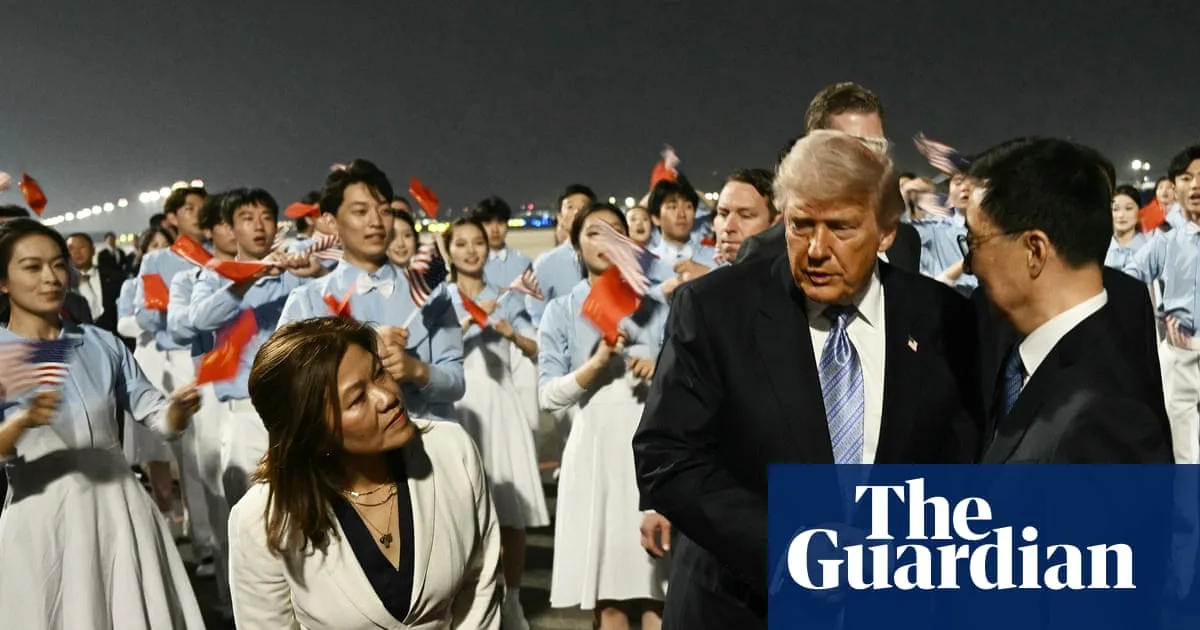
President Donald Trump is departing for Beijing to face off with President Xi Jinping in a high-stakes meeting shadowed by a deadlocked conflict with Iran that has left China positioned as a precarious and powerful middleman.
Delayed Visit Amid Volatility
The visit, originally scheduled for March but delayed by the volatility of the Iran war, comes as the White House seeks to leverage China's unique economic ties to Tehran to force a diplomatic breakthrough. However, the role of peacemaker remains complicated by allegations that Beijing has provided weapons and intelligence to aid Iranian war efforts.
China, which relies on Iranian crude for nearly 20 percent of its imports, wants a ceasefire to hold so shipping in the Persian Gulf can resume. But the President ominously said on Monday that the ceasefire with Iran is 'on life support' and is weighing his military options after peace negotiations stalled.
Potential Diplomatic Pitfalls
Beyond the oil markets, a central trap for the President during the meeting lies in a dangerous diplomatic sleight of hand that Beijing is eager to exploit. Tehran knows it 'cannot hope to outlast Washington in this current conflict and must concede to a deal,' Brent Sadler, a veteran military diplomat and former nuclear submarine officer, tells the Daily Mail.
If Trump isn't careful, Xi could attempt to use the chaos in the Persian Gulf as a convenient precedent to justify China's own aggressive maritime ambitions, say experts. Sadler adds that Trump must 'void any equivalency regarding what is occurring in Iran as a rationale for China closing sea lanes in Asia or interfering with international air traffic. International law is very much against what Iran has been doing in the Strait of Hormuz.'
Taiwan: A Sensitive Flashpoint
As for the most sensitive flashpoint, one wrong phrase could risk a catastrophic escalation when it comes to their neighbor: Taiwan. Speaking from the Oval Office on Monday, Trump told reporters he would discuss the topic of continuing to sell weapons to Taiwan this week with Xi. 'He will bring up Taiwan more than I will. Our discussion will be a little bit about energy and the beautiful country of Iran,' Trump said.
Former State Department consultant John Sitilides cautions that Trump should not verbally oppose Taiwan's independence. Instead, he should uphold the long-standing 'strategic ambiguity' that states that the island's status can only be resolved peacefully. According to Sitilides, Trump must ensure Xi is deterred from even 'thinking of imposing a quarantine, blockade, or any hybrid 'grey zone' measure' over the island, which must be permitted to trade and operate freely.
'Cold Peace' Dominates Agenda
As the two leaders prepare for their busy schedule that includes a tour of the Temple of Heaven and a state banquet, the underlying tension of a 'cold peace' dominates the agenda. In geopolitical terms, 'cold peace' is a step up from a 'cold war.' While a cold war usually means active hostility, a cold peace means the two countries have a formal treaty or agreement to stay out of a shooting war, but they still deeply distrust each other and have very little cultural or social cooperation.
While Xi has signaled a shift toward national security over market reforms — directing billions toward artificial intelligence and military self-reliance — his economy remains a 'vulnerable mess' that White House insiders suggest Trump intends to capitalize on.
Economic Leverage and Vulnerabilities
'The focus on economic stability has gained even more significance in the wake of the Iran War; both the United States and China are feeling pain, whether at the pump or on the factory floor,' notes Jack Burnham, an analyst with the China Program at the Foundation for Defense of Democracies. 'Securing large buys of soybeans and Boeing aircraft matter more now that fertilizer prices have cut margins for American farmers and the price of jet fuel continues to rise.'
Yet, experts warn against any deal that leaves the US permanently exposed. 'President Trump is focused on securing 'the greatest deal ever' with China, but the US remains highly vulnerable to Beijing's dominance of refined rare earths, pharmaceuticals, and defense industrial supply chains,' Sitilides said.
On the high-stakes battle for dominance in tech, Burnham warns that Trump must handle negotiations with a healthy dose of skepticism. 'The Trump administration will likely look to frame discussions as progress without over-promising, wary of Beijing's habit of viewing dialogue itself as the destination rather than a road to resolution,' Burnham explains.
Iran's Calculations
Experts note that Tehran believes China may publicly signal a diplomatic end to the war but will continue to 'secretly support Iran's ability to militarily and diplomatically challenge and thwart the US.' For the summit to be a success, both Washington and Beijing would need to commit to a 'cold peace' equilibrium that maintains the status quo while progressing any overlapping goals.
'Both sides would win with a united commitment to isolate Tehran economically and politically and work together to secure more reliable sources (i.e. USA) of petroleum for China,' Sadler said.
As Sitilides concludes, the cost of failure is high, and President Trump's love of pomp and circumstance could risk blinding the goal. 'Substantive policy failures for the sake of Communist propaganda and pageantry will constitute a significant loss for both countries,' Sitilides warned.






