
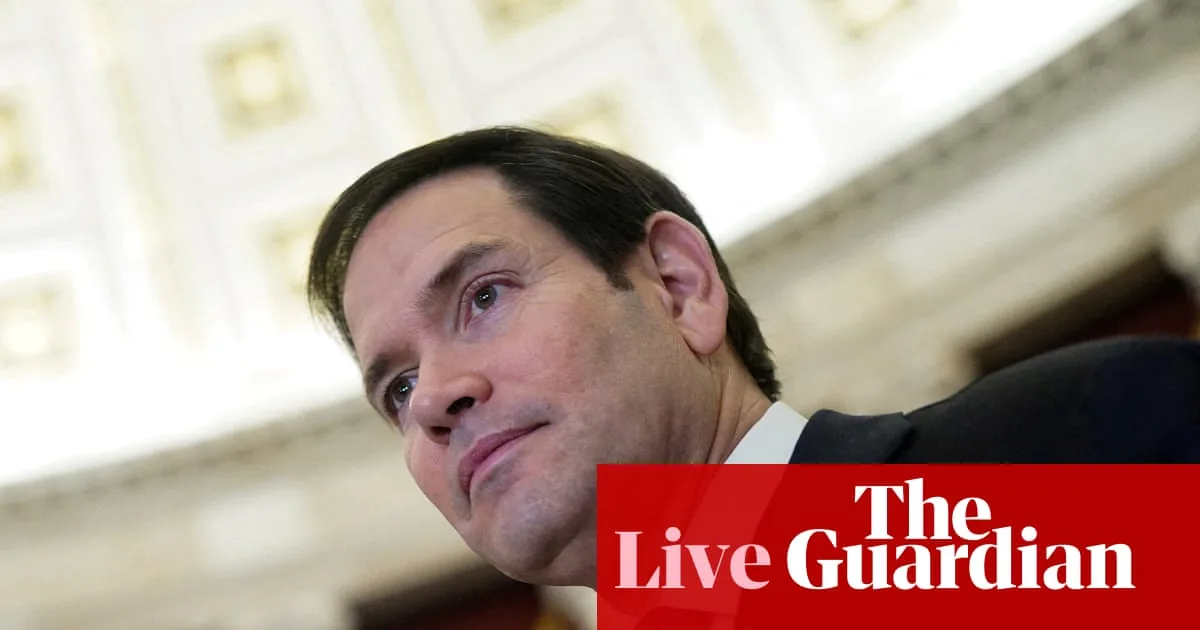
Secretary of State Marco Rubio has attempted to backtrack after President Donald Trump contradicted his claim that a plan from Israel to attack Iran spurred the United States to launch pre-emptive strikes. Speaking on Capitol Hill before classified briefings for lawmakers, Rubio maintained that the president made the decision to strike because negotiations had failed, but did not fully address his earlier comments about Israel's intentions.
Trump, during a meeting with German Chancellor Friedrich Merz, insisted that Israel did not pressure the US to attack. “If anything, I might have forced Israel’s hand,” the president told reporters, directly contradicting his secretary of state. Rubio had previously suggested that an Israeli plan to target Iran prompted the US action, a stance he sought to clarify without retracting.
The classified briefings, held for all members of the Senate and House of Representatives, were led by Rubio, Defence Secretary Pete Hegseth, CIA Director John Ratcliffe, and Joint Chiefs Chairman Dan Cain. Lawmakers emerged with differing views on the administration’s justification. Republican Tim Burchett cited references to historical threats dating back to 1979, while Democrat Pramila Jayapal noted that “there were a lot of references to the 47 years of Iran being a problem. That is not imminent, that is in the past.”
Trump also used the Oval Office appearance to criticise European allies. He condemned Spain for denying the US access to military bases and said he had instructed Treasury Secretary Scott Bessent to “cut off all dealings” with Madrid. The president also scolded Prime Minister Keir Starmer for refusing to support the US operations, remarking, “This is not Winston Churchill that we’re dealing with.”
When asked about the future leadership of Iran, Trump responded, “Most of the people we had in mind are dead,” following US and Israeli strikes. He added that individuals from “another group” might also be dead, based on reports.




