Trump Announces 10-Day Ceasefire in Lebanon Following 'Excellent Conversations'
Donald Trump has announced a 10-day ceasefire in Lebanon, set to commence at midnight on Thursday, with a subsequent meeting between Israeli and Lebanese leaders scheduled for next week. This agreement aims to foster progress toward a parallel peace deal between the United States and Iran.
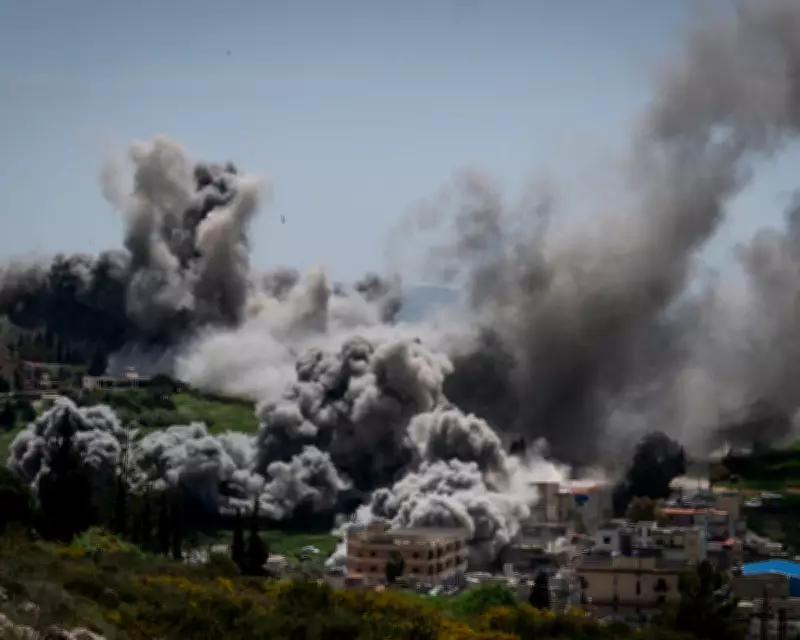
The ceasefire follows seven weeks of intense fighting in Lebanon, where Israel has conducted devastating airstrikes targeting the Iranian-backed Hezbollah militia. Trump stated on social media that the truce was secured after separate "excellent conversations" with Lebanon's President Joseph Aoun and Israeli Prime Minister Benjamin Netanyahu on Thursday.
Netanyahu's Conditions and Security Measures
Netanyahu described the ceasefire as an opportunity for a "historic peace agreement" but emphasised that the disarmament of Hezbollah remains a precondition. In a televised address, he announced that Israel would maintain a 10km (6.2-mile) "security zone" along the border in southern Lebanon to ensure safety.

Trump provided limited additional details beyond the truce's start time and duration, later telling reporters that "at the right time I would visit Lebanon." The terms, as outlined by the US State Department, prohibit Israel from offensive military actions in Lebanon but allow for "self-defense" against planned, imminent, or ongoing attacks.
Lebanese Response and Ongoing Challenges
The Lebanese army has cautioned displaced individuals against returning home due to intermittent shelling reported after the ceasefire took effect. While the Lebanese state has not been an active participant in the conflict, Hezbollah parliament member Hassan Fadlallah attributed the deal to "Iranian diplomatic efforts" and stated that Hezbollah would respect the truce if Israel halts all hostilities.
This conflict escalated when Hezbollah launched missile attacks on Israel on 2 March in solidarity with Tehran, prompting a fierce Israeli response, including a ground invasion into southern Lebanon. Israel has expressed intentions to occupy southern Lebanon up to the Litani River, approximately 18 miles from its border, a move Lebanon is expected to oppose by demanding complete Israeli withdrawal.
Link to US-Iran Peace Negotiations
The ceasefire is directly tied to parallel negotiations for a US-Iranian peace agreement, initiated after a US-Israeli attack on Iran on 28 February. A Pakistani-brokered ceasefire, set to expire on 22 April, has been in place, with initial peace talks in Islamabad breaking down after 21 hours. Pakistan's army chief, Asim Munir, is currently in Tehran working to bridge gaps between the parties.
Trump claimed that Iran has agreed to relinquish its enriched uranium stockpile, stating, "They've agreed to give us back the nuclear dust." However, this assertion remains unconfirmed by Iran or intermediaries. US Defense Secretary Pete Hegseth warned Iran that US forces are "locked and loaded" and ready to resume combat if negotiations falter, reiterating threats to target Iran's energy industry.
Humanitarian Impact and Legal Considerations
Israeli airstrikes in Lebanon have resulted in significant casualties, with at least 2,196 killed and 7,185 wounded over seven weeks. Recent attacks included striking an ambulance in Tebnine, critically injuring two paramedics, and destroying the last bridge into Tyre, isolating approximately 30,000 residents. A school in Marwahin was also demolished as part of a campaign to raze villages.
Yale law professor Oona Hathaway commented on the legality of targeting energy facilities, noting that such actions must meet the definition of a military objective under international law, with precautions to limit civilian harm. The paths to lasting peace in Lebanon and Iran are interlinked, with success or failure in one area potentially derailing progress in the other.
Key issues for US-Iran negotiations include reopening the Strait of Hormuz, regulating Iran's nuclear programme, and establishing a financial settlement. The Pentagon reported that a US naval force in the Gulf of Oman repelled 13 vessels, with Hegseth vowing to maintain the blockade indefinitely.