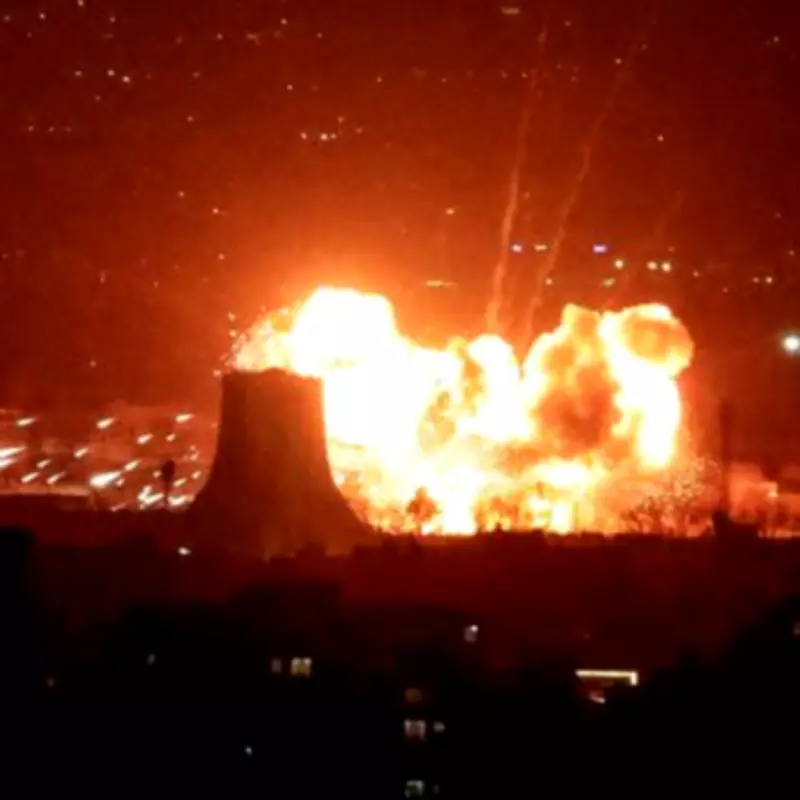
Tehran Engulfed in Flames Following Israeli Strikes
Israel launched a series of devastating strikes on Sunday, targeting southern Lebanon, Beirut, and a critical oil storage facility in Tehran, marking a significant escalation in the ongoing Middle East conflict. The attack on Tehran's industrial infrastructure sent towering pillars of fire into the night sky, creating a stark glow over the Iranian capital. This appears to be the first instance in the war where a civilian industrial facility has been directly targeted, raising concerns about the broadening scope of hostilities.
Netanyahu's Ominous Warning
Israeli Prime Minister Benjamin Netanyahu issued a chilling statement following the strikes, promising that Israel has "many surprises" prepared for the next phase of the conflict. His remarks underscore the unpredictable and intensifying nature of the warfare, which has already resulted in substantial casualties across the region. The warning suggests that further military actions, potentially beyond conventional strikes, could be imminent as Israel seeks to maintain strategic pressure on Iran and its allies.
Regional Retaliation and Infrastructure Damage
In a retaliatory move, Iran struck a desalination plant in Bahrain, highlighting the tit-for-tat nature of the conflict. Earlier on Sunday, Iran's Foreign Minister Abbas Araghchi accused the United States of damaging an Iranian desalination plant on Qeshm Island through an airstrike, stating that "the US set this precedent, not Iran." Such infrastructure is vital for providing drinking water in the arid Gulf region, and its targeting signals a dangerous shift towards attacking essential civilian resources, which could exacerbate humanitarian crises in affected areas.

Mounting Casualties and Broader Impact
The war, which erupted on February 28 following joint US-Israeli strikes on Iran, has led to a grim toll of human lives. According to official reports, at least 1,230 people have been killed in Iran, more than 300 in Lebanon, and around a dozen in Israel. These figures illustrate the widespread devastation and the high stakes involved as the conflict continues to spiral. The targeting of civilian and industrial sites, such as the oil storage facility in Tehran, not only causes immediate destruction but also threatens long-term economic stability and public safety in the region.
The escalation raises urgent questions about the potential for further international involvement and the risk of a broader regional war. With Netanyahu's promise of "many surprises" and the ongoing strikes on critical infrastructure, the situation remains highly volatile, with analysts warning that the conflict could deepen before any resolution is in sight. The international community is closely monitoring developments, as the humanitarian and geopolitical implications continue to unfold.