
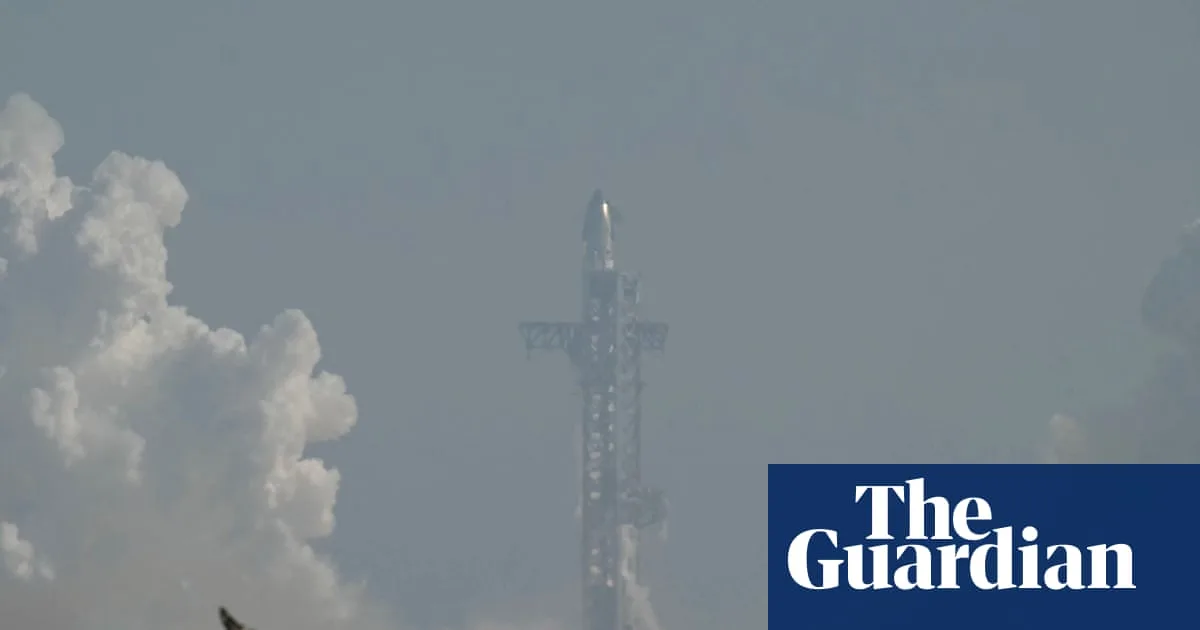
SpaceX launched its largest and most powerful Starship yet on Friday, an upgraded version that Nasa is relying on to land astronauts on the moon. The third-generation rocket, dubbed Starship V3, lifted off from a new launchpad at Starbase in Texas, carrying 20 mock Starlink satellites that were deployed during the hour-long flight.
The spacecraft reached the Indian Ocean despite some engine trouble, before erupting into flames upon impact—a result that SpaceX said was expected. CEO Elon Musk described the launch and landing as 'epic', telling his team via X: 'You scored a goal for humanity.'
It was the 12th test flight of the rocket that Musk is developing with the ultimate goal of taking people to Mars. However, the immediate focus is on the moon and Nasa's Artemis programme. Nasa administrator Jared Isaacman attended the launch, stating that Starship was now one step closer to the moon.
The redesigned booster features fewer but larger grid fins for steering, and a larger fuel transfer line. At 124 metres long, the latest model is slightly bigger than its predecessors and packs more engine thrust. While the liftoff went well, not all engines fired as the booster attempted a controlled return, and the spacecraft had to make do with fewer engines.
A pair of modified Starlink satellites ejected from Starship provided brief views of the spacecraft in flight—a remarkable first. Nasa is paying SpaceX billions of dollars to provide lunar landers for the Artemis programme, with the first crewed moon landing since 1972 targeted for as soon as 2028.
SpaceX is already taking reservations for private flights to the moon and Mars. The world's first space tourist, Dennis Tito, and his wife signed up three and a half years ago for a flight around the moon, though the timing remains uncertain.




