
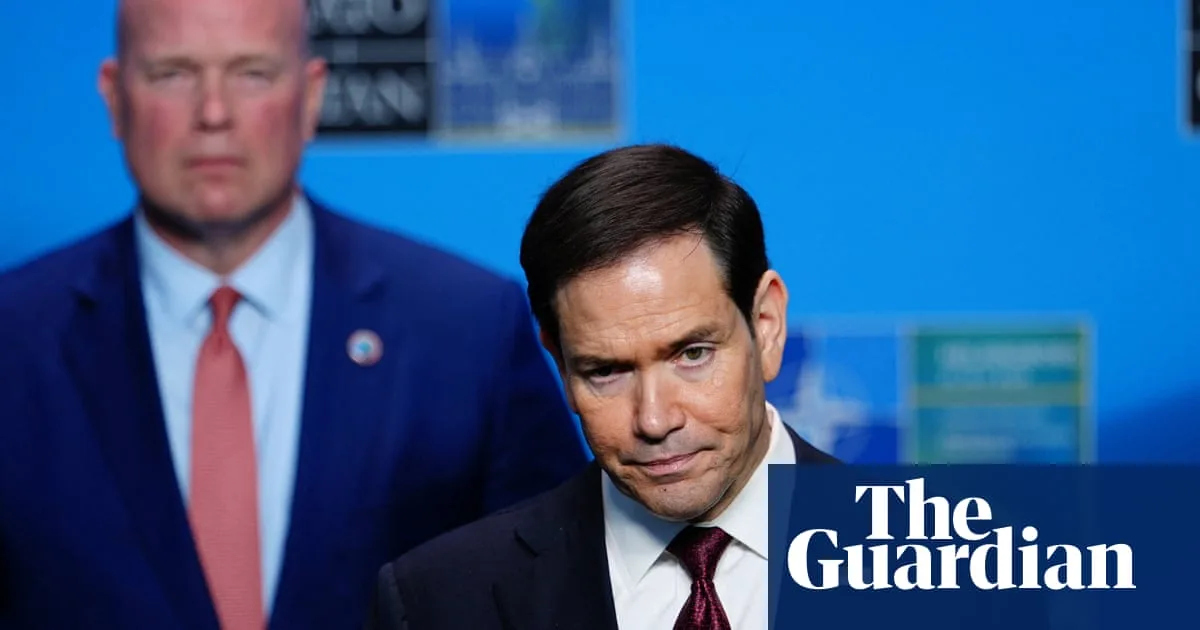
US Secretary of State Marco Rubio has indicated that President Donald Trump is disappointed with NATO allies for refusing to become more actively involved in attacking Iran, setting the stage for a potentially fraught alliance summit in July. Speaking ahead of a meeting of NATO foreign ministers in Helsingborg, Sweden, Rubio said the rift would be discussed at the leaders' level in Ankara, making it 'one of the more important' summits in NATO's 77-year history.
Rubio stressed that the US expects allies to contribute to a potential military effort to reopen the Strait of Hormuz if peace talks with Iran fail. 'We have to have a plan B for if someone is shooting, then how do you reopen the straits?' he said, adding that while it might not be a formal NATO mission, countries within the alliance could participate. The UK and France have offered to lead a multinational force to secure merchant shipping once a peace deal or ceasefire is established.
Rubio also confirmed that US troop numbers in Europe are expected to drop from 80,000, reflecting wider global commitments, though the exact reduction remains unclear amid contradictory statements from the White House. 'I think it's well understood in the alliance that the United States' troop presence in Europe is going to be adjusted,' he said, noting that the US has obligations in the Indo-Pacific, Middle East, and Western Hemisphere.
The troop adjustment follows Trump's decision to withdraw 5,000 troops from Germany after Chancellor Friedrich Merz commented that Iran was humiliating the US in peace talks. The Pentagon also halted the rotation of 4,000 troops into Poland, only for Trump to reverse that decision on social media, announcing an additional 5,000 troops would be sent to Poland. Swedish Foreign Minister Maria Malmer Stenergard described the erratic policy changes as 'confusing indeed, and not always easy to navigate.'
Rubio noted that during the 38-day attack on Iran, no other NATO member joined the US, though some provided limited assistance. Spain refused to allow US bases or airspace for the attack, France permitted support aircraft from Istres, and the UK allowed bombing missions from Fairford. The issue of base access will be discussed at the Ankara summit, as Rubio questioned the value of bases denied during conflicts.




