Putin Pushes NATO to the Brink After Drone Strike in Romania

Russian President Vladimir Putin has pushed NATO to the brink following a drone attack that struck an apartment building in Romania, a NATO member state. The incident, which injured two civilians, has intensified debates within the alliance over how to respond to Moscow's increasingly aggressive actions.

Drone Strike in Galati

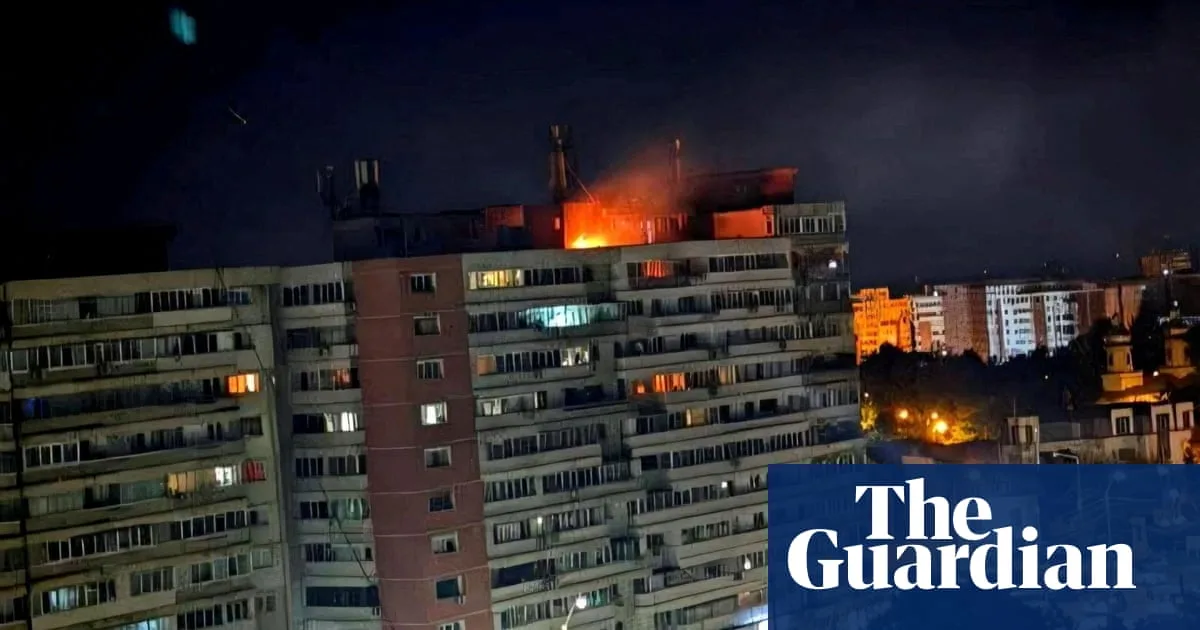
A drone carrying at least 50 kilograms of high explosive detonated in the top floors of a block of flats in Galati, eastern Romania, on Thursday night. The blast, occurring 160 kilometres from any likely target in Ukraine's port city of Odessa, sent flames bursting through the building and ignited widespread condemnation from NATO members. Romanian authorities scrambled attack helicopters and fighter jets to defend its airspace, while the injured were treated in hospital.

NATO's Dilemma

NATO, bound by Article Five of its founding charter—which states that an attack on one member is an attack on all—now faces a difficult decision on how to react. Secretary General Mark Rutte condemned the attack, stating, "Russia's reckless behaviour is a danger to us all." He added that NATO would continue to strengthen deterrence and defence while supporting Ukraine.

Wide Pickt banner — collaborative shopping lists app for Telegram, phone mockup with grocery list

The drone had been on Romanian territory for at least four minutes before impact, blasting a large hole in the reinforced concrete roof and scattering debris into the street. Analysts are now assessing whether the drone drifted off course due to electronic jamming or if the Kremlin deliberately targeted a NATO nation. A deliberate attack would align with Moscow's "Gerasimov doctrine," which views chaos in enemy ranks as a form of victory.

Context of the War

Russia is currently on the back foot in its war with Ukraine, having lost small territories captured last year at a high human cost. UK intelligence estimates that 500,000 Russian soldiers have been killed since 2022. Moscow has also overspent its military budget by $28 billion this year, with at least 40 per cent of the economy dedicated to the war effort. Meanwhile, Ukraine has increased long-range drone attacks on Russian oil infrastructure, raising fuel prices even as Moscow benefits from higher oil prices due to the US-Israel conflict in Iran.

Ukraine claims to kill about 35,000 Russian soldiers monthly, aiming for 50,000 to create a manpower shortage and financially strain the Kremlin's compensation system, which pays $165,000 to families of deceased soldiers.

Hybrid Warfare Tactics

An attack on NATO that is deniable as an accident fits Russia's tactics of achieving strategic effect with low investment. Recent exercises in Belarus involving Russian short-range nuclear missile systems were touted by Moscow as part of efforts to unbalance enemies and distract from frontline failures and internal disaffection.

Russian drones attacking Ukraine typically fly low to avoid radar detection, often using Ukrainian SIM cards and cellular networks. On the night of the Galati attack, Odessa and Izmail ports were under heavy drone and missile barrages. Romanian officials reported at least 28 drone incursions into their airspace over the past year, with a reconnaissance drone also crashing in the north of the country.

NATO's Response

President Nicusor Dan declared, "Romania is a NATO member state and will not accept, under any circumstances, that the war of aggression waged by Russia against Ukraine be transferred to its citizens." He called for a firm, coordinated, and proportionate response at national, allied, and international levels.

The largest aerial invasion of NATO airspace occurred in Poland in September 2025, when almost two dozen Russian drones entered the country, prompting a scramble of air defences. Polish Foreign Minister Radoslaw Sikorski described it as a probing mission to test NATO's thresholds. Russian drones have also violated the airspace of Latvia, Lithuania, and Estonia.

Pickt after-article banner — collaborative shopping lists app with family illustration

Sikorski summed up NATO's conundrum: "Regardless of whether it was on purpose or the result of ineptitude, Russia is still dangerous and we must defend ourselves against it." Russia's hybrid war against the West includes assassinations, sabotage of railway and logistics operations for Ukraine in the UK and Poland, relentless cyber warfare, spying on undersea communications cables, surveillance of NATO airfields by mystery drones, and the sailing of millions of tons of illicit oil through seas patrolled by NATO navies.

Military and Nuclear Considerations

NATO has opted to outsource hard power to Ukraine through increased weapons supplies, except for the US, which has cut all military aid to Kyiv. The alliance is anxious to avoid a direct military confrontation with Russia, which limits its options. Russia's economy, two-thirds the size of the UK's GDP, is puny compared to NATO's, which can muster double the troops, three times the combat aircraft, a vastly larger navy, and spends about ten times what Moscow budgets for defence.

Russia's major card is its nuclear arsenal, with 5,500 warheads compared to the US's 5,200. All sides are aware that a nuclear exchange would lead to mutually assured destruction. However, Putin's enemies fear he might be fanatical enough to regard MAD as a sane option.